


Pakistan’s solar revolution: phase-two in full swing
Pakistan's solar market is shifting from rapid panel imports to energy storage. Panel imports have sharply declined, while battery imports are surging, indicating a move towards off-grid solutions and market maturity.
- Sharp decline in Pakistan's solar panel imports.
- Surging lithium-ion battery imports in Pakistan.
- Market shift from solar generation to energy storage.
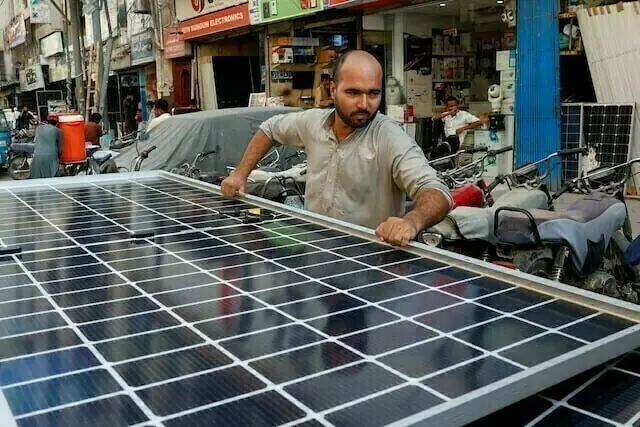
For three years, the panel import numbers did the talking. Every fresh release from customs data showed another record: more megawatts, more containers, more households abandoning the grid. That story is slowing down. What is unfolding now is a different one, and the numbers say it started months ago, not years from now.
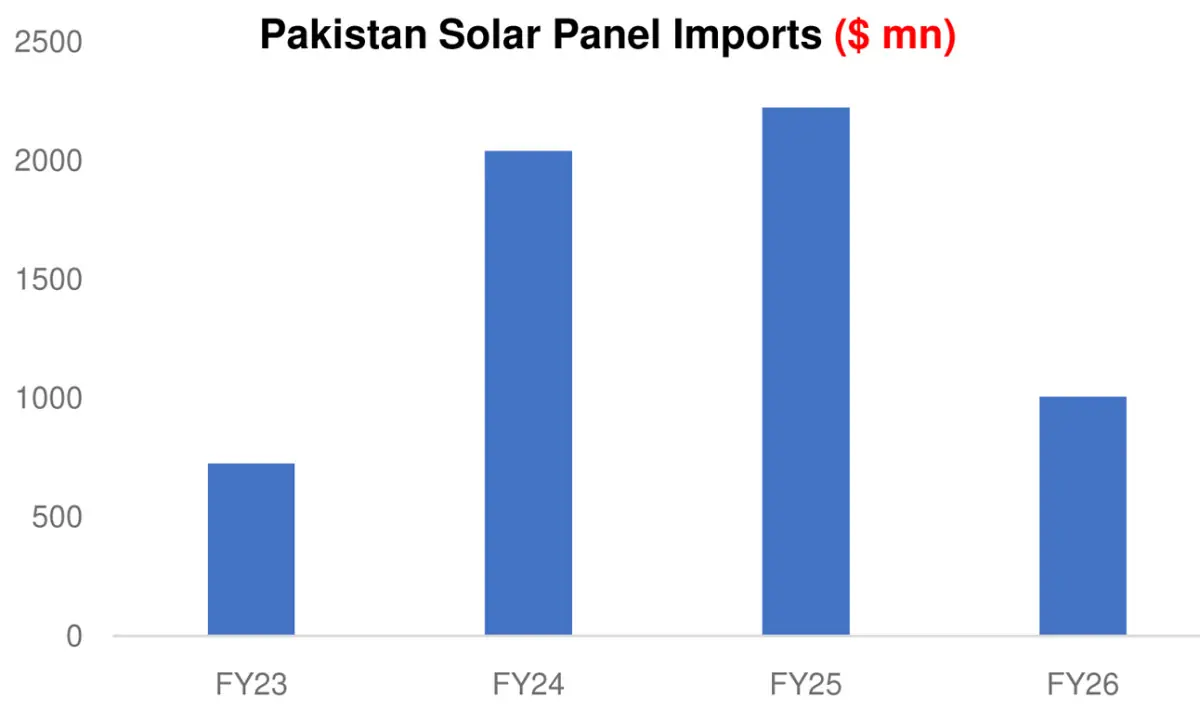
Panel imports have gone from deceleration to outright contraction. Between January and May 2026, Pakistan brought in 4,574MW of solar panels, against 11,781MW in the same five months of 2025, a drop of 61 percent. The dollar value fell almost as sharply, down 54 percent to $514 million from $1.12 billion.
None of this means the market is shrinking. Cumulative panel imports crossed 55,700MW by the end of May, still adding volume every month; the slowdown is in the rate of addition, not the base itself.
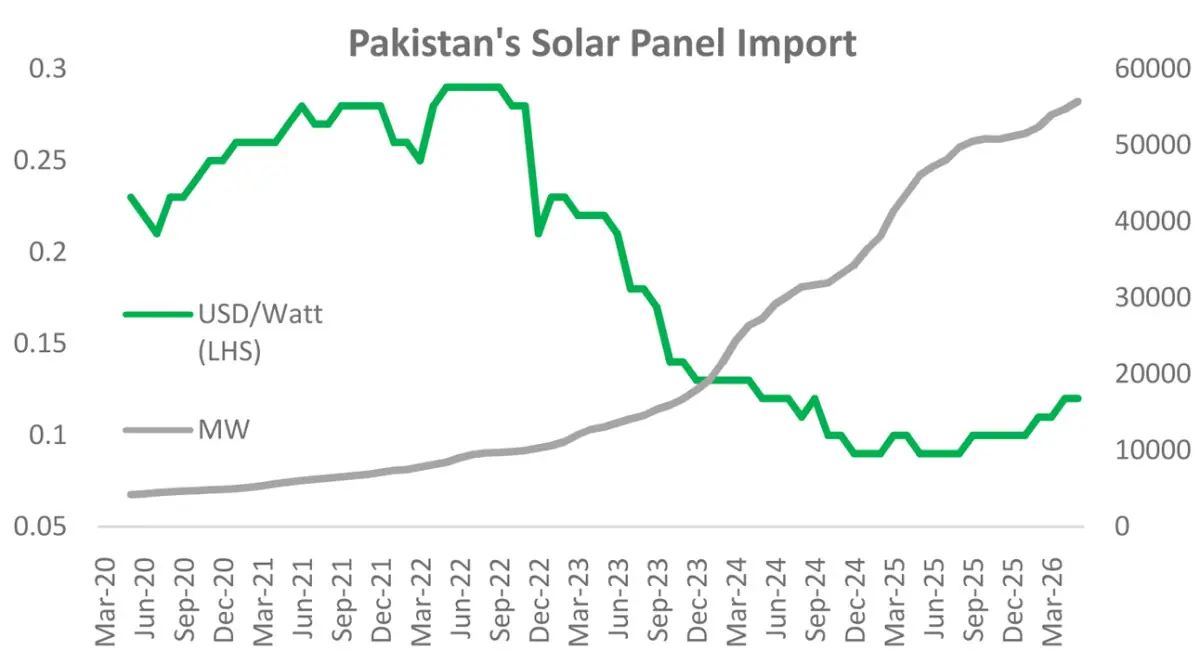
Four years ago, Pakistan was importing panels at under $0.30 per watt. It is now paying roughly a third of that. Module prices have fallen more than 70 percent since 2017, from $0.38/W to about $0.10-0.12/W through 2026.
Panels, in other words, have finished becoming a commodity. The room for a repeat of 2023-24’s import frenzy, when a single fiscal year briefly bought over 14,000MW, has narrowed on price grounds alone. There are only so much further module costs that can fall before manufacturers stop shipping.
On the surface, a slower panel market reads as demand exhaustion: early adopters saturated, urban rooftops full, the low-hanging fruit picked. Look one line item down the import bill, and a different picture appears.
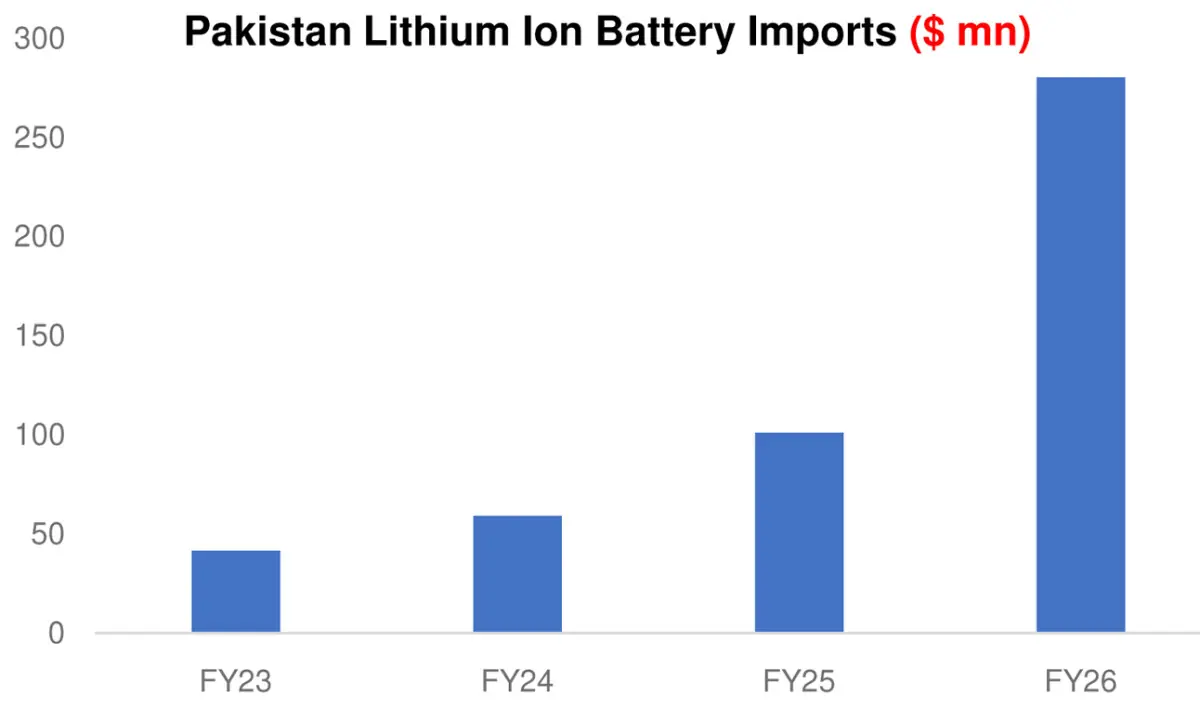
Lithium-ion battery imports have gone from a rounding error to a genuine trend. Battery imports rose from $42 million in FY23 to $280 million in FY26.Battery imports in 4QFY26 alone account for 50 percent of the fiscal year imports – suggesting the ground is warming up.
That inflection is the actual story. Pakistan’s solar market spent its first phase chasing capacity: getting panels onto as many roofs as possible, as cheaply as possible, to escape grid tariffs that kept climbing through 2023 and 2024. That phase is now mathematically slowing because most of the addressable, easy-to-convert demand has already been converted. What is left is a market that increasingly wants to store what it generates rather than simply generate it, a shift from displacing the grid during the day to leaving it altogether, or close to it.
There is corroborating evidence in the gap between panels imported and panels actually registered under net metering. By the close of FY25, cumulative panel imports stood at roughly 47,200MW. Officially net-metered installed capacity, as reported by distribution companies, was just 6,485MW, meaning at least 86 percent of everything imported never showed up as a formal, grid-tied net-metering connection.
Some of that gap is inventory sitting in warehouses; some is installation lag; but a meaningful share comprises systems that were never intended to touch the grid at all: commercial and industrial self-consumption setups, hybrid inverters paired with batteries, and off-grid installations in areas where net metering does not reach. The battery imports numbers suggest that share is growing, not shrinking.
None of this is guesswork dressed up as inevitability. It is one dataset decelerating exactly as a second, previously immaterial dataset, starts compounding, the kind of handoff that, in most commodity cycles, marks a market maturing rather than dying.
Pakistan’s solar story spent 2021 through 2024 being about access. What the fresher numbers now show is a market moving into a second, quieter phase: not who can plug in a panel, but who can afford to store what it produces. The panel boom bought Pakistan cheap daytime power. The battery numbers, still small in absolute dollar terms but unmistakable in their trajectory, suggest the next fight is over what happens after the sun goes down.


















Comments