


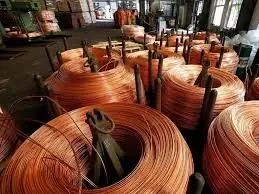

LONDON: Copper slipped on Wednesday after fresh hostilities in the Middle East threatened an interim ceasefire deal, reviving worries about weaker economic growth and metals demand.
Benchmark three-month copper on the London Metal Exchange shed 1.4 percent to USD13,184 a metric ton by 1600 GMT, having dipped 0.3 percent in the previous session. Oil prices surged and global stocks tumbled after US President Donald Trump said the memorandum of understanding signed with Iran to end the Gulf conflict was “over” after the two sides traded attacks.
Brent crude jumped about 5 percent to a two-week high, though still traded well below its highs during the Iran war.
“Metals are seeing the initial reaction to higher oil prices and the market is waiting to see whether it escalates or whether it’s just rhetoric once again,” said Ole Hansen, head of commodity strategy at Saxo Bank in Copenhagen.
“The US needs to sort this out because they cannot sustain high oil prices for long and their own reserves are starting to run low.”
During the conflict, investors feared that surging oil prices would ignite inflation and curb global economic growth, reducing demand for metals.
US Comex copper futures slid 2.4 percent to USD6.08 a lb, falling more than the LME contract after there was no announcement about possible US tariffs on refined copper following a deadline of June 30 for officials to deliver a report to Trump.
LME aluminium dipped 0.2 percent to USD3,131 a ton. Earlier it had climbed on worries around fresh disruption to smelters in the region, which accounts for about 9 percent of global supply for the metal used in transport, construction and packaging.
The most-traded aluminium contract on the Shanghai Futures Exchange rose 0.7 percent to 23,075 yuan (USD3,394.38) a ton.
Aluminium plunged 16 percent in June, its biggest monthly decline since the 2008 global financial crisis, after peace talks between the US and Iran prompted traders to price out the war risk premium.
“Copper is likely to remain driven by broader macro sentiment, while aluminium could continue to outperform if geopolitical tensions raise concerns over further supply disruptions,” said Ewa Manthey, commodities strategist at ING.
Among other metals, LME zinc fell 1.3 percent to USD3,524.50 a ton and tin lost 2.2 percent to USD52,175, while lead added 0.4 percent to USD1,891 and nickel rose 0.3 percent to USD16,390.























Comments