


Oil jumps over 4% to two-week high after Trump says deal with Iran 'over'
- Brent crude futures were up $3.14, or 4.23%, to $77.30 a barrel
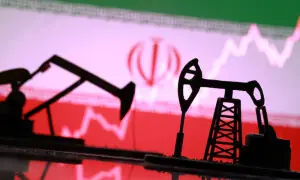
Oil prices surged over 4% after President Trump ended the Iran conflict MOU, reigniting fears of Middle East supply disruptions and attacks near the critical Strait of Hormuz.
- Trump's decision to end the Iran conflict memorandum.
- Renewed attacks on vessels near the Strait of Hormuz.
- Impact of escalating US-Iran tensions on global oil supply.

Oil prices jumped more than 4% on Wednesday, hitting a two-week high after U.S. President Donald Trump said the memorandum of understanding to end the conflict with Iran was “over”, renewing fears of disruptions to Middle East oil supplies.
Brent crude futures were up $3.14, or 4.23%, to $77.30 a barrel at 1231 GMT, while U.S. West Texas Intermediate crude climbed $2.93, or 4.16%, to $73.37 a barrel. The benchmarks hit their highest levels since June 22 earlier in the session.
Both rose about 3% on Tuesday after the U.S. revoked the general licence authorising the sale of Iranian crude.
Trump said on Wednesday that the memorandum of understanding signed with Iran to end the conflict was “over”, adding he didn’t want to engage with Tehran.
The agreement, brokered by Pakistan last month to provide a 60-day window for negotiations, came under strain after the U.S. launched fresh strikes on Iran.
“The market is again being forced to price the risk that renewed attacks on shipping, or a broader breakdown in U.S.-Iran relations, could slow the normalisation of flows through the Strait of Hormuz,” Saxo Bank analyst Ole Hansen said.
The U.S. airstrikes were in response to Iranian attacks on three commercial vessels that were transiting the Strait of Hormuz, U.S. Central Command said on Tuesday. Iran’s Revolutionary Guards then said they targeted U.S. military sites in Bahrain and Kuwait early on Wednesday.
The attacks renewed concerns about tanker traffic through the Strait of Hormuz, which carried about one-fifth of global energy supply before the war began in late February.
The Brent crude three-month time spread widened to $2.36 a barrel, its highest since June 16, extending its move into backwardation after trading in contango as recently as July 6, as traders reassessed near-term supply risks in the Middle East. Backwardation, where prompt crude trades above later-dated barrels, typically signals tighter near-term supply.
Supply fears resurface
“Trump’s assertion that the MOU is over raises the prospect of a re-closing of the Strait as an escalatory cycle begins again,” Saul Kavonic, head of research at MST Marquee, said.
At least four oil and gas tankers have turned back from attempting to transit the strait, ship-tracking data showed, as renewed attacks on vessels heightened safety concerns.
After the U.S. and Iran signed their truce last month, oil prices tumbled to pre-war levels and traders amassed large short positions in oil futures, betting prices would fall further.
Since the start of the conflict, nations have drawn down their inventories to make up for the supply shortfall.
HSBC lowered its Brent crude oil price forecast for 2026 to $80 per barrel from $95, as it assumes a return to normal Gulf oil exports by the end of September.
Meanwhile, China has lifted refined fuel export restrictions for the rest of July and allowed a private refiner to resume shipments after a four-month halt, trade sources said on Wednesday.






















Comments