


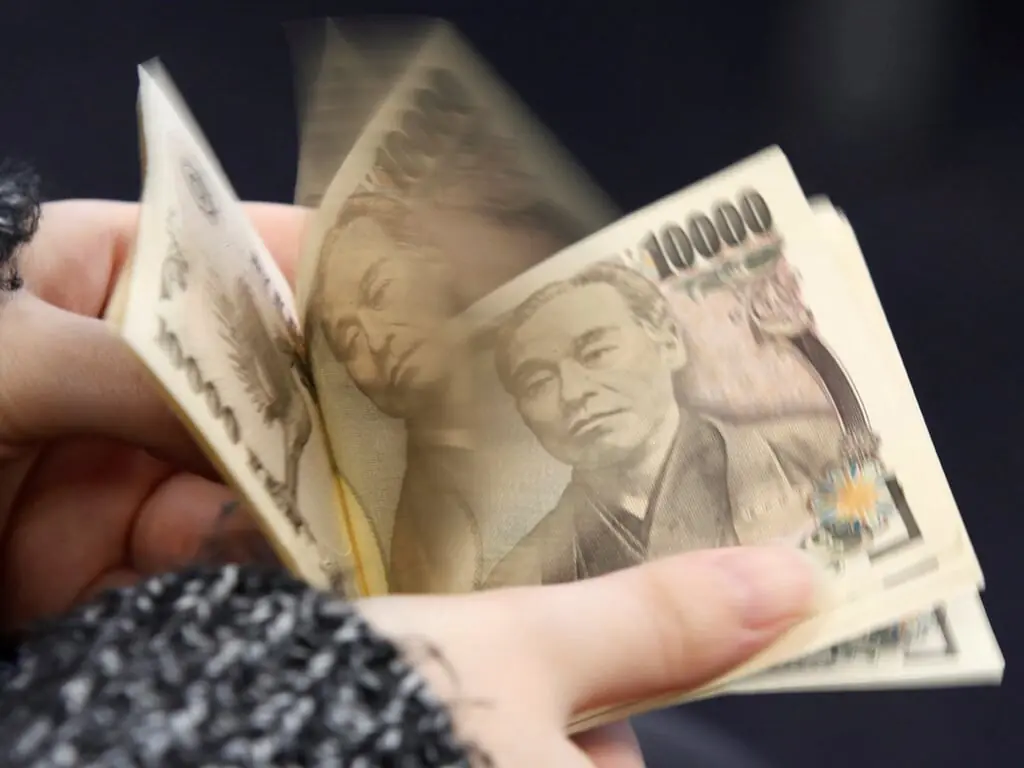

NEW YORK: The Japanese yen struggled near four-decade lows on Monday, raising the risk of official intervention, while the dollar steadied after last week’s soft jobs report reduced the odds of an imminent US Federal Reserve interest rate hike.
The yen last traded around 162.3 per dollar, just above last week’s low of 162.84, the weakest level since 1986, leaving traders nervous after a sudden surge in buying briefly lifted the currency on Thursday.
The dollar found its feet after having posted its worst weekly performance since April last week, weighed down by a US payrolls report that showed job growth slowed sharply in June. That data, together with weaker oil prices, curbed market expectations for a rate increase this month.
Data showed that US employers added just 57,000 jobs in June, far below expectations. Some economists said the bigger-than-expected slowdown in job growth was likely a delayed response to the Middle East conflict, which has raised gasoline prices and boosted inflation.
Investors are now looking ahead to the release of the minutes of the US central bank’s June 16-17 meeting on Wednesday for clues about the rate outlook. New Fed Chairman Kevin Warsh has given little away so far, other than to say last week that anyone thinking the US central bank may go easy on inflation, which he acknowledged had cooled recently, could be “disappointed.”
Still, it remains to be seen whether other Fed officials agree, said David Scutt, strategist with City Index. “Waller, for example, argued only a few months ago that you’d have to be ‘crazy’ to consider cutting rates. Will he provide another similarly definitive signal? That’s what traders should be watching for,” Scutt said, referring to Fed Governor Christopher Waller.
The dollar index, which tracks the performance of the US currency against six peers, hit a 13-month peak last week, but has since retreated as expectations for a rate hike at the Fed’s July 28-29 meeting have faded. It was last up 0.2 percent at 101.08.
The yen remained firmly in the spotlight, as the threat of official intervention kept traders on edge, even though analysts doubt any such move by Tokyo would deliver lasting support.
Moh Siong Sim, currency strategist at OCBC, said the market is still contending with hawkish Fed risk, which is a negative for the yen. However, concerns about potential intervention have stemmed further weakness in the currency.
























Comments