


Carbon Levy: Experts raise questions about financing transformation to electric mobility
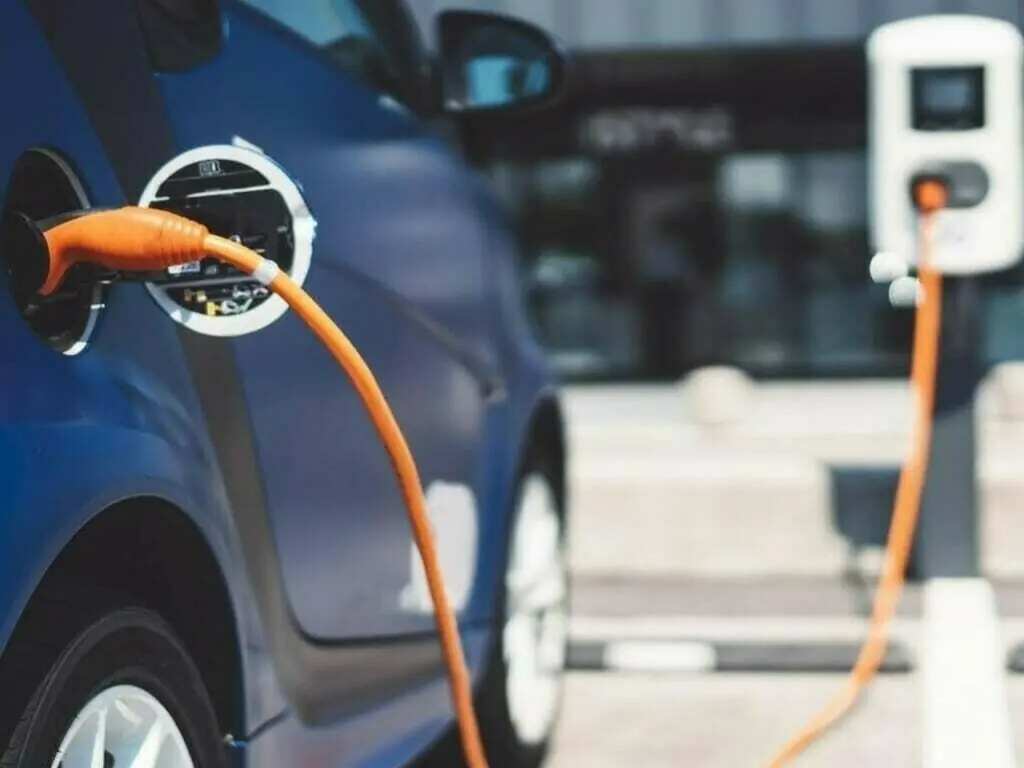
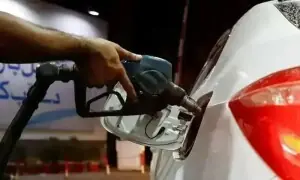
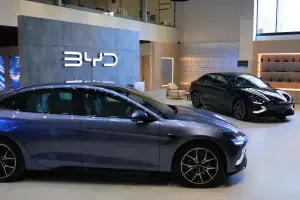
ISLAMABAD: The government has introduced a carbon levy on fossil fuels, proposed additional taxes on conventional vehicles, announced financial incentives for electric vehicles (EVs), and pledged support for the development of EV charging infrastructure.
Leading experts, however, have questioned the government’s ambitious targets to accelerate the transition from petrol- and diesel-powered vehicles, arguing that one fundamental question remains unanswered: who will finance the shift?
The government’s commitments under the IMF’s Resilience and Sustainability Facility (RSF) and the New Energy Vehicles (NEV) Policy 2025–30 provide a broad framework for cleaner transport. Together, they introduce a carbon levy on fossil fuels, propose higher taxation on conventional vehicles, promise incentives for electric vehicles (EVs) and envisage public support for charging infrastructure.
On paper, these measures complement one another. Revenue raised from carbon-intensive fuels and internal combustion engine vehicles is expected to encourage cleaner alternatives. In practice, however, Pakistan has yet to establish a transparent mechanism linking the money it collects with the infrastructure and incentives it promises.
That distinction matters because the IMF’s roughly USD 1.4 billion RSF is a reform programme — not a dedicated fund to purchase EVs or build charging stations. It supports policy reforms, including carbon pricing, climate budgeting and transport-sector reforms, but Pakistan must still determine how the transition will be financed and implemented, they said.
The RSF requires Pakistan to introduce a carbon levy through the petroleum development levy framework and to strengthen incentives for EV adoption. It also recognises the need to protect lower-income households from higher fuel costs through targeted social protection. Separately, the reform package proposes using additional levies on conventional vehicles to help finance EV incentives, creating a broadly revenue-neutral approach.
The principle is sensible. Those generating higher emissions should contribute towards cleaner alternatives. But such a system works only if the revenue collected and the spending it finances are clearly connected.
The government should disclose how much these levies are expected to generate, how much will be allocated to EV programmes and how the funds will reach consumers, manufacturers and charging infrastructure.
The financing gap becomes more apparent when viewed against the scale of Pakistan’s ambitions. The NEV Policy targets 30 percent of new vehicle sales by 2030, more than 2.2 million new-energy vehicles during the policy period, and around 3,000 public charging stations.
Achieving those targets requires substantial investment. Charging stations need land, equipment, grid connections, and power-system upgrades. Manufacturers require capital to expand local production and supply chains. Consumers need affordable financing because EVs generally have higher upfront costs despite lower operating expenses. Banks, insurers, and regulators must also adapt to an emerging market with new technologies and risks.
The policy acknowledges some of these challenges by proposing viability-gap funding for charging stations in commercially unattractive locations. This could help overcome the familiar problem where consumers hesitate to buy EVs because charging stations are scarce, while investors hesitate to build charging stations because there are too few EVs.
But viability-gap funding is only one piece of the puzzle. The government must define how much support will be available, who will qualify, how projects will be selected, and whether assistance will take the form of grants, concessional loans, guarantees, or blended finance. Competitive bidding, transparent eligibility criteria, and public disclosure of supported projects would help ensure value for money.
They pointed out that consumer financing is equally critical. Pakistan has rightly prioritised electric motorcycles and three-wheelers, which offer the fastest potential gains in fuel savings, lower emissions and reduced oil imports. Yet these are also the most price-sensitive segments.
Purchase subsidies alone will not be enough. Pakistan should complement them with green refinancing facilities, partial credit guarantees, leasing models, battery subscription schemes, and other financial products that reduce upfront costs. Public funds can also serve as first-loss capital to mobilise significantly larger volumes of private investment rather than relying solely on direct subsidies.
The challenge is ensuring a reliable source of financing. The NEV Policy identifies levies on conventional vehicles as a source for EV incentives and charging infrastructure, but it does not guarantee that the proceeds will remain dedicated to those purposes.
If the revenue simply flows into the consolidated budget, it will compete with debt servicing, pensions, defence, energy subsidies, and other fiscal priorities. In a resource-constrained economy, EV financing could easily be squeezed out.
A practical solution would be to create a time-bound, on-budget clean-mobility financing window funded by a defined share of carbon- and vehicle-levy revenues. Such a mechanism would remain subject to parliamentary oversight while providing greater certainty for investors and implementing agencies. It should include periodic reviews and sunset provisions to ensure accountability and flexibility.
The debate has gained urgency following suggestions that additional petroleum-related revenue could instead help reduce the gas sector’s circular debt. While addressing circular debt is important, using climate-related transport levies for unrelated fiscal purposes risks undermining the credibility of the entire reform programme.
Consumers are more likely to accept higher fuel prices if they can see tangible results in the form of charging stations, affordable EV financing, and better public transport. If those outcomes fail to materialise, carbon levies may increasingly be viewed as ordinary revenue measures rather than climate reforms.
Public support should also be carefully targeted. Electric motorcycles, rickshaws, buses and commercial fleets offer greater economic and environmental returns than subsidising high-end imported electric cars. Incentives for local manufacturers should be linked to domestic assembly, component production, technician training, warranties, and after-sales services to strengthen Pakistan’s industrial base.
The electricity system must not be overlooked either. Charging infrastructure requires adequate grid capacity, appropriate tariffs, smart metering and, where feasible, integration with renewable energy. Installing chargers without preparing the power network risks creating infrastructure that cannot operate efficiently.
Finally, implementation will require close coordination among the federal and provincial governments, financial institutions, regulators, and power distribution companies. Tax policy, industrial incentives, transport planning, consumer financing, and electricity regulation cannot operate in isolation.
Transparency will determine whether the policy succeeds. The government should regularly disclose how much revenue is collected from carbon- and vehicle-related levies, how much is allocated to clean mobility, how much is spent, and what results are achieved. Reporting should include operational charging stations, EV financing, private investment mobilised, fuel savings, and emissions reductions.
Pakistan now has policy targets and an IMF-backed reform framework. What it still lacks is a credible financing bridge between the two.
The success of the country’s electric-vehicle transition will not be judged by the number of policies announced. It will be measured by whether Pakistanis can afford EVs, whether they can charge them reliably, whether local industry can manufacture and service them, and whether the transition genuinely reduces petroleum imports and urban pollution.
Until the government clearly demonstrates how those outcomes will be financed, Pakistan’s electric-mobility ambitions will remain stronger on paper than on the road, experts added.
Copyright Business Recorder, 2026







Comments