


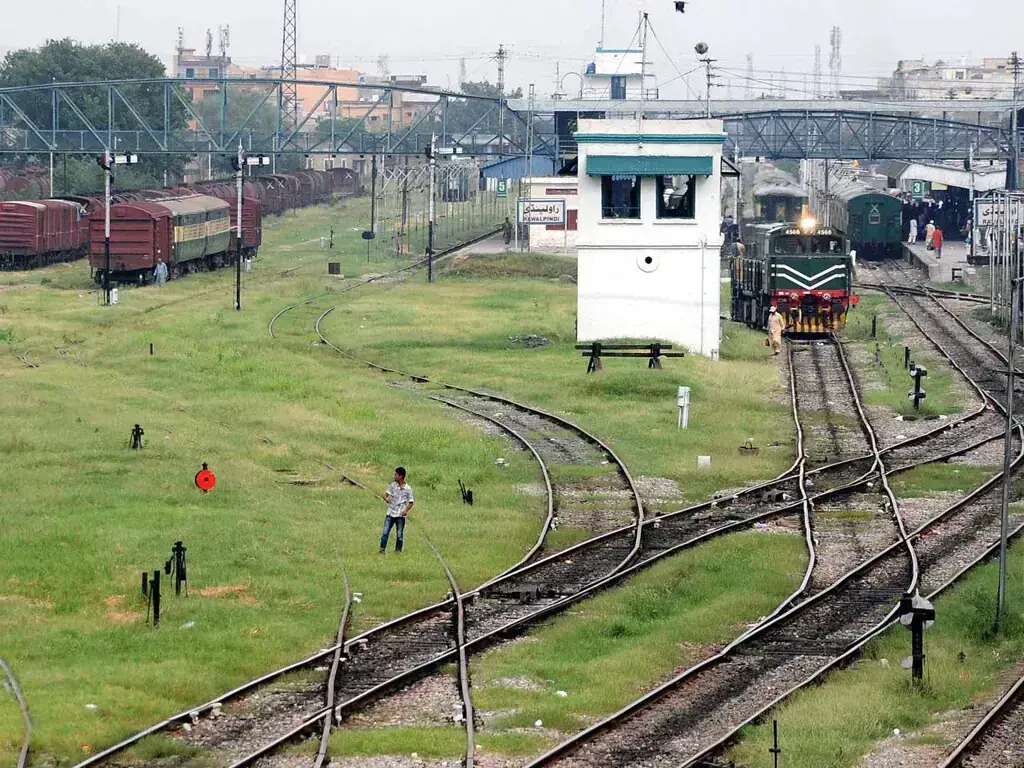
EDITORIAL: The National Assembly’s Standing Committee on Railways has done well to seek a comprehensive report on encroachments along Pakistan Railways’ network.
While the committee’s deliberations also covered recent accidents, the restructuring plan and progress on the Main Line-1 (ML-1) project, the issue of illegal occupation of railway land warrants sustained attention.
Unless this longstanding problem is addressed with seriousness and consistency, efforts to modernise and revive the railways will remain constrained.
According to media reports, over 12,400 acres of railway land have been encroached upon across the country, with Punjab and Sindh accounting for the largest share. The scale of the problem points not merely to administrative shortcomings but to decades of weak enforcement, institutional neglect and, in many cases, political patronage.
The loss is considerable, given that railway land constitutes one of the organisation’s most valuable assets, much of it located in commercially important urban centres. The implications extend well beyond the loss of public property as encroachments impede infrastructure development, complicate
maintenance, create safety hazards and restrict the expansion of rail services. They also deprive Pakistan Railways of an important source of non-fare revenue at a time when the organisation continues to rely heavily on government support. For the railways to become financially viable, the commercial utilisation of their land assets must form part of any credible reform strategy.
The issue assumes added significance in the context of major infrastructure initiatives, including the ML-1 project and the proposed freight corridor from Pipri to Karachi. These projects require secure rights of way and effective protection of railway property.
Delays in recovering encroached land invariably increase costs and complicate execution. Land management, therefore, should be viewed as an integral component of railway reform rather than a peripheral administrative matter.
It is encouraging that Pakistan Railways has geo-referenced all its land boundaries and integrated them into a centralised digital database capable of real-time monitoring.
Such technological measures can strengthen transparency and facilitate the timely detection of new encroachments. However, digital tools can only support, not substitute for, effective governance. Their success will depend on prompt legal action, institutional coordination and the political will to proceed against all illegal occupants without discrimination.
At the same time, enforcement must remain both lawful and equitable. While vulnerable families occupying railway land may require rehabilitation, there can be no justification for allowing organised land grabbers or influential interests to retain possession of public assets.
The parliamentary committee’s directive should, therefore, mark the beginning of a sustained recovery effort rather than another routine reporting exercise.
Protecting railway land is eventually about safeguarding public assets, strengthening institutional credibility and creating the space needed for a modern, efficient and commercially sustainable railway system.
Unless the state demonstrates the resolve to reclaim and protect these strategic assets, the broader agenda of railway reform will remain difficult to realise.
Copyright Business Recorder, 2026


















Comments