


Afghanistan needs 'all hands on deck' including women, UN says
- More than six million Afghans have had to return from Pakistan and Iran since September 2023
UN officials stress that Afghanistan needs both male and female talent to tackle major humanitarian challenges, including mass returns, despite Taliban restrictions on women's rights and employment.
- Mass returns of Afghans from neighboring countries.
- Taliban restrictions on women's education and employment.
- UN officials' calls for women's inclusion and rights.
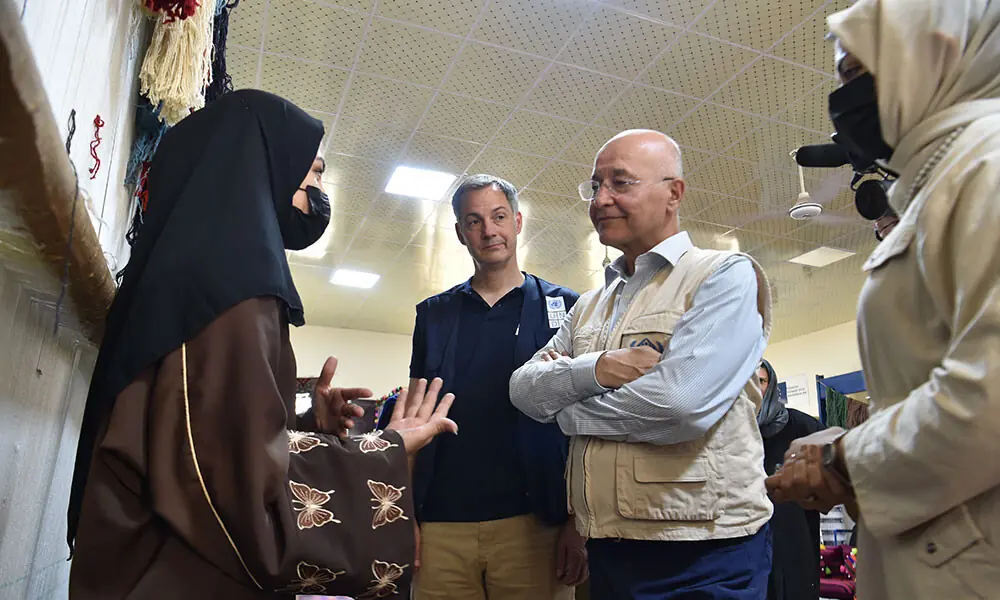
NAHR-E-SHAHI: Afghanistan needs the talents of both women and men to respond to major challenges as millions return to the country grappling with a severe humanitarian crisis, two UN officials said Monday.
“You need all hands on deck, you need all the talents that are available, and that is male talent but also female talent,” said Alexander De Croo, head of the United Nations Development Programme.
He made the remarks during a visit to a carpet weaving centre in northern Afghanistan’s Nahr-e-shahi employing women who have recently returned to the country.
More than six million Afghans have had to return from Pakistan and Iran since September 2023, after their host countries tightened migration policies.
These mass returns to a country already scarred by decades of war pose major challenges in terms of housing, employment and access to healthcare.
De Croo called on the Afghan authorities to ensure “sufficient access to education, employment and entrepreneurship for girls and women”.
The Taliban authorities have imposed multiple restrictions on women, barring them from studying beyond primary school, working in certain professions and going to parks.
Since September 2025, the Taliban government has also banned women from working in United Nations offices, a measure repeatedly condemned by the world body.
Barham Salih, the UN High Commissioner for Refugees who is also visiting Afghanistan, told AFP “that is for sure a major limitation on our ability to deliver for the people of Afghanistan.”
Salih is due to meet with Taliban officials in Kabul in the coming days to urge them to lift the ban on women UN employees.
“Afghanistan deserves support, but for us to be able to do so, there needs to be collaboration and cooperation,” he said.
“We must harness the potential of this society … and that requires men, women, boys and girls be able to be mobilised to contribute to the future of their country.”
Afghanistan’s development “cannot happen without” women and girls, Salih said.
According to a UNICEF report issued in April, restrictions on women’s education and employment cost Afghanistan at least $84 million every year.



















Comments