


Relentless settlement expansion
UN Security Council debate highlighted how Israel's relentless settlement expansion in occupied Palestinian territories, alongside the Gaza humanitarian crisis, severely undermines the two-state solution and regional stability.
- Israel's settlement activity eroding two-state solution prospects.
- Deepening humanitarian crisis in Gaza and civilian suffering.
- UN Secretary-General's warnings on relentless settlement expansion.
- E-1 corridor's impact on West Bank territorial continuity.
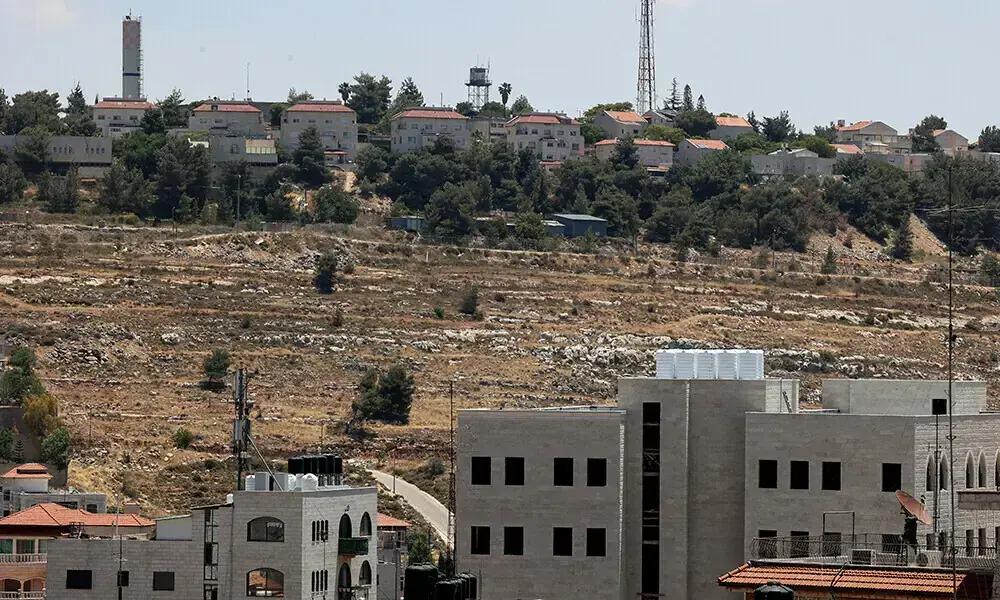
EDITORIAL: The recent debate at the United Nations Security Council underscored a reality that has become increasingly difficult to ignore: Israel’s continued settlement activity in the occupied Palestinian territories is steadily eroding the already limited prospects for a negotiated two-state solution. The UN secretary-general’s report, presented to the Council, reiterated the established position under international law that settlements in territories occupied since 1967 have no legal validity. Yet expansion in the occupied West Bank continues despite decades of international criticism.
Of particular concern are Israeli plans to develop the E-1 corridor, which would sever the territorial continuity of the West Bank and further complicate the establishment of a viable and contiguous Palestinian state. At the same time, the humanitarian crisis in Gaza continues to deepen. Reports of widespread hunger, water shortages, the collapse of healthcare services and mass displacement, point to the scale of civilian suffering. Whatever the security considerations, international humanitarian law requires the protection of civilians and the unhindered delivery of humanitarian assistance. Neither objective is being met.
Pakistan’s intervention in the Security Council deliberations reflected concerns voiced by a broad cross-section of member states, including some European members of the Council. Citing the advancement or approval of 4,750 housing units and a cabinet decision authorising 34 new settlements, Pakistan’s Permanent Representative to the UN, Ambassador Asim Iftikhar Ahmad, warned that the occupied West Bank was witnessing “the largest and deadliest wave” of settlement expansion in recent history. Similar views were expressed by several delegations, underscoring that opposition to settlement expansion extends well beyond the region.
In a quarterly report on the West Bank UN Secretary-General Antonio Guterres also described the expansion of Israeli settlements as “relentless”, warning that it is contributing to the worst displacement crisis in the West Bank since 1967. He noted that the proliferation of settler outposts has fuelled violence, restricted Palestinians’ access to their land and further undermined conditions for peace. Furthermore, he warned that development of the E-1 area would have severe consequences for the territorial contiguity of the occupied Palestinian territory and pose what he described as an existential threat to the two-state solution.
The debate at the Security Council once again highlighted the widening gap between international consensus and developments on the ground. However, repeated expressions of concern have done little to slow settlement expansion or alleviate the humanitarian crisis. If the Israeli policy continues unchecked, the possibility of a negotiated settlement will become increasingly remote, with consequences extending beyond the Israeli-Palestinian conflict to regional stability and the credibility of an already strained rules-based international order. The challenge before the Security Council therefore is not one of principle but of political will.
Copyright Business Recorder, 2026






















Comments