


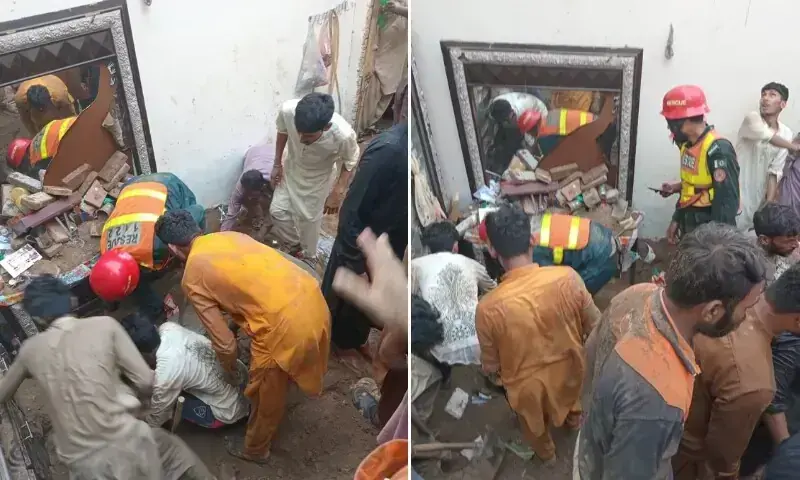
EDITORIAL: The collapse of the roof of a private tuition centre in Lahore’s Kahna area, which claimed the lives of at least 14 children and left many others injured, is not merely a tragic accident. It is a devastating indictment of official negligence, weak regulatory enforcement, and the persistent failure of the state to provide safe, accessible, and quality education to all children.
While the customary expressions of grief from the country’s highest offices are appropriate, they cannot substitute for accountability or meaningful reform. Unless the structural causes behind such tragedies are addressed, condolences will continue to follow preventable disasters.
The most immediate and disturbing question is why children were being taught in a building where construction work was still underway. If labourers were working on the premises when the roof collapsed, as preliminary reports suggest, then those responsible displayed a shocking disregard for the safety of young lives.
Equally troubling is the apparent failure of regulatory authorities to detect or prevent such a hazardous arrangement. Building regulations exist for a reason. Yet their implementation remains sporadic, compromised, or altogether absent, allowing unsafe structures to operate until catastrophe strikes.
This tragedy also exposes a broader governance failure. Roof collapses, especially during the monsoon season, are recurring features of Pakistan’s news cycle. Such incidents repeatedly reveal the consequences of poor construction standards, inadequate inspections, and a culture in which regulations are treated as optional rather than mandatory. If criminal negligence is established in this case, those responsible must be prosecuted without exception.
More importantly, authorities must undertake a comprehensive audit of private schools, tuition centres, and educational facilities operating in residential buildings across the province.
Beyond questions of construction safety lies an equally uncomfortable reality about the country’s education system. The victims were children from an underprivileged neighbourhood whose families had sought supplementary education despite limited means.
Their determination reflects an enduring faith in education as the pathway to a better future. It is also a reminder that millions of parents continue to shoulder responsibilities that the Constitution places squarely upon the state.
Article 25-A guarantees free and compulsory education for every child between the ages of five and 16. Yet the proliferation of informal tuition centres, often operating in unsuitable premises, is itself evidence of gaps in the quality and accessibility of public education.
Ironically, even as the Constitution assigns the responsibility of school education to the state, Punjab government has shifted the operational management of thousands of public schools to NGOs, private operators, and education foundations.
While partnerships may have a role, outsourcing cannot become a substitute for public responsibility. Education is not simply another service to be delegated; it is a constitutional obligation requiring sustained public investment, effective regulation, and unwavering oversight.
The children who lost their lives in Kahna were failed long before the roof collapsed. They were failed by unsafe construction practices, lax enforcement, and an education system that left their families with few viable alternatives. Their deaths must become the catalyst for reforms that place children’s safety and their right to quality education above administrative convenience and official complacency.
Copyright Business Recorder, 2026















Comments