


The cost of impunity
Punjab Police admitted "criminal negligence" after mistakenly killing a child and injuring family members, sparking outrage. The incident highlights a deeper issue of normalized lethal force and institutionalized extrajudicial killings.
- Police admission of "criminal negligence" in a child's death.
- International scrutiny influencing official police accountability.
- Systemic issues with police "encounter-based" killings.
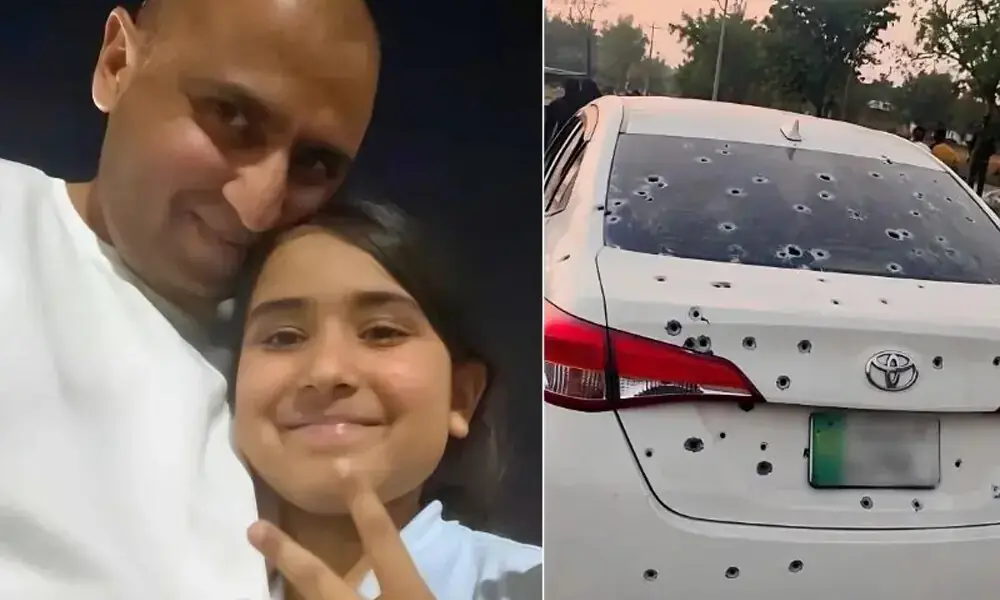
EDITORIAL: The unusually apologetic tone adopted by senior Punjab Police and Crime Control Department (CCD) officials at Thursday’s press conference reflected the gravity of a tragedy that has shocked the country.
Acknowledging that CCD personnel had mistakenly opened fire on a family vehicle in Chakwal, killing nine-year-old Hania and injuring her father and brother, the officials described the incident as a result of “criminal negligence” and inadequate training. They promised an independent investigation and assured the public that those responsible would be held to account. Yet while the admission of wrongdoing is welcome, the explanations offered raise far more questions than they answer.
The official claim that the tragedy stemmed primarily from shortcomings in training is difficult to accept as a complete explanation. Training deficiencies may have contributed to an officer’s failure to assess the situation correctly, but they do not explain why lethal force was used against a civilian vehicle on the basis of suspicion alone. Such conduct points to a deeper problem: a policing culture in which the use of deadly force has become normalised, often at the expense of caution, verification and lawful arrest.
No surprise, therefore, that this level of official contrition emerged only after intense public outrage and international scrutiny. The victim was an Australian citizen, and Australian Prime Minister Anthony Albanese had publicly called for a transparent investigation into the killing. It is difficult to avoid the conclusion that the response would have been far less forthcoming had the victim been an ordinary Pakistani child whose death attracted no international attention. Needless to say, accountability should never depend on citizenship, media coverage or diplomatic pressure. Every victim of unlawful state violence deserves equal justice.
The Chakwal tragedy must also be viewed against the backdrop of longstanding concerns regarding the CCD’s encounter-based approach to crime control. In Punjab alone, at least 924 suspects were killed in 670 documented encounters led by the CCD between April and December 2025. Several suspects have been killed in various “encounters” across the province in the current year. Human rights organisations have repeatedly questioned the large number of suspects killed in police encounters across Punjab and the striking disparity between suspect and police casualties. Such figures suggest extrajudicial killings have become institutionalised rather than remaining exceptional responses to genuine threats. The basic issue requiring clarity is whether law enforcement agencies have been given the freedom to rely on lethal force where arrest, investigation and prosecution should be the norm.
Public safety cannot be achieved by bypassing the justice system. Due process is not an obstacle (contrary to a familiar grumble that the courts easily let suspects walk free) to effective law enforcement; it is the foundation of legitimate policing. The true measure of justice is not how many suspects are killed but whether the state respects the legal rights and human dignity of every individual it encounters. Little Hania’s death is a heartbreaking reminder of the cost of abandoning that principle. If any lasting lesson is to emerge from this tragedy, it must be a renewed commitment to accountability, the rule of law and the simple proposition that no one should be deprived of life without due process.
Copyright Business Recorder, 2026





















Comments