


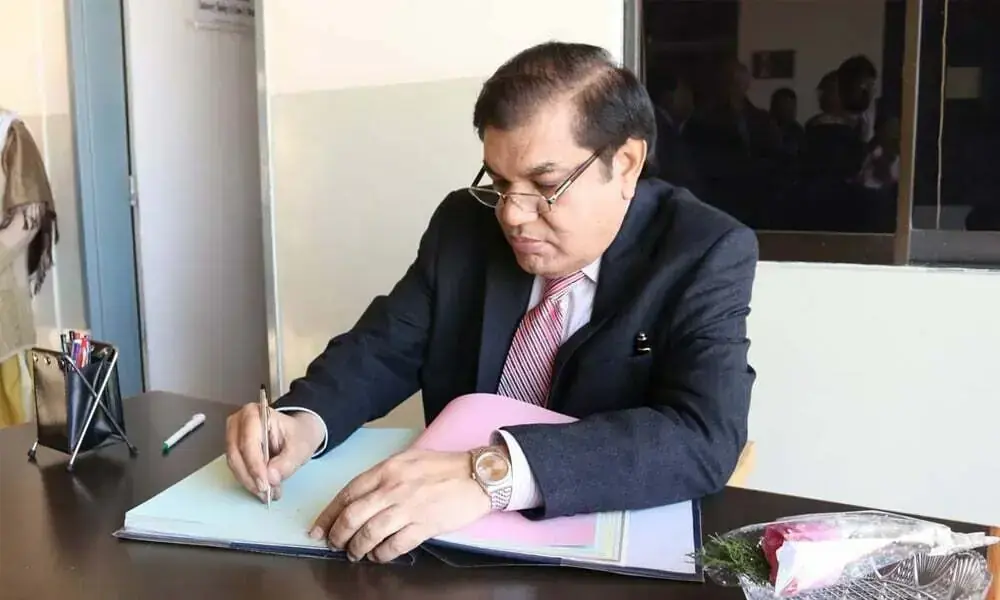
KARACHI: Mian Zahid Hussain, President of the Pakistan Businessmen and Intellectuals Forum (PBIF), President of the All Karachi Industrial Alliance (AKIA), Chairman of the National Business Group Pakistan (NBG) and Chairman of the FPCCI Policy Advisory Board has emphasized that there is no alternative to economic revival other than reducing reliance on imports and providing incentives to the export sector on an emergency basis.
He said that the tax burden on industries had surged to an unbearable level of over 60 percent, demanding that “this burden be reduced to a maximum of 40 percent in the upcoming budget” to enable the local industries to compete effectively in the global market.
The business leader said that the industrialists had informed the prime minister that additional burdens, such as the Super Tax, constituted a major hurdle to industrial growth in the current economic scenario.
He underscored the urgent need to simplify the tax regime in the federal budget to make it business-friendly, thereby restoring investor confidence.
He added that rationalizing energy tariffs and reviewing contracts with the Independent Power Producers (IPPs) were inevitable measures required to bring down the soaring cost of production.
Mian Zahid Hussain said that the business community had high expectations from the Federal Budget 2026-27, hoping that the government would take practical steps to protect local industries while simultaneously honoring its agreements with the IMF.
He said he was confident that if the government incorporated into the budget document the demands for the restoration of the Final Tax Regime (FTR) for exporters and a rational reduction in taxes these measures could support export-led recovery and sustainable growth.
He said that this consultation came at a critical juncture when the country urgently required a coordinated strategy to boost exports and stabilize the foreign exchange reserves.
Mian Zahid Hussain said the business community warmly welcomed the prime minister’s initiative to engage in a direct consultative process.
He hoped that the economic team under the prime minister’s leadership would integrate these proposals into the budget document to accelerate industrialization, generate employment opportunities, and anchor the economy on sustainable foundations.
He referred to the recent meeting between the prime minister and several business leaders as a highly encouraging development towards economic stability and industrial growth.
Mian Zahid Hussain stated that during the meeting, the FPCCI leadership and business representatives candidly discussed the severe macroeconomic challenges facing the country and presented concrete proposals to the prime minister for the promotion of trade and industry.
He said that the trade deficit had reached a staggering USD32 billion during the first 10 months of the current fiscal year, while the ratio of exports to imports had witnessed an alarming decline. Furthermore, Pakistan’s economy had been facing immense pressure due to the ongoing US-Iran war.
Copyright Business Recorder, 2026





















Comments