


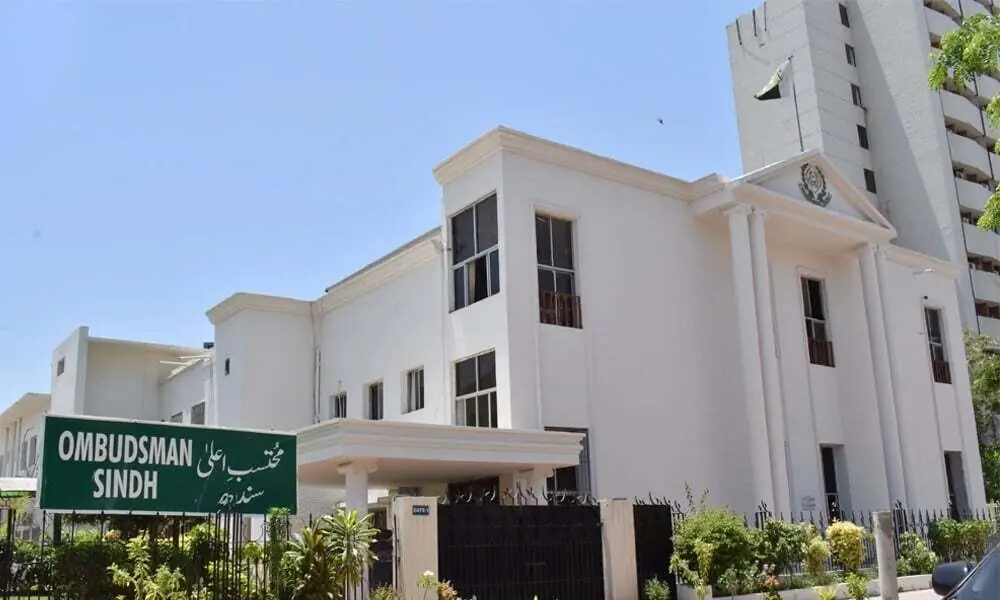

KARACHI: Sindh Ombudsman’s secretariat received over 25,000 public complaints during 2025, marking a sharp increase in citizens number seeking administrative justice, while providing relief in thousands of cases and securing financial benefits worth over Rs4.29 billion for affected individuals, says Ombudsman’s annual report.
Sindh Ombudsman Dr Sohail Rajput presented the Annual Report 2025 to Sindh Chief Minister Syed Murad Ali Shah at the Chief Minister’s House, on Tuesday.
According to the report, the Ombudsman’s office received 25,217 complaints during the year, representing a 236 percent increase compared with the average of approximately 7,500 complaints annually in previous years. Of the total complaints received, 8,854 were disposed of after preliminary scrutiny, while 16,363 were admitted for formal investigation.
The institution decided 12,591 cases after investigation and provided relief in 8,789 cases, resulting in financial benefits of Rs4.29 billion for complainants.
The sharp rise in complaints was attributed largely to increased public awareness, expanded outreach and the growing use of digital complaint mechanisms introduced by the Ombudsman’s office.
A key feature highlighted in the report was the success of the institution’s Complaint Management System (CMS), a web-based platform designed to facilitate online complaint registration and case tracking. By March 31, 2025, more than 7,611 complaints had been registered through the system. The platform allows citizens to file complaints online, monitor case progress in real time and receive timely updates, contributing to greater transparency, accountability and institutional efficiency.
The report showed that local government institutions generated the highest number of complaints, with around 10,000 cases lodged against union councils and town committees. Other departments receiving significant numbers of complaints included the Revenue Department (3,345), School Education and Literacy Department (2,261), Police Department (1,965), Karachi Water and Sewerage Corporation (1,685), Karachi Metropolitan Corporation and former district councils (1,510), Irrigation Department (604), Accountant General Sindh (598), Health Department (554), and Public Health Engineering and Rural Development Department (521).
To improve access to justice, the Ombudsman’s office organized 423 open forums and public hearings at union council and tehsil levels across the province. It also conducted 120 awareness sessions in schools and colleges, helping resolve 2,660 complaints informally and expanding outreach to remote and underserved communities.
Digital transformation remained a major focus during the year. The office redesigned its website, strengthened its presence on social media platforms including Facebook, TikTok, YouTube and LinkedIn, and upgraded its mobile application. In addition, approximately 31 million public awareness SMS messages were sent to citizens explaining complaint registration procedures and available grievance redressal mechanisms.
The report also highlighted the expansion of the Ombudsman’s Brand Ambassador Programme, implemented in partnership with several universities, including NED University of Engineering and Technology, IBA Sukkur, SZABIST, Hamdard University, Sindh Madressatul Islam University, Salim Habib University and the University of Karachi. Under the initiative, students were selected to help promote public awareness about the institution’s services.
The Ombudsman’s internship programme also continued during 2025, providing practical training to 32 undergraduate students throughout the province on complaint resolution procedures and institutional operations.
To strengthen legal assistance and public outreach, the office signed memorandums of understanding with several civil society organisations, including Transparency International Pakistan, HANDS Welfare Foundation, Legal Aid Society Pakistan and Helping Hand for Relief and Development. The partnerships focus on complaint referrals, legal support and awareness campaigns, particularly for vulnerable communities.
The report noted the establishment of two permanent committees dedicated to addressing issues faced by persons with disabilities. The committees are tasked with monitoring implementation of the five-percent employment quota in public and private sectors and promoting inclusive education for children with special needs.
Among new initiatives, the Ombudsman’s office established a Climate and Disaster Justice Unit (CDJU) in 2025 to address complaints arising from environmental challenges and natural disasters, providing a specialised platform for grievance redressal in climate-related matters.
The report also highlighted international recognition received by the institution. Dr. Rajput was elected to the Board of Directors of the International Ombudsman Institute and appointed Vice Chairman of the United Nations Ombudsman Working Group, reflecting the growing global profile of Pakistan’s ombudsman institutions.
Chief Minister praised the Ombudsman’s performance and emphasized the importance of accessible and affordable justice mechanisms in strengthening public trust in government institutions.
“Citizens should know that whenever they face difficulties with a public institution, there is an independent forum available to hear their grievances and provide free and timely justice,” the chief minister said.
He reaffirmed the provincial government’s support for initiatives aimed at promoting transparency, accountability and improved public service delivery, saying the statistics represented not merely numbers but thousands of citizens whose grievances had been heard and resolved.
“The growing public outreach of the Ombudsman’s office and its effective use of technology are fully aligned with our governance agenda and contribute to stronger institutional oversight and improved public administration,” Shah said.
Copyright Business Recorder, 2026

























Comments