


Upcoming budgets: PUASA urges federal, Punjab govts to prioritise higher education sector
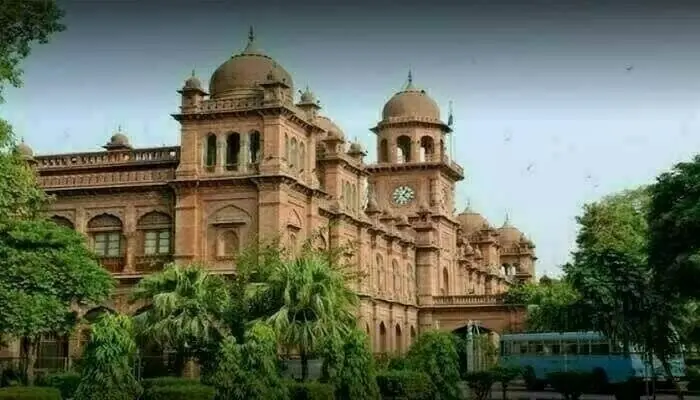

LAHORE: The President of the Punjab University Academic Staff Association (PUASA), Prof Dr Amjad Abbas Khan Magsi, has urged the federal government and the Punjab government to prioritise the crisis-ridden higher education sector in the upcoming Federal and Provincial Budgets for 2026–27, warning that continued neglect of public universities poses a serious threat to the country’s intellectual and economic future.
Speaking to the Daily Business Recorder, Dr Magsi said that Pakistan’s public universities are caught in a deepening financial bind, with government funding effectively frozen since 2018 even as enrolment figures, inflation, and operational costs have continued to rise. “Investment in education is not an expense — it is a strategic commitment to the stability and development of the nation,” he said, endorsing the demands formally presented by the Federation of All Pakistan Universities Academic Staff Associations (FAPUASA) to both tiers of government.
Dr Magsi pointed out that Pakistan’s approximately 160 public sector universities currently serve more than 1.62 million students, accounting for over 80 percent of the country’s total university enrolment. Yet, in the Federal Budget 2025–26, against a total outlay of Rs 17.573 trillion, the recurring grant for higher education stood at a mere Rs 66 billion — a figure that has seen no meaningful increase in nearly eight years despite the sector’s sustained growth and the relentless pressure of inflation.
He expressed serious concern that Pakistan’s total public expenditure on education, at between 1.5 and 1.9 percent of GDP according to UNESCO’s 2024 figures, remains among the lowest in South Asia and far below the global average of 4.48 percent. The share allocated specifically to higher education, he noted, falls below one percent of GDP. The consequences of this chronic underfunding, he argued, are visible in the deteriorating quality of teaching, research, academic infrastructure, and institutional capacity across public universities. By comparison, Bangladesh allocates around two percent of its GDP to education, Iran approximately 2.8 percent, Malaysia 3.5 percent, and India more than four percent, while China, South Korea, and the United States each invest close to six percent. Dr Magsi called on the government to commit to progressively raising education spending to at least four percent of GDP in the short term, as recommended by UNESCO.
On the question of faculty compensation, Dr Magsi demanded the immediate restoration of the income tax rebate for university teachers and researchers, describing its removal as a blow to both the livelihoods of academics and the state’s own commitment to fostering research and scholarship. The rebate, he recalled, had been incrementally cut from 75 percent to 25 percent before being abolished altogether, sharply reducing the take-home salaries of faculty members who already earn less and receive fewer allowances than many other professional groups in the public sector. He called on the Federal Government to restore the rebate without further delay, stressing that it represented a policy signal, not merely a financial benefit.
Copyright Business Recorder, 2026



















Comments