


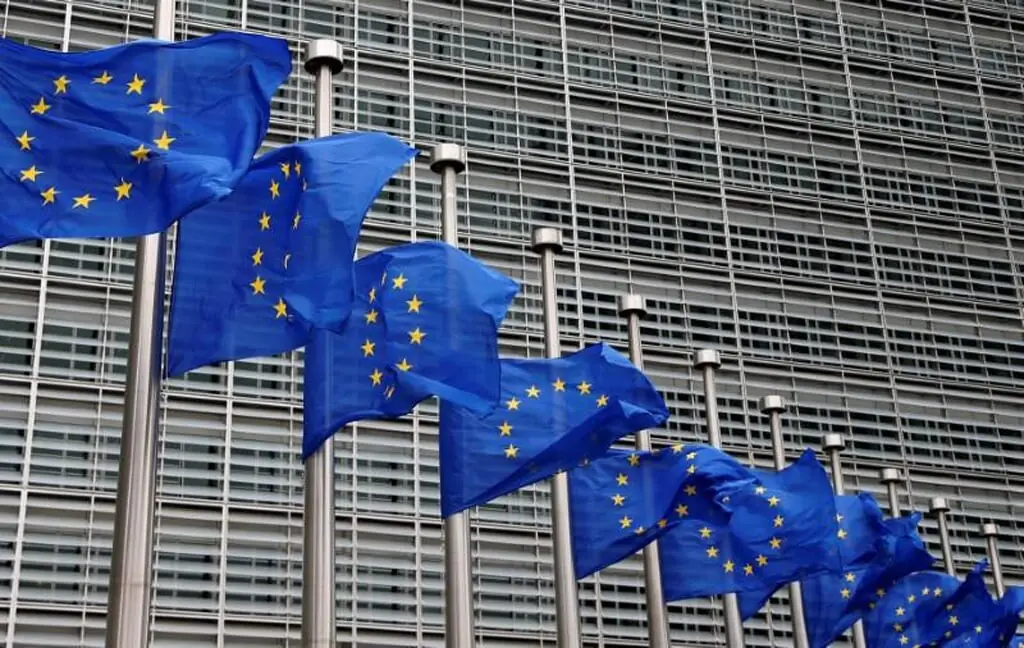

BRUSSELS: The EU’s trade and investment relationship with China is “not sustainable”, the European Commission said on Friday, vowing a stronger response as commissioners discussed how best to shield Europe’s industries from surging Chinese imports.
Commissioners were pitching ideas ahead of an EU leaders’ summit on June 18 to 19, and possible proposals could include forcing EU firms to diversify supply chains or introducing new trade mechanisms to curb China’s access to the EU market in chemicals, metals and clean energy technology.
“As economic and security interests become ever more intertwined, both dimensions will require a more robust and coherent response,” the Commission said.
Any concrete proposals for the response are not expected to be announced until the third quarter of this year.
Western governments are trying to reverse some of the offshoring to China that peaked in the early 2000s, depleting industrial know-how and hubs in their countries, particularly in the US and EU members.
China’s commerce ministry said on Saturday in response that Europe should abide by World Trade Organization rules, uphold free trade and fair competition, and firmly oppose protectionism and unilateralism. “Should the EU insist on unilaterally introducing new trade instruments and imposing discriminatory restrictions, China will resolutely take countermeasures and adopt effective measures to safeguard its own interests,” it said in an online statement.
The Group of Seven (G7) wealthy nations will also tackle trade imbalances and overcapacity at a mid-June summit as China increasingly flexes its dominance on rare earths and other metals that are critical for sectors including defence, tech, energy and automotive industries.
US President Donald Trump has pitched “America First” and, early this year, the EU proposed a new “Buy European” policy and RESourceEU to accelerate the development of critical mineral supply chains in the EU as well as partnerships with mineral-rich countries from Central Asia to Australia and Brazil.
China’s Foreign Ministry accused the EU on Thursday of using trade data selectively to justify claims of imbalances, and it has repeatedly threatened “strong countermeasures” should the EU adopt “Buy European” and revised tech sovereignty policies. China rejects the notion that its trade practices are unjust.
Europe’s industry faces a tougher climate than US rivals, constrained by higher energy costs and stricter regulation.
Industry Commissioner Stephane Sejourne said this week he wants the bloc’s existing trade tools such as import duties and quotas to be used “more systematically” across sectors, rather than targeting specific companies or materials.
The EU has tried to curb some Chinese imports, with mixed results. The bloc imposed tariffs on heavily subsidised Chinese electric vehicles, but not hybrid models. Hybrids accounted for nearly 40 percent of new car registrations so far this year and China’s market share in Europe continues to rise.
While the Commission is keen to adopt a tougher stance, it will have to navigate differences between France and Germany to pass major legislation.
“Paris argues that Europe’s open market is absorbing the combined effects of Chinese subsidies and US protectionism,” Carsten Nickel, deputy research director at Teneo, wrote in a report.
“Germany’s position is more conflicted,” Nickel said, with concerns about mounting pressure on German manufacturing constrained by the deep dependency of big industrial groups on China’s market.


















Comments