


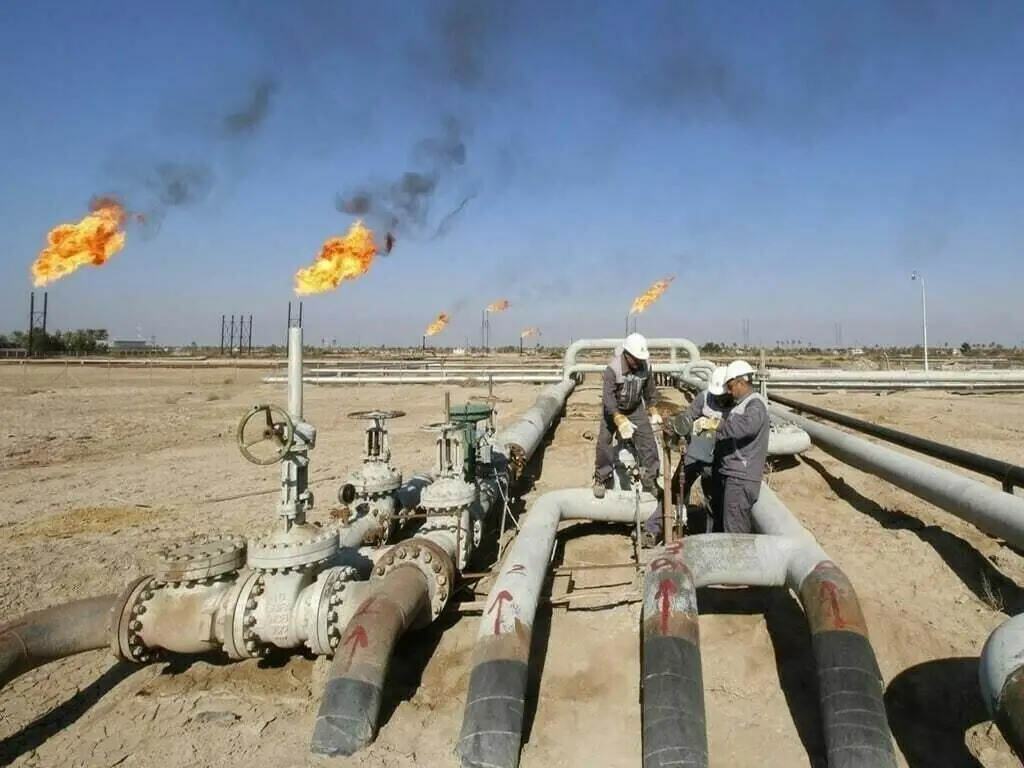
Pakistan’s gas sector is no longer facing a temporary imbalance. It has entered a structural decline.
The continued failure to reform SNGPL and SSGC is damaging industrial competitiveness, discouraging exploration investment, increasing LNG dependence and weakening Pakistan’s long-term energy security.
For years, policymakers treated the gas crisis as a supply shortage problem. It is not. The deeper problem is that the structure of the gas market itself which no longer works.
SNGPL and SSGC continue functioning simultaneously as monopoly buyers, monopoly sellers, transporters, distributors, subsidy vehicles and warehouses for circular debt. This structure was built for a different era — one in which domestic production was rising, indigenous gas was cheap and industrial demand was continuously expanding.
Pakistan now faces declining indigenous production, expensive RLNG imports, shrinking industrial throughput and severe financial stress across the energy chain. Yet the institutional structure has barely changed. The most dangerous consequence is declining throughput.
Industrial consumers are steadily reducing dependence on pipeline gas because tariffs have become unaffordable and unpredictable. Businesses are shifting toward solar, coal, biomass, furnace oil and self-generation because pipeline gas is no longer viewed as commercially reliable.
This destruction of demand has been accelerated by misguided policy.
The wrongly calculated and irrational levy imposed on captive power plants effectively priced many industrial users out of the gas system. Instead of preserving industrial throughput and export competitiveness, policy moved aggressively to force industry away from gas consumption.
The result was predictable: industrial consumers reduced off-take, switched fuels or invested in alternatives altogether. This has inflicted severe damage on the economics of the pipeline system.`
Pakistan’s gas infrastructure carries enormous fixed costs. Pipelines, compressor stations, maintenance, debt servicing and staffing costs do not disappear simply because fewer molecules move through the network. Instead, these costs are spread over smaller and smaller gas volumes.
The result is a classic utility death spiral: lower throughput leads to higher tariffs, higher tariffs reduce demand further and declining demand pushes tariffs even higher.
The data increasingly reflects this deterioration.
SSGC’s average gas throughput reportedly declined from roughly 841 MMCFD to around 789 MMCFD within a year — a decline of more than 6 percent. Captive power demand has also weakened materially, with captive power’s share of demand reportedly falling from roughly 21 percent to 19 percent.
SNGPL’s tariff petitions similarly show a shrinking sales base despite rising revenue requirements. Recent projections indicated sales volumes of roughly 301,157 BBTU even as the utility sought sharply higher revenue recovery.
This is the core problem: the fixed costs of the system are being recovered from a shrinking and increasingly stressed customer base.
As throughput falls, the Sui companies continue attempting to recover infrastructure costs, UFG losses, financing costs, RLNG obligations and historical shortfalls through a shrinking customer base.
Consumers increasingly face the absurd situation where service quality weakens, industrial competitiveness deteriorates and supply reliability becomes uncertain, yet tariffs continue rising.
The diversion of imported LNG away from industry toward the domestic sector has further worsened the crisis.
Pakistan originally imported LNG primarily to support industrial growth, efficient power generation and economic expansion. Instead, increasingly large volumes are being diverted toward low-paying and heavily subsidised domestic consumption. The financial consequences are enormous.
Imported LNG is dollar-linked and significantly more expensive than legacy domestic gas. Diverting LNG into heavily subsidised sectors creates massive unrecovered costs that eventually flow back into circular debt, tariff pressure and utility shortfalls.
The yearly economic burden of this diversion likely runs into hundreds of billions of rupees once subsidy gaps, financing costs, system losses and unrecovered receivables are considered.
At the same time, local gas fields are increasingly being curtailed because the system cannot absorb available domestic production efficiently while LNG obligations continue.
This may be the most irrational aspect of the entire structure.
Pakistan is simultaneously:
• importing expensive LNG,
• suppressing industrial demand,
• curtailing local production, and
• weakening exploration incentives.
No rational energy market operates this way.
The gas companies’ compensation framework worsens the problem.
SNGPL and SSGC largely operate under a cost-plus return-on-assets model. In practice, the utilities recover costs and earn regulated returns on their asset base regardless of whether throughput rises or falls.
This creates distorted incentives. The system rewards ownership of infrastructure and cost recovery rather than throughput growth, efficiency, customer retention or aggressive loss reduction.
The problem is compounded by uncontrolled Unaccounted-for Gas.
UFG includes theft, leakages, illegal connections, metering inaccuracies and weak recoveries. In some high-loss regions, UFG levels have reportedly exceeded 30 percent. Reportedly, gas supply systems around the world have UFG in the range of 2 to 4 percent while Pakistan’s system has consistently reported UFG at well over 12 percent. The cost of the additional UFG if priced at LNG which is imported instead runs into billions of dollars. This is a problem that is more severe than the power sector line losses but rarely highlighted or talked about.
Pakistan has discussed reforming the Sui companies for more than a decade. Multiple studies and restructuring proposals were prepared by international consultants and organisations including PwC and multilateral institutions.
These studies repeatedly highlighted the need for:
• unbundling transmission and distribution,
• creating a neutral transmission operator,
• introducing third-party access,
• reducing UFG,
• implementing wheeling frameworks, and
• moving toward market-based pricing.
In 2020, proposals were seriously examined for creation of a National Gas Transmission Company operating as a common carrier while allowing competitive supply through open access.
Reforms repeatedly failed because of political patronage as new domestic connections equal votes, monopoly control was preserved, circular debt remained unresolved, political pricing continued and institutional incentives were never fundamentally changed.
Pakistan repeatedly attempted tariff reform without structural reform.
Reality is that no amount of administrative tariff adjustment can repair a fundamentally broken market structure.
Perhaps the greatest long-term damage from delayed reform is occurring upstream.
Pakistan’s exploration sector is steadily losing investment appetite because the downstream market structure no longer guarantees commercially reliable payments.
Exploration is among the highest-risk industries in the economy. Companies invest billions in seismic surveys, drilling campaigns, appraisal wells and infrastructure years before earning revenue.
Investors therefore require confidence that discovered gas can be sold at commercially viable prices and paid for on time.
Under the present structure, producers remain dependent on financially stressed monopoly buyers suffering from delayed recoveries and circular debt.
The consequences are predictable:
drilling activity slows, marginal fields remain undeveloped, enhanced recovery projects are postponed and frontier exploration weakens.
Every undeveloped field represents:
• lost domestic production,
• lost investment,
• lost employment,
• lost tax revenue, and
• greater dependence on imported LNG.
Pakistan still possesses substantial untapped hydrocarbon potential such as in the Former Block 28 acreage, tight gas, deeper conventional formations, offshore acreage and marginal reserves that could become commercially viable under rational pricing structures.
But no serious investor will continue taking geological risk where payment itself remains uncertain.
Pakistan is therefore not merely losing production today. It is losing future production capacity that may take years to rebuild.
This is why third-party gas sales are central to reform.
Under a liberalised framework, producers, LNG suppliers and competitive suppliers would be allowed to sell gas directly to consumers while paying regulated transportation charges to pipeline operators.
Instead of:
Producer→SNGPL/S SGC→political allocation→delayed payment the system becomes:
Producer→Buyer→Pipeline Transport Fee→Delivery
That restores commercial discipline throughout the chain.
Most importantly, it improves:
• payment security,
• financing access,
• exploration incentives,
• throughput utilisation, and
• market transparency.
Pakistan’s gas sector therefore requires structural transformation rather than temporary administrative adjustments.
The reform pathway should include:
• unbundling SNGPL and SSGC,
• creation of a neutral transmission operator,
• regionalisation of distribution,
• aggressive UFG reduction,
• transparent wheeling charges,
• competitive gas supply,
• third-party sales, and
• market-based pricing.
Most importantly, legacy circular debt and historical liabilities must be ring-fenced so they do not contaminate new market participants.
The Sui companies must evolve from monopoly merchants into neutral infrastructure operators. Without this structural reform, tariffs will continue rising, industrial throughput will continue shrinking, exploration investment will remain weak, LNG dependence will grow and circular debt will continue expanding.
This is no longer merely an energy-sector issue. It is becoming a national economic problem affecting exports, employment, investment, foreign exchange and long-term growth potential. The time to act is now.
Copyright Business Recorder, 2026

PUBLIC SECTOR EXPERIENCE: He has served as Member Energy of the Planning Commission of Pakistan & has also been an advisor at: Ministry of Finance Ministry of Petroleum Ministry of Water & Power
PRIVATE SECTOR EXPERIENCE: He has held senior management positions with various energy sector entities and has worked with the World Bank, USAID and DFID since 1988. Mr. Shahid Sattar joined All Pakistan Textile Mills Association in 2017 and holds the office of Executive Director and Secretary General of APTMA.
He has many international publications and has been regularly writing articles in Pakistani newspapers on the industry and economic issues which can be viewed in Articles & Blogs Section of this website.










Comments