


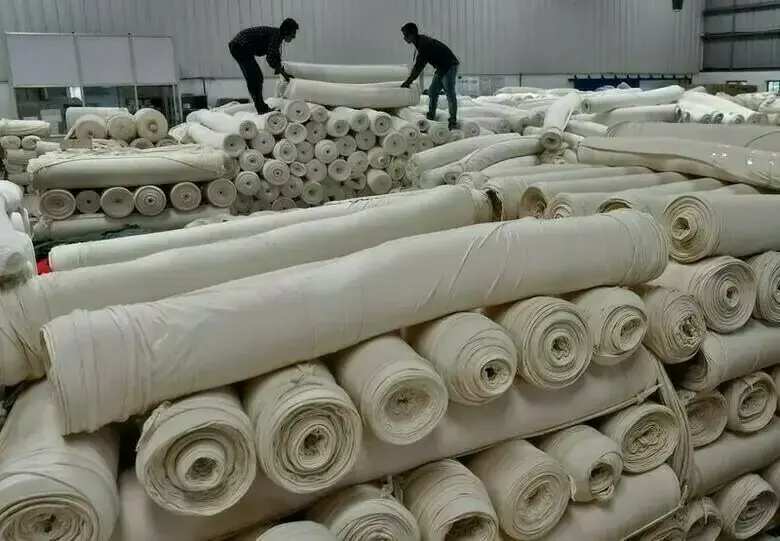

KARACHI: Pakistan’s export industry leaders have accused the federal government of waging an “undeclared war” against exporters through policies that have driven manufacturing and business costs to historic highs, jeopardising industrial growth and national economic stability.
Chairman of Pakistan Apparel Forum Muhammad Jawed Bilwani, said exporters were struggling to remain viable amid intense global competition and domestic constraints that have significantly raised the cost of doing business. He described the situation as an “undeclared war” on the export sector, warning that without corrective measures, continued pressure could lead to factory closures, job losses and reduced foreign exchange earnings.
Bilwani said manufacturing and operational costs have reached record levels due to extremely high electricity, gas and water tariffs, unreliable energy supply, rising wages and escalating overheads.
READ MORE: Working capital: Textile industry seeks enhanced refinance facilities
Frequent power outages and gas shortages, he added, disrupt production schedules, increase costs and undermine the credibility of Pakistani exporters in international markets, particularly in value-added textile and apparel segments.
High interest rates and a tight monetary policy have further constrained the sector by limiting access to affordable financing. According to Bilwani, expensive credit has made working capital and expansion financing unviable, especially for small and medium-sized enterprises that form the backbone of the manufacturing ecosystem.
He noted that new entrants into export markets are declining, while exporting associations have seen their membership base shrink as firms either close down or shift to non-export businesses.
Taxation and liquidity constraints were also highlighted as major challenges. Exporters, he said, face multiple layers of taxation with some of the highest tax rates in the region, while billions of rupees remain stuck with the government in the form of delayed tax refunds.
This has severely strained cash flows and weakened the financial health of export-oriented firms, with Pakistan described as the only country in the region where exporters’ liquidity is held for extended periods for non-export purposes, the chief of apparel forum said.
Energy costs and supply reliability remain a critical concern for value-added exporters who depend heavily on uninterrupted electricity, gas and water.
Tariffs in Pakistan are significantly higher than those in competing countries such as Bangladesh and Vietnam, while frequent outages and gas shortages disrupt production and delivery schedules.
These challenges have contributed to reduced industrial output, layoffs and, in some cases, partial or complete shutdowns of production facilities, as global buyers increasingly shift orders to more cost-competitive markets, he added.
Exchange-rate volatility has added another layer of uncertainty. Sharp and unpredictable rupee-dollar fluctuations complicate pricing, contract negotiations and the cost of imported raw materials and inputs, discouraging long-term export commitments, he said.
Despite being a cotton-producing country, he said, Pakistan increasingly relies on imported cotton and synthetic fibres due to inconsistent domestic production, exposing exporters to global price shocks and currency risks. Although Pakistan’s textile spindle capacity exceeds that of some regional competitors, operational utilisation remains lower, reducing overall efficiency.
Bilwani also pointed to frequent changes in export-related policies, utility tariffs and taxes, as well as the absence of a centralised one-window system, which forces exporters to deal with multiple departments and undermines ease of doing business.
Compliance with international environmental and labour standards has introduced additional costs, while logistics and infrastructure bottlenecks such as high fuel prices, transport disruptions, port congestion and inefficient customs procedures have further eroded competitiveness.
He noted that exporters in competing countries benefit from lower production costs, more stable policy environments and broader trade agreements, attracting major international buyers.
In contrast, Pakistan’s limited trade arrangements and reliance on a few key markets, particularly the EU and US, leave exports vulnerable to external shocks and demand fluctuations. Competing exporters in India also benefit from comparatively stronger logistics and trade frameworks.
Warning of the risk of deindustrialisation, Bilwani said sustained increases in production costs and policy uncertainty could result in the loss of export markets, industrial closures and long-term economic instability.
He called for timely policy interventions to reduce manufacturing costs, ensure reliable energy supply and restore confidence in the export sector, stressing that a sustainable manufacturing base is essential for employment, foreign exchange earnings and long-term economic resilience.
Copyright Business Recorder, 2026












Comments