



Pakistan is paying for electricity it does not use. Through capacity payments, billions of rupees flow annually to power producers regardless of actual consumption, while consumers bear rising electricity tariffs including fixed charges, yet circular debt continues to swell. At the same time, the world is entering an era defined by artificial intelligence—an industry whose most critical input is not just talent or capital, but energy.
This convergence presents Pakistan with a rare strategic opportunity: to transform surplus electricity, particularly from Thar coal, into a globally competitive AI and digital export economy—while simultaneously easing the burden on domestic consumers.
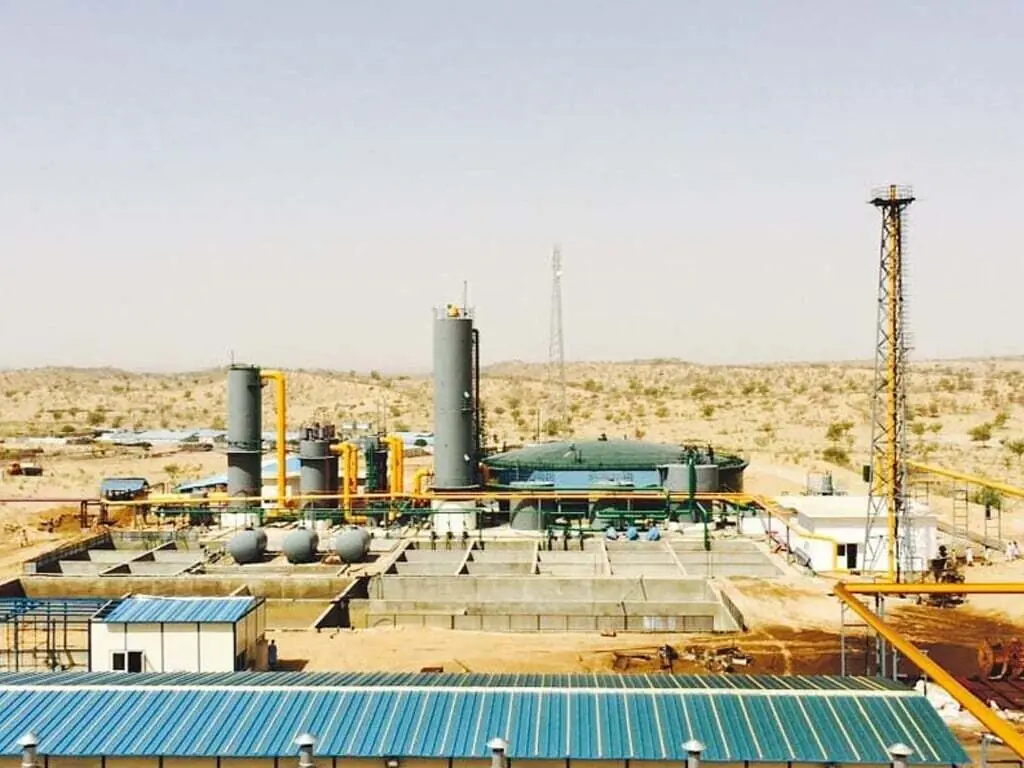
The Thar coal ecosystem already hosts over 3,000 megawatts of mine-mouth, base-load power generation, with potential for further expansion. Unlike imported fuels, Thar offers price stability and one of the lowest marginal costs of electricity in the country. Yet, a portion of this capacity remains underutilized, even as the government continues to pay for it.
Instead of treating this as a burden, Pakistan can convert it into a revenue-generating asset.
The proposal is to develop energy-anchored digital and AI parks, beginning along the Thar transmission corridor and eventually extending to mine-mouth locations. Electricity to these digital parks can be supplied direct without the need for inefficient DISCOs where most of the transmission losses occur.
These parks would offer long-term, competitively priced electricity—ideally in the range of USD 0.05 to USD 0.06 per kWh—under dollar-denominated contracts. This can attract data centers and compute-intensive industries seeking stable and affordable energy.
Even a modest first phase of 100 megawatts can generate USD 150 to USD 200 million annually in export revenues. Over a decade, scaling to 1,000 megawatts or more could yield USD 1.5 to USD 2 billion per year from Thar alone, with national potential reaching USD 3 to USD 5 billion annually as additional zones come online.
However, the real opportunity lies not in selling electricity, but in value addition through compute and artificial intelligence.
Globally, AI infrastructure is becoming energy-constrained. Training large models and running inference workloads require enormous, continuous power. Countries that can provide reliable, low-cost energy will emerge as hubs for AI compute. Pakistan, through Thar, can position itself as one of the most cost-efficient destinations for this rapidly growing industry.
To capture this opportunity, the strategy must evolve across three layers:
Attract international data center operators – One-window Facilitation
The first layer is infrastructure monetization. Pakistan should attract international data center operators by offering power, land, and connectivity through a genuine one-window facilitation system. Initial projects should be located near well-connected nodes such as Matiari, ensuring access to both the national grid and fiber routes linked to Karachi, Pakistan’s primary internet gateway.
Compute ownership – GPU clusters
The second layer is compute ownership. Pakistan must move beyond hosting foreign infrastructure and begin developing its own compute capacity—particularly GPU clusters tailored for AI workloads. This can be achieved through public-private partnerships and incentives for domestic investors. Owning compute ensures that a larger share of value remains within the country.
Tax-free AI-driven export services
The third layer is AI-driven export services. With compute capacity in place, Pakistan can build an ecosystem of AI development, data processing, and digital services—ranging from model training and inference to software platforms and data analytics. At this stage, each unit of electricity generates multiples of its original economic value.
Importantly, this strategy delivers direct benefits to domestic consumers.
By converting surplus capacity into dollar-denominated revenue, the government can recover a portion of its fixed power costs externally rather than loading them onto local tariffs. This reduces upward pressure on electricity prices for households and industry. In addition, improved utilization of base-load plants enhances system efficiency, lowering the overall cost per unit of delivered electricity.
This also enables a more rational solarisation strategy.
Pakistan’s current rooftop solar trend, while beneficial for individual consumers, risks undermining grid economics by shifting costs onto non-solar users and reducing utilization of already-paid-for base-load capacity. A more balanced approach would encourage:
-
Daytime solar adoption for self-consumption
-
Grid integration through net billing rather than excessive net metering
-
Alignment of solar generation with industrial and digital demand
Energy-anchored digital parks can act as anchor consumers, absorbing excess generation and stabilizing the grid. This creates space for solar to grow sustainably without distorting tariffs or increasing inequity among consumers.
Execution will determine success. Fiber connectivity must be treated as critical infrastructure, with a dedicated and redundant corridor linking Karachi to Thar. Policy stability is essential; investors require long-term certainty in tariffs, taxation, and foreign exchange repatriation. Security and governance must be addressed proactively to build confidence among global players.
The geopolitical environment further strengthens Pakistan’s case. As costs rise and uncertainties grow in parts of the Middle East, companies are increasingly seeking alternative locations for digital and AI infrastructure. Pakistan can position itself as a lower-cost, energy-secure, and strategically neutral destination.
The country already possesses the key ingredients: surplus power, a growing IT talent base, and geographic proximity to major markets. What is needed is integration—a coherent framework that aligns energy policy with digital and industrial strategy.
Pakistan has already invested in the energy. The next step is to convert that energy into computation—and that computation into global value.
Transforming idle electrons into AI-powered dollar earnings is no longer just an opportunity. It is a national imperative.
Copyright Business Recorder, 2026
The writer is a former Vice President of KCCI, former Board Member of REAP, and commodities and international trade expert




















Comments