


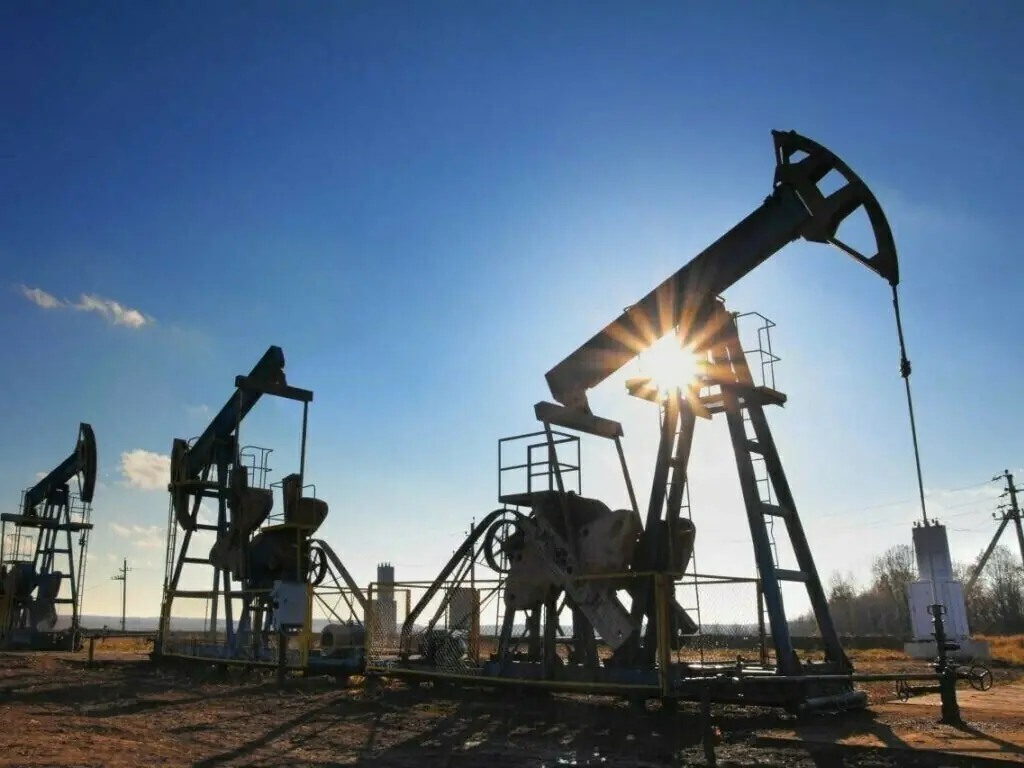
NEW YORK: Oil prices held steady on Wednesday as ongoing worries about supply disruptions offset comments by US President Donald Trump that the war on Iran could be over soon.
A source briefed by Tehran said Iran could consider allowing ships to sail freely through the Omani side of the Strait of Hormuz without risk of attack as part of proposals it has offered in negotiations with the United States, providing a deal is clinched to prevent renewed conflict.
Brent futures rose 14 cents, or 0.1 percent, to settle at USD94.93 a barrel, while US West Texas Intermediate crude rose one cent to settle at USD91.29.
Forty-five days after Iran’s Revolutionary Guards declared the strait closed, effectively shutting in about 20 percent of global oil and LNG shipments, transit through it remains at only a fraction of the 130-plus daily crossings before the war, sources said.
Cumulative Middle Eastern crude and condensate supply losses have reached 496 million barrels to date, said Johannes Rauball, senior crude analyst at Kpler.
The US has enacted a blockade of shipping leaving Iranian ports that its military said has completely halted trade going in and out of the country by sea.
“Recent tracking data shows a small but increasing number of tankers moving through the Strait of Hormuz, even as overall traffic remains sharply below normal levels,” analysts at energy consulting firm Gelber & Associates said.
“The result is a market that is no longer pricing a full-scale outage, but still holding a residual premium as flows recover unevenly rather than snapping back to normal,” the Gelber analysts added.
The US will not be renewing the waivers that allowed the purchase of some Iranian and Russian oil without facing US sanctions, Treasury Secretary Scott Bessent told reporters on Wednesday.
World coping with supply disruptions
Finance ministers from almost a dozen countries led by Britain called on the US, Israel and Iran to implement their ceasefire in full and said the conflict would weigh on the global economy and markets even if it was resolved soon.
Bessent said the US economy will be slower this quarter, but is in good shape and will rebound, adding that oil prices do not appear to be weighing on inflation expectations. Adding to economic uncertainty, Trump threatened to fire Jerome Powell from his separate seat on the US central bank’s Board of Governors if the Federal Reserve chair does not vacate that post as well when his term as Fed chief ends on May 15.
Analysts worry that involving more politics in interest rate decisions could reduce the Fed’s ability to control inflation. Trump wants the Fed to cut rates, which would reduce consumer costs and could boost economic growth and demand for oil.
US import prices increased less than expected in March, though the trend still pointed to firming imported inflationary pressures as the Middle East conflict boosts oil prices and snarls supply chains.
Higher oil prices could lead to a rise in consumer inflation expectations, Chicago Fed Bank President Austan Goolsbee told the Financial Times in an interview, adding the US central bank faces a double danger from the Iran war and Trump’s tariffs.
The International Monetary Fund expects at least a dozen countries to seek new loan programs to cope with surging energy prices and supply chain disruptions caused by the Middle East war.













Comments
Comments are closed for this article.