



BENGALURU: Emerging Asian equities rose on Friday and were set for their best week in more than a decade after a US-Iran ceasefire drew investors back, though doubts over its durability lingered.
The MSCI EM Asia index rose 1.1 percent and was on track for an 8 percent weekly gain, its best since early December 2011. The broader index for global EM stocks was set for its best week since early June 2020 with a 7 percent gain, helped by a 0.9 percent rise on Friday.
Markets rallied during the week after US President Donald Trump agreed to a two-week ceasefire with Iran, but investors remained on edge as traffic through the Strait of Hormuz remained constrained.
Delegations from Tehran and Washington are set to hold talks in Pakistan on Saturday.
“In Emerging Asia, the negative effect so far could be more pervasive than in other geographies, and we believe that the region is unlikely to escape at least some lasting economic drag from persistent supply constraints,” Barclays analysts said in a note.
“The economic scarring from the attacks on energy facilities and ports in Iran, as well as other Gulf nations, could continue to keep supply under stress in Emerging Asia.”
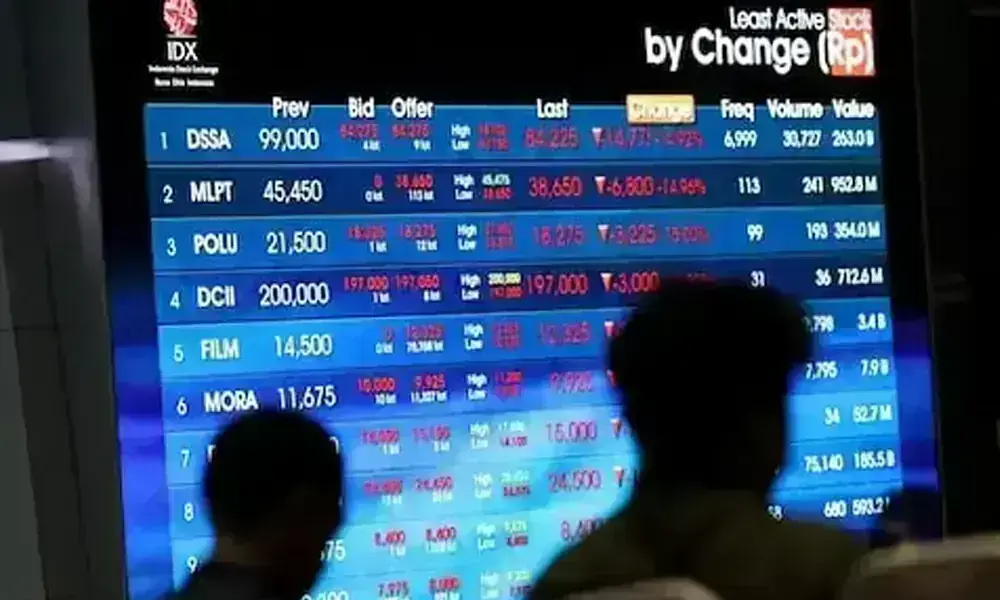
On the day, Indonesia’s Jakarta Composite index rose 2.2 percent, driven by a 17.8 percent gain in petrochemical producer Chandra Asri. It has gained more than 6 percent so far this week, heading for its first weekly rise in seven.
Ernest Chew, Head of ASEAN Equities at BNP Paribas, attributed the recent rise in Indonesian stocks to, among other factors, an improved global sentiment, strong retail participation, and commodity prices that remain a key influence given the country’s exports.
“The sustainability of the rally will depend on corporate earnings delivery and the consistency of domestic policy,” Chew said.
On the other hand, the rupiah slipped further and hit a record low of 17,120 per dollar, set for a weekly loss of around 0.7 percent.
South Korea’s KOSPI advanced 1.4 percent and the won weakened to 1,484.9 per US dollar after the central bank kept its policy interest rate unchanged.
In Southeast Asia, stock benchmarks in Kuala Lumpur and Manila rose about 0.1 percent each, while Singapore equities were flat.
Thailand shares extended gains to a fourth consecutive day, rising 1.1 percent to hover near a six-week high.
Among Asian currencies, the ringgit rose 0.4 percent, retaining the crown for the best-performing currency in the region with a gain of 2.3 percent so far this year.
The majority of analysts polled by Reuters expect the Monetary Authority of Singapore to tighten policy next Tuesday, given the upside risks to inflation from the Gulf crisis.




















Comments