


Iran speaker Qalibaf a key negotiator as talks approach to cement truce
- It would be Qalibaf along with Foreign Minister Abbas Araqchi who will head to Islamabad
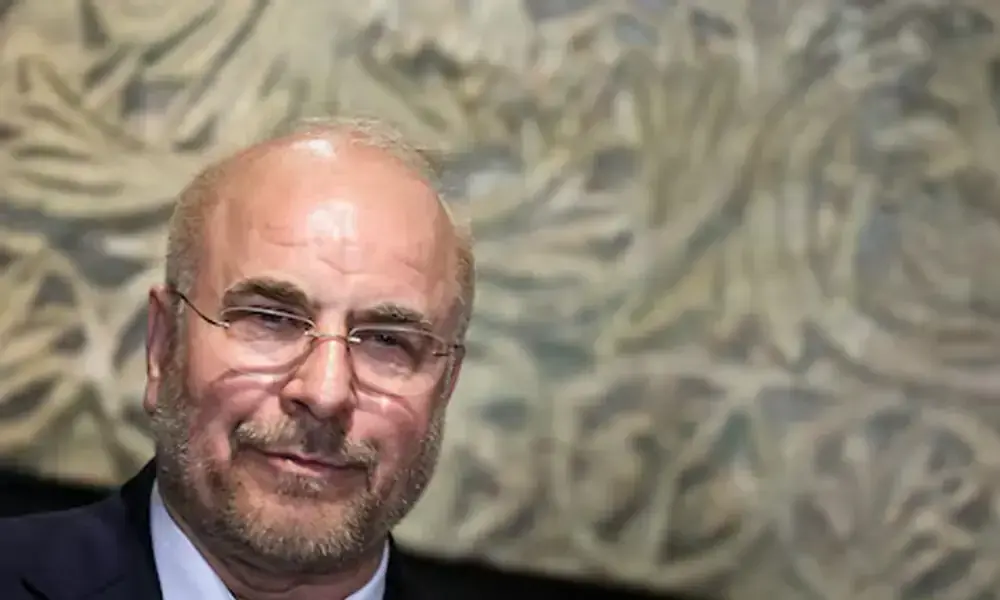

DUBAI: Mohammad Baqer Qalibaf, the speaker of Iran’s parliament who has taken a more central role as Israeli and U.S. strikes pick off the Islamic Republic’s leadership, will be a key player in any negotiations to cement and extend Wednesday’s truce.
Pakistani sources said it would be Qalibaf along with Foreign Minister Abbas Araqchi who will head to Islamabad - which had urged Washington to remove them from any U.S. or Israeli hit list - to lead negotiations with the United States.
With few of Iran’s most prominent figures remaining after a concerted assassination campaign, the former Revolutionary Guards commander, Tehran mayor, national police chief and presidential candidate is now a key node between the political, security and clerical elites.
More than five weeks after the assault on Iran began with the killing of supreme leader Ayatollah Ali Khamenei, the leadership in Tehran is emerging, battered but still standing, from an attritional campaign to outlast its assailants.
Qalibaf combines fiery rhetoric with pragmatism
Qalibaf, long seen as a protégé of Khamenei and a confidant of his son Mojtaba, who has succeeded to the position of supreme leader, has been a leading voice of defiance against Israel and the United States, vowing revenge for their attack.
Addressing U.S. President Donald Trump and Israeli Prime Minister Benjamin Netanyahu after the killing of Khamenei, he promised “such devastating blows that you will be begging”.
“I say to these two dirty criminals and their agents: you have stepped on our red line and you have to pay for it,” he declared in a televised address.
That rhetoric reflects his longstanding position as a fierce disciple of the Islamic Republic’s theocratic system of government, a stance he has also demonstrated through helping to crush displays of internal dissent.
Trump says US will work closely with Iran, discuss sanctions
Yet despite that hardline profile, Qalibaf has also built a reputation as a moderniser and pragmatist, posing during his 2005 presidential run in his military pilot’s uniform for campaign adverts to bolster his image as a professional.
Being able to communicate effectively with both Revolutionary Guardsmen and the clerical leadership may have helped position him as a candidate for talks with Washington as the conflict continued.
Born in the northeastern town of Torqabeh in 1961, Qalibaf was partly shaped by lectures he attended in mosques as a teenager, according to Iranian media, as the 1979 Islamic Revolution gathered steam.
When Iraq invaded Iran months after the ruling shah was ousted, he joined the Revolutionary Guards, a new military unit devoted to upholding the new Islamic system, rising to become a general within three years.
Repeated attempts to become president
Pursuing a career with the Guards after the war ended, he qualified as a military pilot and eventually became head of the Guards’ air force unit.
While with the Guards, he took part in a bloody crackdown on university students in 1999 and joined other commanders in signing a letter to the reformist president, Mohammad Khatami, threatening to oust him if he did not curb protests.
US and Iran agree to truce; Iranian official says strait could open in time for talks on Friday
Khamenei, caught between growing discontent at home and foreign pressure over Iran’s nuclear programme, increasingly turned to security hawks like Qalibaf as the reformist movement ran out of steam.
As police chief, Qalibaf could be ruthless, ordering his forces to fire on protesters in 2002.
He ran for president in 2005, trying to appeal broadly to middle- and lower-income voters. But he was outdone by the firebrand populist Tehran mayor Mahmoud Ahmadinejad, and Khamenei eventually switched his support from his favoured former general to the new man.
Qalibaf continued to seek the presidency, running unsuccessfully in 2013 and 2024, and pulling out of the 2017 race to avoid splitting the hardline vote.
He replaced Ahmadinejad as Tehran mayor, holding the post for 12 years and taking credit for helping suppress months of unrest that rocked the establishment after his predecessor was declared winner of a disputed election in 2009.
He returned to national politics by being elected to parliament and installed as speaker in 2020, securing one of Iran’s most senior posts.



















Comments