


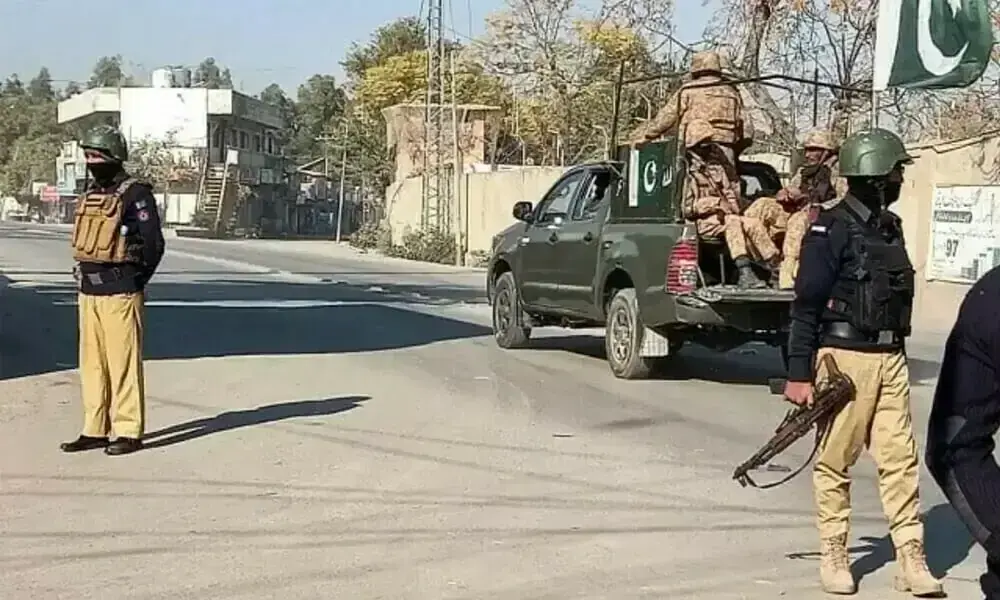
EDITORIAL: The April 3 suicide bombing at a police station in Bannu district of Khyber Pakhtunkhwa, carried out by the Tehreek-e-Taliban Pakistan (TTP), which left five people dead—four from the same family—has once again brought into sharp focus the continuing challenge of cross-border terrorism.
As Pakistan deals with the immediate aftermath of this attack, its representatives are engaged in talks with Afghanistan, hosted by China in Urumqi, aimed specifically at addressing the issue of militant groups operating from Afghan territory. As China’s Foreign Ministry spokesperson recently noted, Beijing has pursued mediation in “its own way,” maintaining close communication with both sides through multiple channels and at various levels, while creating conditions and platforms for dialogue.
Islamabad’s position in entering these talks is clear and narrowly defined. Its three core demands—that Kabul must formally designate the TTP as a terrorist organisation, dismantle its operational infrastructure, and provide verifiable proof of these actions—are grounded in concrete security concerns. By limiting the scope of engagement strictly to counterterrorism and border management, Pakistan has signalled its intent to keep the dialogue focused and outcome-oriented, avoiding broader political questions that could dilute the process.
China’s role as mediator adds an important dimension to the talks. Holding the dialogue in Urumqi, in its Xinjiang region, is not without significance. Beijing has its own concerns about militant groups such as the East Turkestan Islamic Movement (ETIM), which is believed to have a presence in Afghanistan, aligning its security interests with those of Pakistan. Moreover, given its substantial economic investments in Afghanistan and established diplomatic ties with that country, China appears better positioned to act as a facilitator — in contrast to earlier efforts by other mediators that failed to produce an agreement.
The effectiveness of the Urumqi process, however, will depend on the extent to which commitments translate into action. The question of whether the Afghan authorities are prepared to move decisively against the TTP remains central. Given the complexities of internal dynamics and past patterns of engagement, any progress will need to be measured—rightly, as Islamabad emphasises—through verifiable steps rather than statements of intent.
Meanwhile, diplomatic engagement proceeds alongside continued counterterrorism efforts within Pakistan’s own borders to address immediate threats. Equally important is the need to identify and hold accountable local facilitators and support networks that enable such attacks.
The Urumqi dialogue represents a necessary effort to address a persistent source of terrorism and instability. Its success, however, will rest on tangible outcomes. Any meaningful breakthrough will ultimately depend on the willingness of the Afghan Taliban to rein in their TTP ideological counterparts.
Copyright Business Recorder, 2026























Comments