


Rules for Sindh Women Agri Workers’ Act 2019: concerns voiced over ‘flaws’
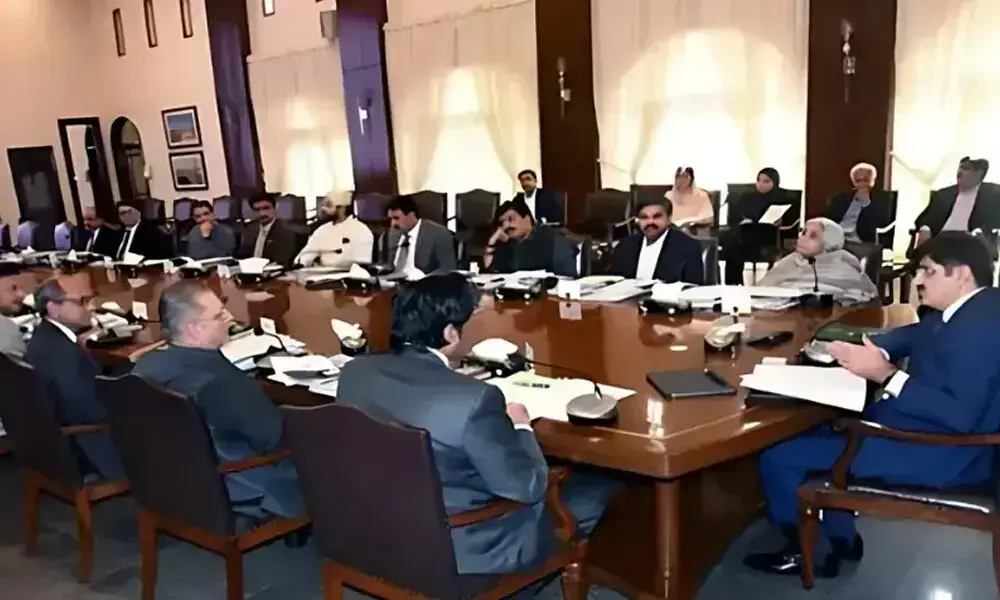
HYDERABAD: The Sindh Cabinet has approved the Rules for the Sindh Women Agriculture Workers’ Act 2019, but these lack many key areas, including an accountability mechanism. Participants voiced their concerns in a consultative dialogue organised at Hyderabad by Hari Welfare Association (HWA).
Participants from communities, trade unions, the Human Rights Commission of Pakistan, and civil society contributed detailed insights on the content of the rules. They appreciated the government of Sindh not only for passing the 2019 Act but also for recently approving its rules of business.
Akram Khaskheli, president of HWA, stated that this landmark Act recognises the rights and contributions of women in agriculture, who have long remained invisible despite being essential to rural economies. He noted that there is a lack of a strong accountability mechanism within all labour laws, including the Act of 2019, as existing frameworks lack effective enforcement provisions. Concerns were raised about gender-based wage disparities, with women agricultural workers continuing to receive lower wages than men despite performing the same work.
He highlighted that accessibility to worker registration remains a key issue under this Act, as there are no mechanisms to register women workers and support them at the union council level. Moreover, district-level mechanisms often remain inaccessible to women due to mobility and structural constraints. It was further pointed out that although the Labour Department has developed digital systems for worker registration, their implementation remains weak and needs urgent activation.
Ms Zahra Khan, General Secretary of the Home-Based Women Workers Federation, stressed the urgent need for social protection mechanisms, including extending the Employees’ Old-Age Benefits Institution coverage to agricultural workers, especially beyond the age of 60. Qazi Khizar, Vice Chairperson of HRCP, commented that bonded labour in agriculture is widespread and that this issue has not been explicitly addressed within the Act and rules. Ms Shanti, a peasant woman from Mirpurkhas, pointed out that economic injustices in agricultural markets are pervasive. She noted that crop prices remain low at harvest but increase substantially later, benefiting middlemen and landlords rather than farmers. She called for fair pricing mechanisms.
Ms Fozia, also a peasant woman from Mirpurkhas, emphasised the need to clearly define worker categories such as skilled, semi-skilled, and unskilled—to ensure fair wages. She recommended translating the Act and its rules into Sindhi and other local languages to improve understanding among farming communities.
Advocate Ms Sara Malkani highlighted inconsistencies between the Act and the draft rules, especially regarding the definition of “worker.” While the 2019 Act aligns with ILO standards, the draft rules reportedly rely on outdated definitions from earlier legislation, creating contradictions. She pointed out ambiguities in provisions such as committee formation under Article 16-B, which lacks clarity on administrative levels.
Copyright Business Recorder, 2026






















Comments
Comments are closed for this article.