


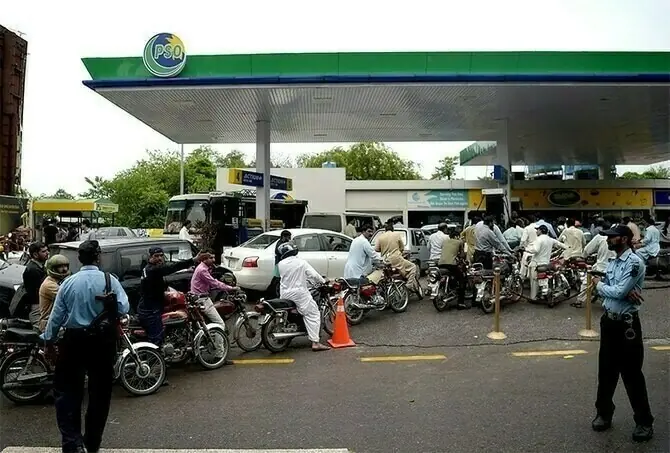
The petroleum consumption largely remained unchanged in March, as there is no meaningful impact on the consumption due to so called rationing.
The real impact is to be through pricing, which has not changed in accordance with the shift in the international prices.
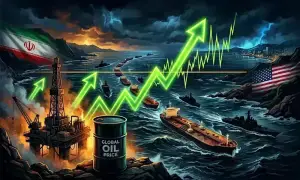
All it is doing of growing the import pressure due to higher international prices and high fiscal slippages, as the government is now providing a subsidy of almost Rs7 billion per day – higher than running the whole government machinery.
Pakistan is ensuring supply through chocked routes by leveraging its geopolitical positioning. Irony is that the country cannot afford to keep on paying the higher price, as it does not have economic muscles. Yet, the authorities have not passed the impact on the prices to the consumer.
READ MORE: Govt to finalise targeted petroleum subsidy framework
Pakistan monthly average in the last twelve months of crude oil and petroleum products is $900 million. That is estimated to increase by $700 million in March – based on imports volumes and pricing numbers. There might be some savings, as there is no RLNG imports – as supplier is not providing it. Its import monthly average in the last 12-months toad around $250 million. Thus, the additional petroleum bill would be $650 million.
The payments are due in April (based on March imports) and that may let the current account slip by $650 million, assuming everything else constant in April. The annualized impact would $8 billion – almost half the country’s forex (borrowed) reserves. That is to have the direct impact on the balance of payment.
The fiscal story is not quite different. The petroleum differential claim has increased to Rs204/liter on diesel while on petrol it about Rs96/liter. Netting it from petroleum levy, the average subsidy is roughly Rs139/liter. At unbated demand, it amounts to Rs7 billion per day. No austerity drive can cover this hole.
It would take a month or two, to take the twin deficit – current and fiscal, to grow out of bounds. The IMF programme may go into limbo, as grapevine is that the board approval of recently concluding third review is contingent upon passing on the prices to consumers. Once the impact starts hitting the import payment, there could be panic in the interbank market. Non-essential imports to be curtailed. Grey market premium to start grow, and the currency to slip. Then eventually, the pricesincrease if the insanity continues. Interestincreases to follow.
This is not the first time. The crises in 2022 and 2008 were based on denial. The short-term pain was avoided and followed by a much bigger and prolonged pain. The impact of inflation is to be paid by all. The simple one-line message is to not repeat the same mistake.
The government has no choice but to pass on the impact to the consumers. Increasing the prices absorbs the fiscal burden directly. Then the price elasticity to come in play.Consumers to ration the usage and that is to reduce the burden on the import bill.
That is the only sane way to proceed. Sooner the government do it better it is.















Comments
Comments are closed for this article.