


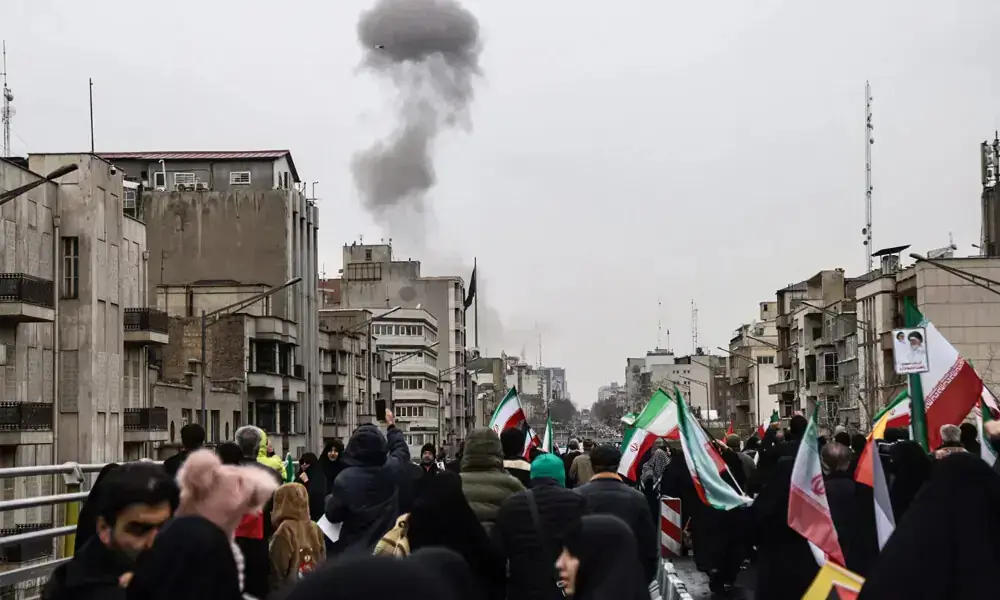

Who is the real beneficiary of this war? Beyond the fog of propaganda, beyond the daily casualty figures and battlefield claims, a clearer geopolitical picture is emerging—one that challenges conventional narratives and exposes a deeply asymmetric outcome.
At first glance, the war appears to be a brutal contest between the United States and Iran, with Israel positioned as a front line ally. Yet, when the layers are peeled back, a different reality unfolds. Israel, despite limited direct losses, appears to be achieving long-standing strategic objectives. The United States, on the other hand, is bearing the overwhelming burden—militarily, economically, and diplomatically—while Iran, though heavily damaged, occupies a complex middle ground as both victim and resilient actor.
Iran has undoubtedly suffered immense losses. Its military infrastructure has been degraded, key leadership figures targeted, and economic systems disrupted. Strategic assets—ranging from oil facilities to logistical networks—have been hit repeatedly. Civilian hardship is mounting, and the country’s economic backbone is under unprecedented strain. In terms of physical destruction, human casualties, and systemic disruption, Iran stands as one of the primary victims of the conflict.
Yet, paradoxically, Iran has also demonstrated a degree of endurance that complicates the narrative of defeat. Its ability to disrupt shipping lanes, influence regional proxies, and impose costs on its adversaries has elevated its image as a power capable of asymmetric resistance. While materially weakened, Iran has not collapsed—nor has it surrendered strategic leverage.
Copyright Business Recorder, 2026
The writer is a former Press Secretary to the President, An ex-Press Minister at Embassy of Pakistan to France, a former MD, SRBC Macomb, Detroit, Michigan




















Comments
Comments are closed for this article.