


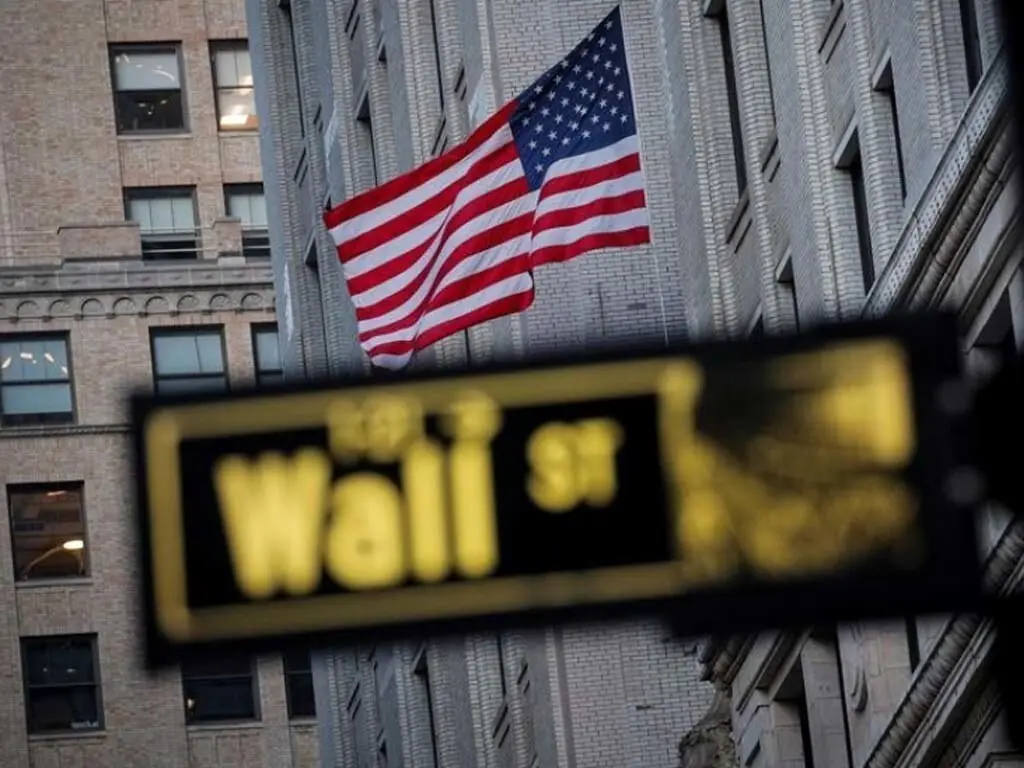

NEW YORK: Wall Street’s main indexes fell on Thursday as rising crude oil prices revived inflation fears and the Federal Reserve’s cautious stance on interest rate cuts weighed on sentiment.
The rate-sensitive Russell 2000 index dropped 0.7 percent, having briefly touched a 10 percent loss from its all-time intraday high earlier in the session. An index falling 10 percent or more below its record high on a close-to-close basis is called a correction.
A strong forecast from Micron Technology did little to uplift sentiment, with shares dropping 4.1 percent, as investors mulled the chip company’s higher spending plans given elevated borrowing costs. Other memory chip stocks that have rallied this year were also knocked down. SanDisk and Applied Digital fell more than 2 percent each, while AI leader Nvidia dipped 1.2 percent.
Brent crude prices hovered around USD112 a barrel after Iran attacked energy facilities across the Middle East in retaliation for Israel’s strike on its South Pars gas field.
The US benchmark, however, was trading at its widest discount to Brent in 11 years due to releases from US strategic reserves and higher freight costs. The Fed left rates unchanged on Wednesday and Chair Jerome Powell flagged higher inflation ahead. He said it was too early to assess the economic impact of the conflict and maintained the projection of one 25-basis-point cut this year.
“The longer we stay at these elevated levels, that just increases that stagflationary threat and when you get to that environment, you start to see shifting narratives around the macro environment,” said Charlie Ripley, senior investment strategist for Allianz Investment Management.
Morgan Stanley joined Goldman Sachs and Barclays in pushing its rate-cut expectations to September from June.
Traders no longer expect a rate cut for this year, and LSEG-compiled data now points to a dovish move only in mid-2027.
At 11:36 a.m. ET, the Dow Jones Industrial Average fell 427.99 points, or 0.92 percent, to 45,797.70, the S&P 500 lost 51.26 points, or 0.77 percent, to 6,573.36 and the Nasdaq Composite lost 208.00 points, or 0.93 percent, to 21,945.26.
Wall Street’s fear gauge, the CBOE volatility index, spiked 0.72 points to 25.81. The Middle East conflict has exacerbated volatility in global markets, but US stocks have withstood the impact due to a rebound in technology shares and on relief that the country is a net energy exporter.
The three main indexes are trading below their 200-day moving averages (DMA), a technical indicator reflecting long-term momentum.
Ten of the 11 S&P 500 sector indexes fell, with materials leading with a 2.3 percent drop. Prices of precious metals fell, weighing on miners Newmont and Freeport-McMoRan, down 8.6 percent and 5.8 percent, respectively.
The S&P 500 industrial sector dropped 1.7 percent, with defense company GE Aerospace among the top losers with a 4 percent loss, along with Boeing.
Among fuel-cost-sensitive travel stocks, United slipped more than 2 percent, while cruise operator Norwegian dropped 1.7 percent.
Meanwhile, weekly jobless claims unexpectedly fell last week, pointing to stable labor market conditions and a rebound in job growth in March.
Also in focus will be a US-Japan summit that President Donald Trump may use to press for help on the Iran war.
Declining issues outnumbered advancers by a 3.05-to-1 ratio on the NYSE and by a 2.4-to-1 ratio on the Nasdaq.
The S&P 500 posted 15 new 52-week highs and 18 new lows while the Nasdaq Composite recorded 22 new highs and 226 new lows.




















Comments
Comments are closed for this article.