


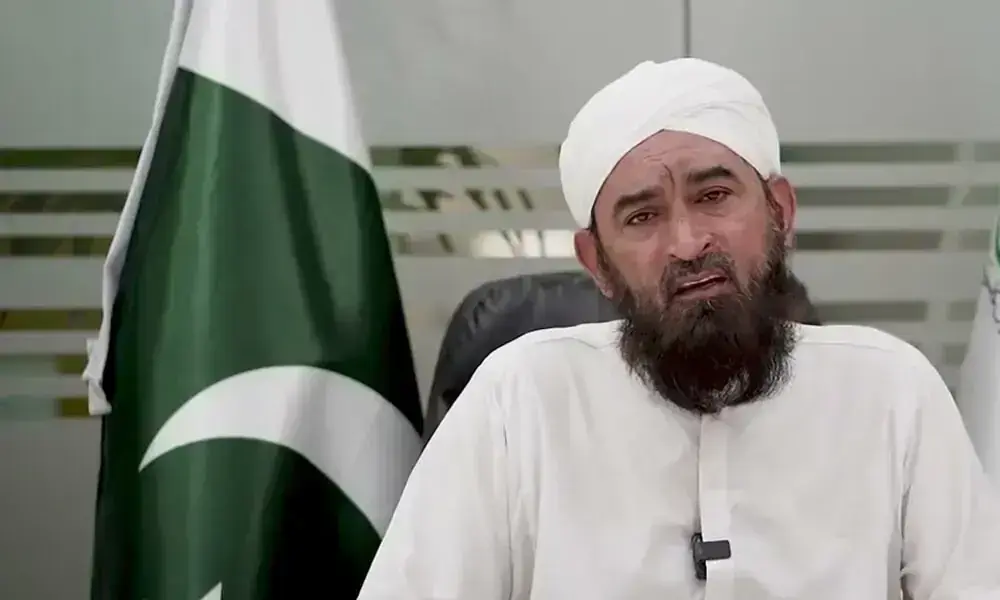

KARACHI: Maulana Muhammad Bashir Farooq Qadri, Founder and Chairman of Saylani Welfare International Trust, has expressed gratitude to the government for deciding not to further increase the prices of petroleum products.
He also proposed several measures to help control the expected energy crisis, including introducing a petrol quota system for households owning multiple vehicles and restricting solo car travel during office hours.
He advised Shehbaz Sharif, the Prime Minister of Pakistan, to review these proposals in consultation with ministers and economic experts in order to prevent the country from falling further into debt.
In a statement issued here, he said that the government’s decision not to increase petroleum prices further is a positive step under the current circumstances, as the recent increase of Rs55 per litre has already placed a heavy burden on the poor. The impact of expensive petrol has been imposed equally on those who are already struggling to survive, including individuals who rely on their motorcycles as a source of livelihood, often using them as informal taxis while supporting families of four or more.
He said that ideally motorcycle riders should be provided petrol at subsidized rates so that the basic economic stability of low-income households can be maintained.
Maulana Bashir Farooq further noted that in recent days there were alarming reports suggesting that petrol prices could reach Rs500 per litre, which, if it had happened, would have made life nearly impossible for the poor.
As a practical solution, he proposed that the government introduce a petrol quota system for the affluent, including government officials, traders, and industrialists. In particular, households owning multiple vehicles should be given limited fuel quotas using data available with government departments.
He added that if the state purchases expensive petrol or gas and sells it cheaply, the financial burden ultimately falls on both the state and the public. Pakistan has already accumulated approximately $137 billion in external debt, and taking on more loans could lead to further restrictive conditions imposed by the International Monetary Fund.
Maulana Bashir Farooq also pointed out that it is common to see cars with only one person travelling in them. In many countries around the world, carpool systems are implemented where solo travel in cars is discouraged or restricted. In some European countries, particularly during office hours, at least three passengers are required in a single vehicle. He stated that such a policy is practical and could help reduce fuel consumption.
He warned that higher petrol prices would increase the tax burden on industrialists through the Federal Board of Revenue, potentially leading to the closure of industries and a decline in exports.
He urged Prime Minister Shehbaz Sharif to consult ministers and economists and develop a system capable of addressing economic challenges in difficult times. Such measures, he said, are necessary to prevent Pakistan—already among the heavily indebted countries—from falling deeper into debt.
Copyright Business Recorder, 2026




















Comments
Comments are closed for this article.