


No let-up in ME tensions: RLNG supply crunch hits power sector hard
- Official sources say power sector’s current RLNG requirement is around 300 MMCFD, while allocation from Sui Northern Gas Pipelines Limited stands at about 130 MMCFD
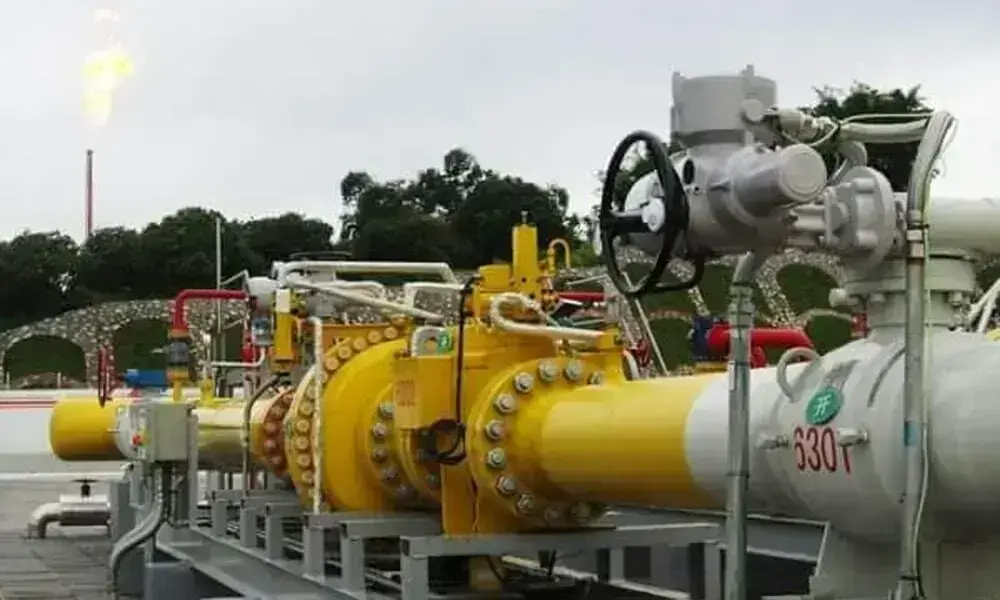

ISLAMABAD: As the Middle East conflict enters its third week, Pakistan’s supply of Re-gasified Liquefied Natural Gas (RLNG) to power plants has dropped sharply after Qatar reportedly suspended LNG production following attacks on its gas fields.
Official sources said the power sector’s current RLNG requirement is around 300 MMCFD, while the allocation from Sui Northern Gas Pipelines Limited (SNGPL) stands at about 130 MMCFD.
“At present, the entire 130 MMCFD is being supplied to a single power plant,” the sources said, adding that the Power Division has been informed that RLNG availability may decline further to around 85 MMCFD between March 20 and 30.
Pakistan has three major high-efficiency RLNG-based combined-cycle power plants established between 2015 and 2018 to address the country’s electricity shortfall.
These plants operate at thermal efficiencies exceeding 61%.
READ ALSO: Pakistan’s domestic power sources cushion LNG supply risk, says Leghari
The key RLNG-fired plants include Bhikki Power Plant (1,180 MW) in Sheikhupura, owned by Quaid-e-Azam Thermal Power Limited, which began full commercial operations in May 2018; Haveli Bahadur Shah Power Plant (1,230 MW) in Jhang, which also started operations in 2018; and Balloki Power Plant (1,223 MW) in Kasur, which achieved commercial operations in July 2018.
Sources told Business Recorder that LNG supply from Qatar has been suspended following attacks on LNG fields. However, with Qatar declaring force majeure, neither party will bear financial liability under existing agreements.
Pakistan, however, may face additional financial burden if electricity generation shifts to alternative fuels such as Residual Furnace Oil (RFO).
“There were consultations within the government to explore the option of procuring spot LNG cargoes to meet power sector requirements,” the sources said adding that “the option appears unfeasible as spot LNG prices are currently around $17–18 per MMBTU, which is comparable to the cost of RFO.”
Meanwhile, on March 11, 2026, the Oil and Gas Regulatory Authority (OGRA) imposed a ban on the export of locally produced furnace oil until clearance is obtained from the Prime Minister’s Committee on Petroleum Prices Monitoring, citing the emerging regional situation linked to the US-Iran conflict.
Sources said the government currently has no immediate plan to initiate load shedding despite the potential decline in electricity generation from RLNG-fired power plants due to the LNG crisis.
However, insiders warned that prolonged disruption in RLNG supply could eventually force the government to impose limited load shedding.
“If RLNG supply disruption continues, the government may opt for a few hours of load shedding nationwide,” said a source adding that “consumers may accept short outages, but they are unlikely to tolerate higher electricity prices under the Fuel Charges Adjustment (FCA) mechanism.”
Data shows that in January 2026, SNGPL supplied 400 MMCFD RLNG to power plants, which was fully consumed.
Electricity generation from RLNG stood at 2,002 GWh (2.9 percent of total generation) at an average cost of Rs 19.9333 per unit, compared with 1,542 GWh in January 2025, reflecting an increase of about 30 percent.
According to sources, a high-level committee headed by Finance Minister Muhammad Aurangzeb is continuously monitoring the energy supply situation and regularly updating the Prime Minister’s Office and other relevant authorities.
Copyright Business Recorder, 2026


























Comments
Comments are closed for this article.