


IMF review mission: No further energy tariff hikes or new tax burdens urged
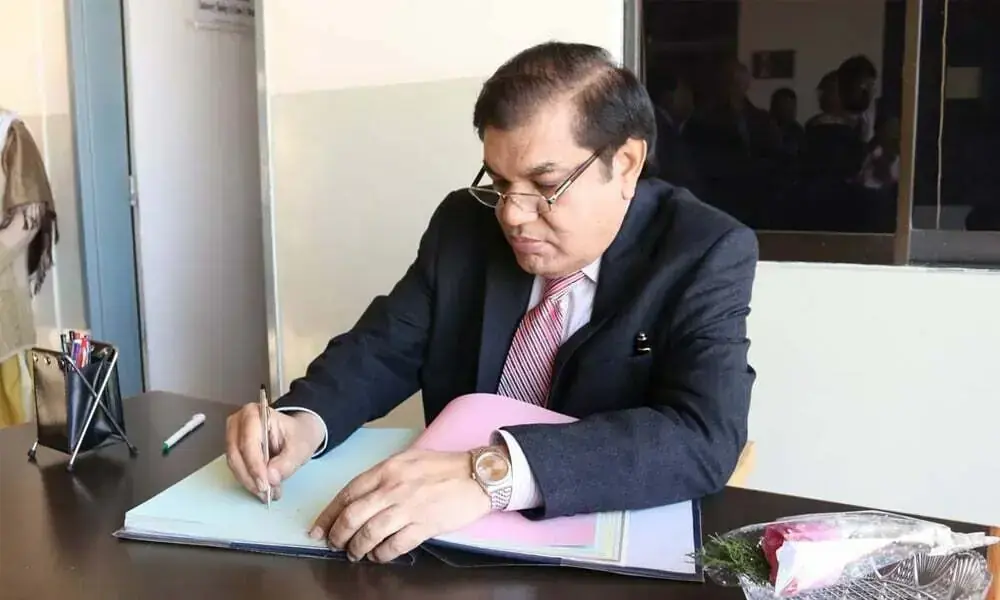

KARACHI: Mian Zahid Hussain, President Pakistan Businessmen and Intellectuals Forum & All Karachi Industrial Alliance, Chairman National Business Group Pakistan and Chairman Policy Advisory Board FPCCI, has said that while the domestic economy is showing signs of a genuine turnaround, the ongoing IMF review mission must not result in further energy tariff hikes or tax burdens that could push the struggling export sector into a total collapse.
He acknowledged the positive macroeconomic indicators, noting that Large-Scale Manufacturing (LSM) has posted a solid 5 percent growth in the first half of FY26. He highlighted the remarkable 67.2 percent surge in automobile production and an 11.6 percent rebound in cement, signaling strong domestic demand. Furthermore, he commended the Pakistan Stock Exchange for its landmark transition to the T+1 settlement cycle, a modernization that aligns the capital market with global standards despite the recent index correction from its 191,000 peak to the 166,000 level.
“We have finally achieved a fragile macro-stabilization, but it is operating on a two-track reality,” said Mian Zahid Hussain. “While domestic manufacturing recovers, our export backbone is experiencing a severe competitiveness emergency. In January alone, textile exports suffered a 7.13 percent year-on-year decline. The government must convey to the IMF that overtaxing a dying industry will hinder recovery rather than prosperity.
The veteran business leader warned that the visiting IMF mission traditionally pressures the government to aggressively increase tax revenues and hike energy tariffs to manage circular debt. He argued that the export sector simply cannot absorb any more “hidden taxes”. Currently, the Rs5 to Rs7 per unit cross-subsidy embedded in industrial power bills keeps Pakistani energy costs 40 percent higher than regional rivals like Vietnam and Bangladesh.
Mian Zahid Hussain also highlighted the existential threat posed by the recently concluded India-EU Free Trade Agreement, which effectively neutralizes Pakistan’s GSP Plus advantage and puts a USD9 billion European export market at severe risk. “If the IMF insists on maintaining the 10.5 percent interest rate or enforcing rigid Super Tax collections without allowing instalment relief, our exporters will be entirely priced out of the global market,” he stated.
He did, however, welcome the government’s recent structural trade reforms, particularly the Export Development Fund (EDF) Act 2026, which legally mandates the inclusion of active private-sector exporters on its board. “Giving the business community control over the EDF is a historic win. But to truly utilize these funds for market diversification, the government must negotiate fiscal breathing room with the IMF.”
Mian Zahid Hussain concluded by urging the Finance Minister and the economic team to present a firm case to the IMF. Stabilization has been achieved, and the focus must now ruthlessly pivot to lowering the cost of doing business to save the country’s export base.
Copyright Business Recorder, 2026




















Comments
Comments are closed for this article.