


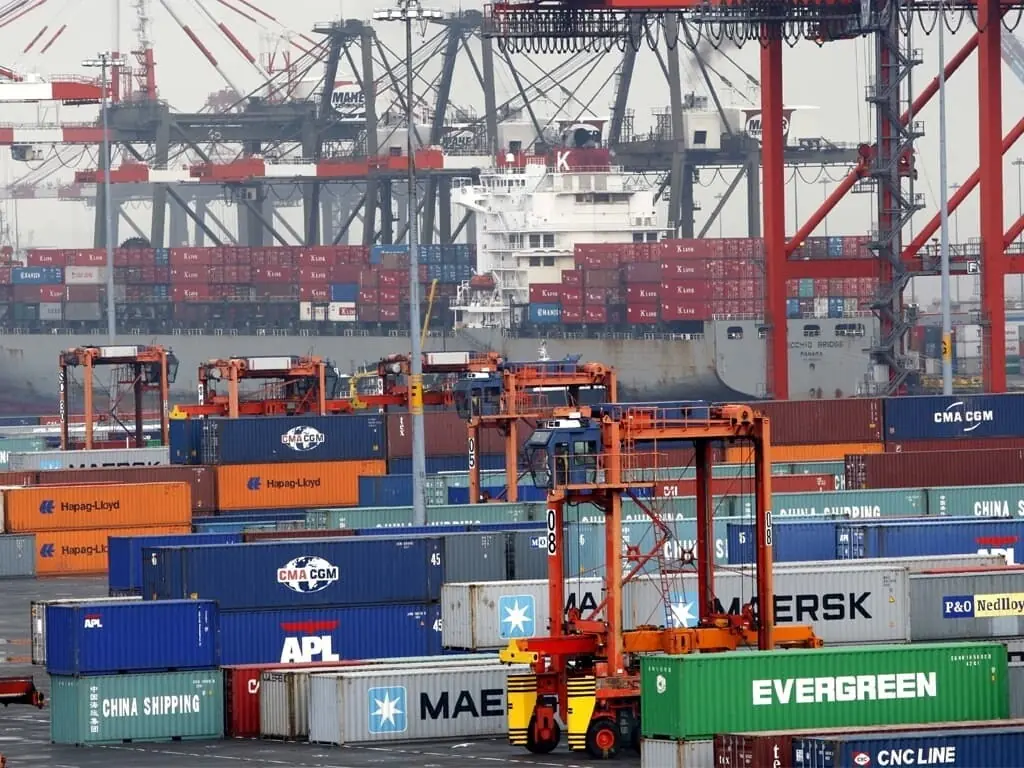
EDITORIAL: Pakistan’s trade deficit with nine regional countries has increased by 41.32 percent with China by far in the lead with exports to China at USD 1.467 billion in 2025, reflecting a slight dip from the previous year’s total of USD 1.482 billion (a rise of 1.02 percent) against imports of USD 11.097 billion in 2025 as opposed to USD 8.907 billion the year before (a rise of 24.58 percent).
This imbalance between exports and imports maybe attributable to the boom-bust cycle that as per the International Monetary Fund can be sourced to “a difficult business environment and weak governance (which) have hindered investments, which remain significantly lower than peer countries, further undermining competitiveness.
Economic volatility has only increased over time, with a tight correlation between Pakistan’s boom-bust economic outcomes and its macroeconomic policies repeated attempts to boost economic activity through fiscal and monetary stimulus have not translated into durable growth, as domestic demand increased beyond Pakistan’s sustainable capacity, resulting in inflation and depletion of reserves, given a strong political preference for stable exchange rates.
Each subsequent bust has further harmed Pakistan’s policymaking credibility and investment sentiment.” This indicates that neither the country’s production profile nor the administration’s policies to jumpstart growth have changed which leads one to a famous Einstein altruism; notably, that you cannot do the same thing again and again and expect different results.
READ MORE: Pakistan’s trade deficit rises 28% to $22bn in July-January
There is overwhelming evidence that serious security concerns are a major factor in lower exports to regional countries particularly Afghanistan and India; however, declining or stagnating exports are also sourced to geopolitical considerations — with war clouds looming large in the Middle East and the ongoing Russia-Ukraine war.
And while the US Supreme Court’s verdict on the use of emergency powers by President Trump to dictate tariffs has generated uncertainty globally yet India’s free trade deal with the European Union (EU) effective from next year would present a major challenge to Pakistan’s existing exports to the EU on the back of GSP+ status.
Pakistan’s economic situation has worsened in recent months due to two major conditions agreed with the IMF. First, the IMF’s insistence to ensure full-cost recovery of all utilities, particularly the power sector.
While the administration has reduced electricity tariffs yet this was made possible by retiring old debts procured at a higher rate of return than the prevalent existing rate — payable by consumers — a factor that may change over time, and which prompted the IMF to dictate that in case the Debt Service Surcharge has to be raised the authorities must pledge to do so.
So far there is little evidence of an improvement in the sector’s sustained appalling performance. Second, IMF’s insistence that fiscal and monetary policies are not adjusted to incentivise the productive sector, a decision that was partly reversed after the announcement of an incentive package relating to industry, which included subsidies to rice exporters which was necessitated because India withdrew its own ban on export of rice.
The decline in exports came under scrutiny in the National Assembly Standing Committee on Commerce where members lamented the negligible growth in the country’s exports and not raised as an issue was the massive rise in imports.
Special Secretary Commerce (it is unclear whether the Ministry needs the services of a Special Secretary) noted that while the Central Development Working Party approved 4.629 billion rupees for export acceleration of small and medium enterprises yet the funds have not been released due to a disagreement with the Planning Ministry which, in turn, clarified that funds are limited and will be released according to project priorities.
The Committee has summoned the Ministries of Interior, Defence and Foreign Affairs as well as the State Bank of Pakistan for its next meeting yet it is doubtful if the ground situation would change without a proactive move to develop productive units not focused on increasing value addition of existing factories with only the surplus exported. It is therefore critical for the authorities to focus on manufacturing those items that are meant to be exported by using technology that would ensure the quality of the product and minimise the costs (through the use of AI with China able to provide us invaluable support in this regard).
Copyright Business Recorder, 2026




















Comments
Comments are closed for this article.