


Prosumer initiative: Leghari explains to NA govt’s decision
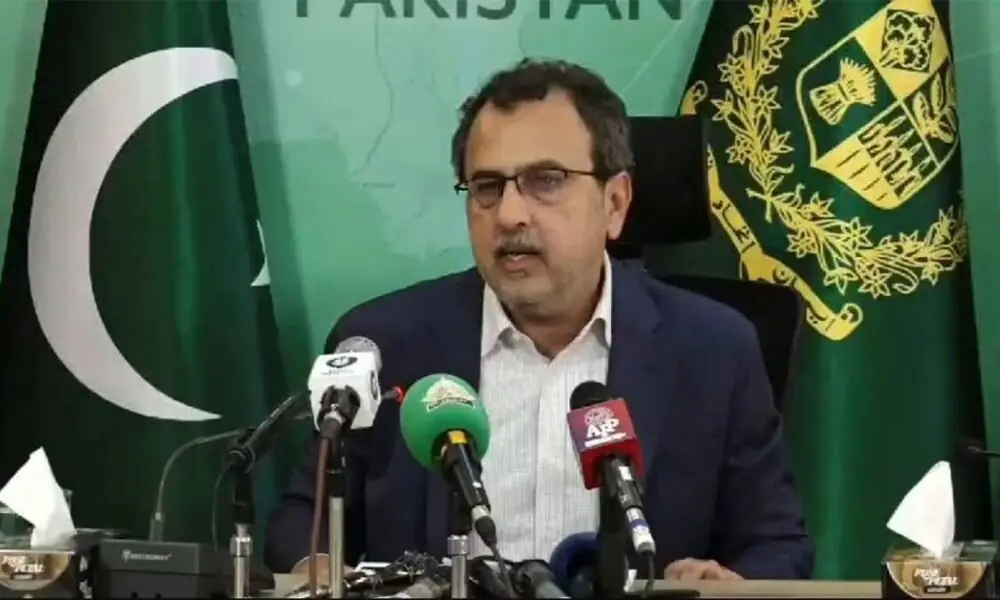

ISLAMABAD: Minister for Power Awais Leghari on Thursday reassured the National Assembly that the government’s decision to replace net metering with net billing would affect only a small proportion of solar energy users, and would not impose a burden on the general public.
In response to a calling attention notice raised by Sharmila Faruqui of the Pakistan People’s Party (PPP), Leghari stated that the country’s elite are benefiting from net metering, and the new regulations will primarily impact high-income individuals
He insisted that these changes would primarily impact only those who are currently registered under the net metering system, which accounts for roughly 6,000 to 7,000 megawatts (MW) of the nation’s solar energy capacity.
READ MORE: Non-revision of net-metering rules: Govt can’t afford Rs550bn burden on consumers, Senate told
He clarified that this amounts to just 8 to 10 percent of the country’s total solar capacity, meaning around 600,000 to 700,000 consumers would be affected, a small fraction of the estimated 20,000 to 22,000 MW of distributed solar generation in the country.
“The proposed shift to net billing affects just a fraction of the overall solar users in the country,” he explained. “This change will not place any undue financial burden on lower-income consumers. In fact, it will only impact the net metering segment, which represents a specific group of users, not the entire solar energy market.”
Leghari also highlighted that the government remains committed to advancing clean energy. He reaffirmed that by 2034, Pakistan aims to generate 90 percent of its electricity from renewable sources.
In 2024-25, 55 percent of the nation’s electricity is expected to come from clean energy, a figure that aligns with Pakistan’s international commitments to increase the share of clean energy to 60 percent by 2030.
The lawmakers voiced concerns on social media and in some sections of the media, arguing that the changes were unfair to the public and would undermine investor confidence.
Leghari acknowledged these discussions, noting that the issue had also been debated in the Senate, where a resolution was ultimately rejected.
The minister also addressed the broader policy changes, explaining that the decision to replace net metering with net billing was approved by the Economic Coordination Committee (ECC) and later reviewed by the federal cabinet, with Prime Minister Shehbaz Sharif requesting a further review of the policy before its final implementation.
Leghari, who had overseen the Ministry of Power when the net metering system was introduced in 2017 under the Pakistan Muslim League-Nawaz (PML-N) government, stressed that regulatory changes to the system were not unusual.
He pointed out that the net metering system had undergone several updates since its introduction, with the most recent amendments being the fourth or fifth such adjustment since 2017.
“The regulator has the legal authority to make these changes, and the government can challenge these if deemed necessary,” he said. “However, I want to reassure the public that these changes are not as widespread as some might suggest, and the government continues to support solar energy by maintaining tax exemptions and implementing pro-solar policies.”
Regarding the ongoing debate, Leghari said that the Prime Minister Sharif had directed that the new net billing system would not apply to existing net metering users at this stage.
“The prime minister has directed that the net billing system will not be implemented for current users at this time and has instructed the Power Division to challenge the regulator’s decision,” he added.
In conclusion, the minister reiterated the government’s commitment to solar energy, citing its pivotal role in the country’s future energy landscape, while assuring that the new regulatory changes would not impact the vast majority of solar users.
Copyright Business Recorder, 2026
























Comments
Comments are closed for this article.