


Govt steps up push to expand economic engagement with EU
- This was done in a bid to avoid losing market share to Indian products in European markets following finalisation of the EU–India trade deal
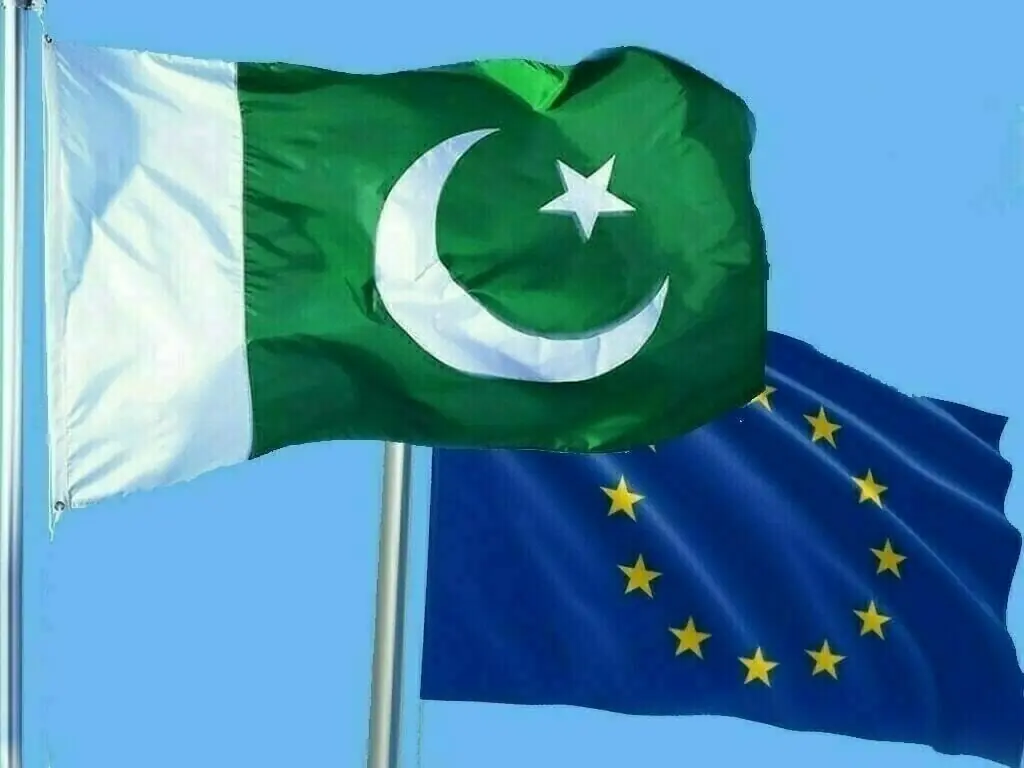

ISLAMABAD: In a bid to avoid losing market share to Indian products in European markets following the finalisation of the EU–India trade deal, Pakistan has intensified efforts to explore new opportunities for economic engagement with the European Union (EU), while also seeking an extension of the “crucial” GSP Plus scheme.
In this regard, Deputy Prime Minister and Foreign Minister Ishaq Dar chaired a high-level inter-ministerial meeting on Friday to review and strengthen trade and economic relations with the European Union, as Islamabad seeks to safeguard market access following what is being described as India’s landmark trade agreement with the EU.
However, the formal signing of the EU-India free trade agreement will take place by end of this year, once the agreement sails through the European Parliament.
READ MORE: PM Shehbaz pledges closer trade cooperation with EU
According to an official statement, the Pakistani authorities discussed ways to strengthen Pakistan’s economic and trade relations with the bloc.
The meeting is seen as part of a broader diplomatic and policy push after India and the EU concluded talks and finalized the free trade deal, granting Indian exporters sweeping tariff-free access to Europe. Pakistani exporters warn that it could erode Pakistan’s competitiveness, particularly in textiles, its largest export sector.
Ishaq Dar highlighted the importance of enhancing trade cooperation, exploring new opportunities for economic engagement, and further deepening Pakistan-EU economic relations.
According to the statement, Dar emphasized that GSP Plus remains a crucial framework for mutually beneficial trade and underlined the need to maximize its potential for Pakistan’s economic growth.
The inter-ministerial meeting was held following a series of consultations. Prime Minister Shehbaz Sharif and the EU’s Ambassador to Pakistan held talks on EU-Pakistan cooperation in the new scenario. Meanwhile, Pakistan’s trade bodies also briefed Finance Minister Muhammad Aurangzeb on the potential impact on the country’s exports to European nations.
Pakistan’s exports to the European Union (EU) exceeded USD9 billion in 2024–2025, with the EU as a top, critical market accounting for nearly 24-29 percent of Pakistan’s total global exports.
Saquib Fayyaz Magoon, vice president of the Federation of Pakistan Chambers of Commerce and Industry (FPCCI), cautioned that the EU-India agreement could erode Pakistan’s competitive edge in European markets.
According to him, the GSP Plus status allows Pakistan a duty-free access for nearly 80 percent of its exports to the EU, the country’s textile exports stand at USD6.2 billion, marginally ahead of India’s USD5.6bn exports even though the latter faces a 12 per cent tariff. He said that once India secures zero-rated access under the trade deal, Pakistan’s advantage will vanish and our exports could suffer a severe blow.
On Thursday, the Foreign Office spokesperson said the GSP Plus scheme has proven beneficial for both Pakistan and the EU. Pakistan, he said, has already held detailed discussions on the future of GSP Plus during the strategic dialogue with the EU.
Economic experts, however, argue that a mere extension of the GSP Plus framework is unlikely to work for Pakistan.
Copyright Business Recorder, 2026























Comments
Comments are closed for this article.