


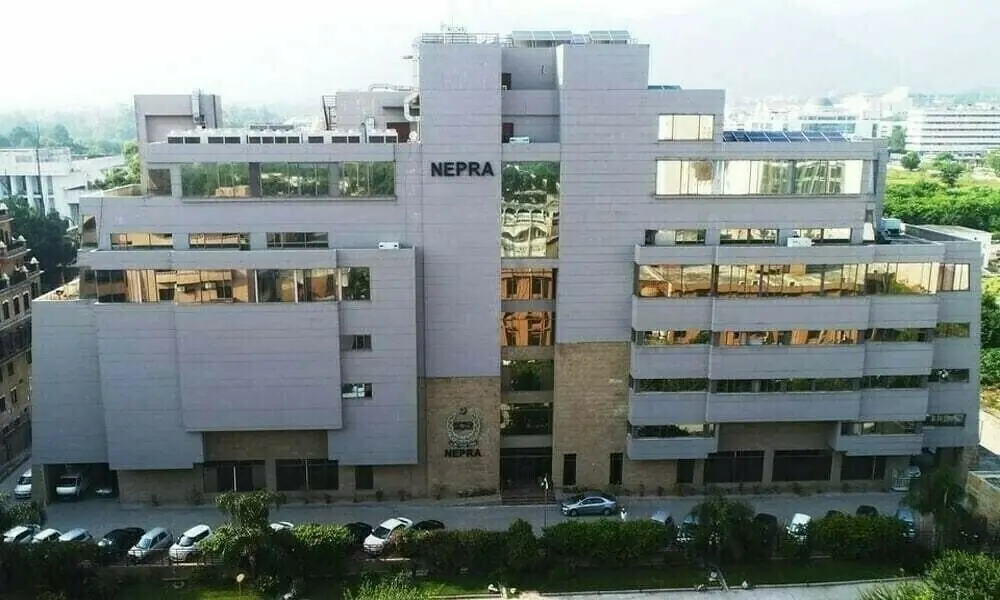
Nepra’s commentary on Independent System and Market Operator (ISMO) in the State of Industry Report appears timely, even prescient, though it has attracted little attention amid more visible sectoral crises.
The regulator underscores the centrality of institutional capacity, transparency, and credibility for ISMO’s success, precisely at a moment when early warning signs are beginning to surface.
Most notably, ISMO has failed to update its hourly generation and demand profile data for two consecutive months, with the last update issued in November 2025, covering data only up to October 2025.
This lapse is not a trivial data-management issue. The hourly generation and demand dataset had quickly emerged as one of the most valuable public-domain tools for understanding Pakistan’s rapidly evolving electricity sector dynamics, particularly on the demand side.
It offered granular insight into load patterns, marginal generation shifts, price formation, and the growing impact of distributed solar on grid behaviour. Its sudden discontinuation, or at the very least an unexplained delay, deprives researchers, analysts, and market observers of a critical empirical anchor at a time of structural transition.
That this development has passed largely without comment is itself revealing. Research remains an afterthought in Pakistan’s power sector governance, and the absence of data rarely provokes institutional urgency. Yet these numbers feed directly into evidence-based analysis, inform policy debate, and allow a more nuanced understanding of sector dynamics, especially in the context of rapid rooftop solar adoption and changing consumption behaviour.
The data would also have provided an early lens into the effectiveness, or otherwise, of the incremental consumption incentive package. In its absence, analysts are left navigating in partial darkness.
Viewed against Nepra’s own cautionary observations, the episode reinforces concerns around ISMO’s current human and technical capacity. Transparency and market credibility are not established through structural reorganization alone; they are earned through consistent, timely, and reliable information disclosure. If such gaps persist at this early stage, they risk validating the regulator’s implicit warning that without rapid capacity building, ISMO could follow the trajectory of earlier reform initiatives that were well-designed on paper but faltered in execution.
Institutional reform in Pakistan’s power sector has repeatedly stumbled not on ambition, but on execution. ISMO’s early data lapse may appear minor in isolation, but in the context of its expanded mandate, it raises uncomfortable questions about readiness. In a market where transparency is the currency of credibility, silence in the data is not neutral; it is consequential.














Comments
Comments are closed for this article.