


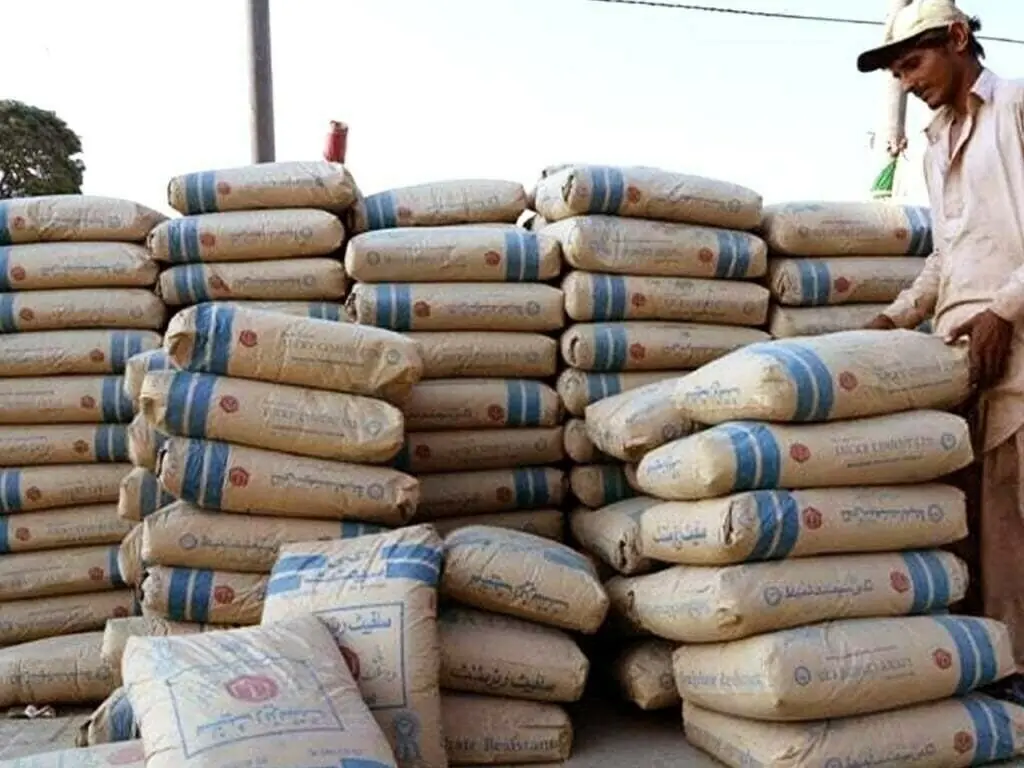
Pakistan’s cement industry is finally selling more at home, exporting less abroad (though not by choice) and as a result, running its plants at barely half capacity. After three years of contraction, domestic cement demand is finally showing signs of life.
Local dispatches rose 14 percent in the first half of FY26, supported by a rebound in development activites in the public sector and a modest recovery in private sector confidence. But this has been followed by a loss in demand abroad—exports have dropped 5 percent during the period.
As a result,industry-wide capacity utilisation stands at 54 percent, well below the 60 percent threshold.
The shift to domestic demand is important for the industry. Demand is now being supported by a firmer, more predictable base of domestic consumption. Public sector development spending is stabilising after years of disruption. There is a mark-up subsidy offered to first time home buyers which would gradually bring genuine demand to the home construction sector.
Although volumes remain below the FY21 peak—on an average monthly basis, domestic sales today are 3.5 million tons, which are about 0.5 million tons shy of the historic peak five years ago.
Exports are losing momentum can be problematic. After accounting for more than a fifth of total dispatches last year, dispatches abroadhave reduced their contribution to the mix; now at 18 percent. While that remains above the decade average, it is well below last year’s peak. Political disruptions along the Afghan border have constrained cross-border trade, with northern producers reporting fewer exports. In the past, exports have acted as an surplus absorber of supply but in recent years, companies have been strategically targetting exports as a reliable source of business and growth. But the industry is also not unfamiliar to the volatalities that come with exports.
With that, the industry is exposed to a lingering constraint of excess capacity. Even with rising volumes domestically, a demand that is very much cyclical, the utilization rates below mid-50s is far below historical norms and where typically price pressures begin to take shape and margins shrink.The last expansion cycle left the industry exposed—demand did not grow as expected and capacity utilization slowly came down.
READ MORE: BR RESEARCH: Cement industry finally finds pulse
The other trend that is taking shape is even more significant. The industry has been consolidating with leading producers acquiring mid-tier players to reinforce pricing discipline, ensure margin protection and have better hold on the market structure. With top players consolidating, those to be left behind like DGKC are venturing on an expansion that would secure the company’s market share.
Over the coming year, demand is expected to grow 8-10 percent on the back of incremental support from the subsidized mortgage scheme and higher development expenditure. Consolidation plans will finalize and there would be a better understanding of how different the industry will look going into FY27. The central challenge of underutilization may affect profitability in the short-run, but not if prices stay firmly in the control of producers. It would remain in the interest of every firm if they stayed in their own lane. That’s what tacit collusion is all about. In many ways, this shields the industry from the erratic nature of boom-and-bust growth cycles.






















Comments
Comments are closed for this article.