


Beyond the Baraat: weddings generated Rs33bn for Karachi’s economy in 2025
- Number of direct industries involved in wedding ceremonies ranges from 80 to 100
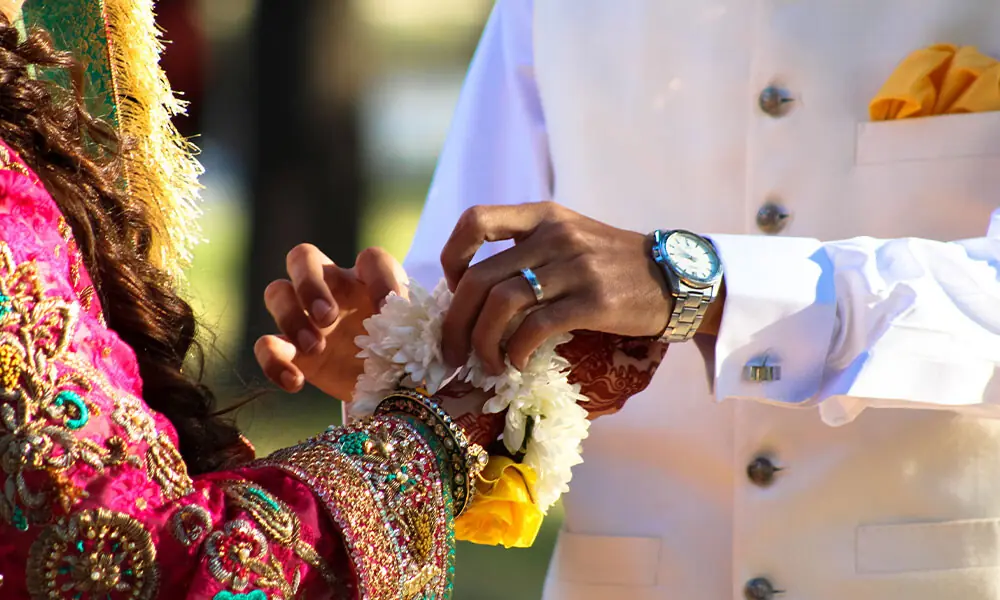

The marriage industry has evolved into a key economic contributor in Pakistan, generating nearly Rs33 billion during this winter season in economic activity from weddings held in Karachi alone, according to one estimate.
This figure represents only the direct industries associated with wedding ceremonies, which include banquet halls, catering services, ready-made garments, as well as transportation costs.
It has been obtained through calculation: the total number of banquets in Karachi are about 800, and the occupancy rate was 70%. This means that 560 weddings took place in one day. If we multiply 560 by 60, the number comes out to be 33,600. Since 600 halls are located in middle-class or lower-middle-class localities, the average expense per wedding has been figure out Rs1million. In this way, the total amount comes to around Rs33 billion.
According to Rana Rais Ahmed, president of the All Karachi Marriage Hall Lawn Banquet Owner Association, the number of direct industries involved in wedding ceremonies ranges from 80 to 100, while the number of allied industries is approximately 250, including the construction industry.
“Although a wedding appears to be just an event, there are around 250 industries associated with it. Direct industries include catering, flowers, banquets, and men’s and women’s clothing, while indirect industries also include the construction sector, because before weddings people often renovate or build” Ahmed said.
While speaking to Business Recorder, the president said from March 2025 until around November, the wedding season was almost negligible. However, the season performed well in December and January, with hall occupancy reaching up to 70%.
He explained that until a few years ago, people scheduled weddings according to the Islamic calendar, but now the trend has changed. There is a preference for winter months for several reasons. In the 1980s and 1990s there were very few Pakistani families living abroad, but now their number has increased significantly, and they return to Pakistan during the December-January holidays. Other reasons include better weather and the fact that children are on holidays from school.
When asked about the growing trend of daytime weddings in Karachi, the president said that the main reason is that halls can cost up to 50% less and are more easily available. In 2025 there were more daytime wedding events than in the past five years.
Karachi has a total of 800 halls, about 600 of which are located in Orangi, Korangi, Surjani, PIB Colony, and surrounding areas. The remaining hubs are situated along Shahrah-e-Faisal, Bahadurabad, Gulistan-e-Jauhar, and Sakhi Hassan, according to Ahmed.
He also said the concept of wedding event management is rapidly gaining ground, gradually replacing traditional methods of organizing marriages. This growing trend reflects changing social preferences, time constraints, and a desire for more personalized and well-organised wedding experiences.
Izzah Zaman, the CEO of event planning marketplace Shadiyana, told Business Recorder demand for services is spread fairly evenly across income groups.
Between October and December 2025, event management companies recorded an almost 25% increase in desktop-based queries, indicating that users are taking time to research vendors, pricing, and availability - a sign that event planning behaviour is evolving.
Zaman has noticed a reduction in average guest counts. She said currently the average guest counts during the December–January wedding season stood at approximately 249, with a noticeable preference for more intimate and personalized events.
“However, this shift does not necessarily translate into lower overall wedding spending. In many cases, spending is being reallocated towards experience, quality, and personalization. Given this nuance, it would be difficult to make a definitive claim that wedding budgets have reduced overall”, the CEO said.





















Comments
Comments are closed for this article.