


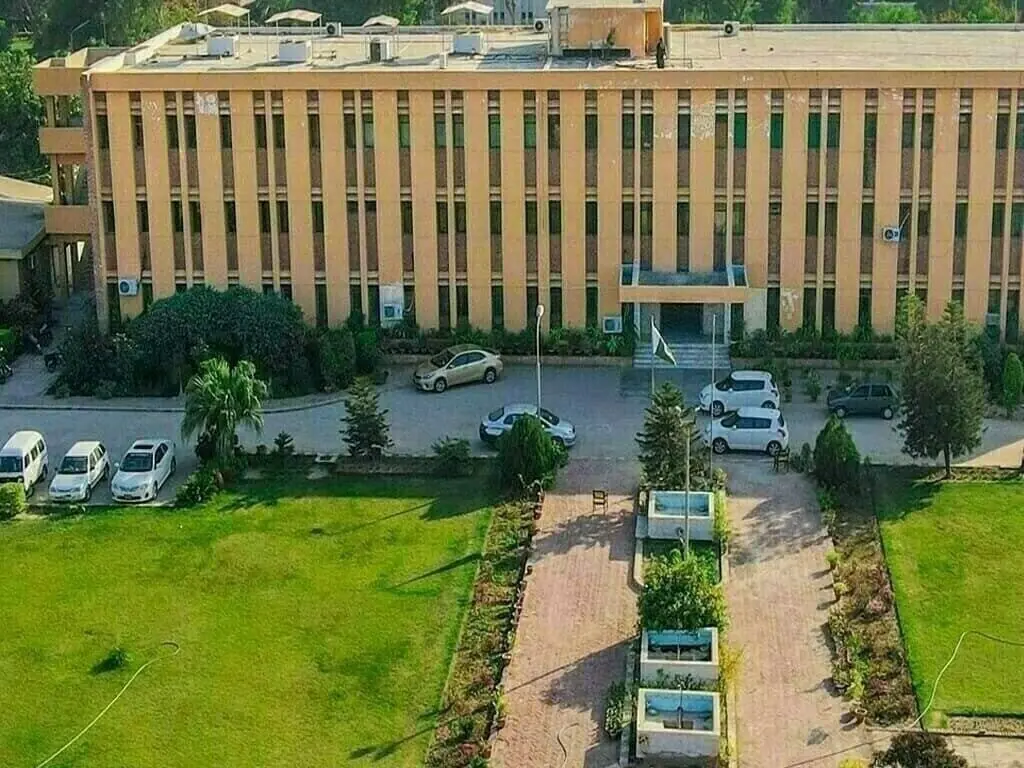

HYDERABAD: Sindh Agriculture University (SAU), Tandojam, in collaboration with Thar Foundation, has formally launched a two-month intensive Artificial Insemination (AI) Training Program for youth from Tharparkar, aimed at enhancing livestock productivity and developing skilled human resources in remote and underserved regions of Sindh.
The training is being conducted under the Livestock Improvement Project of Thar Foundation, with 40 young participants from Block-2 and Gorano areas of taluka Islamkot enrolled in the program. The trainees will receive comprehensive theoretical knowledge and hands-on practical training in modern livestock artificial insemination techniques.
The inaugural ceremony, held at the Senate Hall of Sindh Agriculture University, was presided over by Vice Chancellor Engineer Professor Dr. Altaf Ali Siyal as chief guest. Addressing the gathering, Dr. Siyal stressed the urgent need to conserve Sindh’s indigenous livestock breeds and improve their genetic potential. He described artificial insemination as a globally recognized and proven technology for sustainable genetic improvement in livestock.
Highlighting the importance of local breeds, the Vice Chancellor mentioned Kundhi buffalo, Sindhi Red cattle, Thari cattle, and other indigenous breeds, noting that livestock farming forms the backbone of the rural economy. He emphasized that livestock contributes significantly through milk, meat, butter, cheese, hides, and other by-products, thereby playing a critical role in strengthening rural livelihoods.
Dr. Siyal also underlined the significance of the Memorandum of Understanding (MoU) between Thar Foundation and Sindh Agriculture University, appreciating the organizers and the supporting institution for initiating this impactful program. He assured the university’s full support in future academic, research, and extension collaborations.
Speaking on the occasion, Dr Ghiasuddin Shah Rashidi, Dean, Faculty of Animal Husbandry and Veterinary Sciences, stated that livestock serves as a vital economic pillar for people living in underdeveloped areas of Sindh. He emphasized that
capacity building of local youth is essential for sustainable livestock development.
Dr. Pershotum Khatri, Chairman, Department of Animal Reproduction, highlighted the effectiveness of artificial insemination in Thar’s arid and semi-arid conditions, explaining that the technology improves animal genetics, enhances milk and meat production, helps control diseases, and builds resilience against climatic challenges.
Imam Ali Detho, Manager CSR, Thar Foundation, shared insights into the ongoing collaboration between Thar Foundation and Sindh Agriculture University. He outlined future goals under the Livestock Improvement Project and reiterated the Foundation’s commitment to promoting sustainable rural livelihoods in Tharparkar.
Copyright Business Recorder, 2026

























Comments
Comments are closed for this article.