


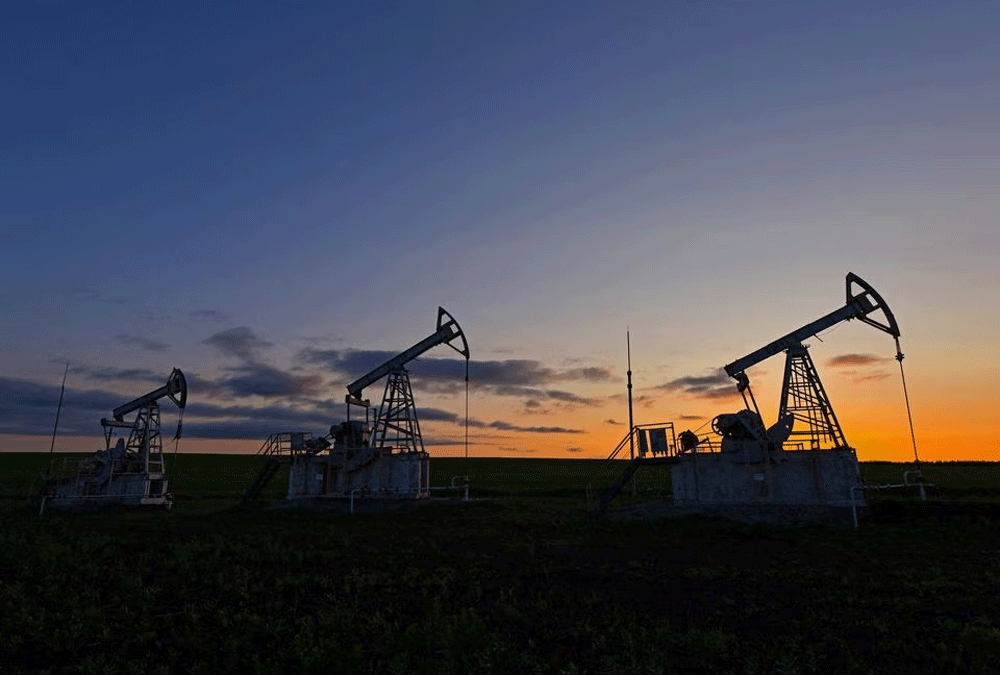

Global oil markets have decisively moved away from a scarcity-driven narrative. The dominant feature now is structural oversupply, with supply growth persistently outpacing demand and inventories continuing to build across major hubs.
Production from the US, Brazil and other non-OPEC producers remains resilient, while sanctioned barrels continue to find their way into global trade flows. Against this backdrop, demand growth has softened, constrained by slower economic momentum and efficiency gains.
The slide of Brent crude below $60 per barrel is not merely a price move but a signal that the market has repriced itself around abundance rather than fear of shortages.
Global oil markets are no longer reacting to geopolitical noise in the way they once did. Even the recent escalation in rhetoric around a possible US Venezuela confrontation has failed to inject any meaningful risk premium into prices.
In earlier cycles, such developments would have triggered sharp rallies on fears of supply disruption. This time, the market barely flinched. That response, or lack of it, is telling. It reflects a market deeply conditioned by surplus, where the cushion of excess supply is large enough to absorb potential shocks without panic.
This shift is already filtering through the macro economy. Lower crude prices are easing fuel costs for consumers and reinforcing the disinflationary trend in many economies, offering some relief to policymakers grappling with high interest rates and weak growth.
At the same time, the pressure on producers is intensifying. Fiscal breakevens for several oil-exporting economies sit well above current price levels, while upstream margins are narrowing, particularly for higher-cost producers. Capital discipline, cost efficiency and selective investment are becoming central to survival in a market that no longer rewards volume growth alone.
What is unfolding looks less like a cyclical dip and more like a market reset. With inventories swelling and little evidence of a near-term demand surge, prices are likely to remain capped well into 2026 unless meaningful supply is withdrawn.
Energy strategy, both at the corporate and policy level, must adjust accordingly. The challenge ahead is no longer how to secure oil at any cost, but how to compete, allocate capital and plan energy transitions in a world where oil is plentiful and pricing power has structurally weakened.
For Pakistan, this shift in global oil dynamics could not have come at a more opportune time. As a net importer of energy, sustained softness in crude prices directly eases the country’s import bill and external account pressures.
Cheaper oil also tends to anchor coal and RLNG prices at lower levels, reducing generation costs across the power sector and providing some relief to consumers and industry alike. In an environment where energy affordability remains a binding constraint on growth, a prolonged period of abundant and inexpensive global energy supplies offers Pakistan valuable macroeconomic breathing space, provided the gains are translated into pricing discipline and structural reforms rather than absorbed by inefficiencies.


















Comments
Comments are closed for this article.