


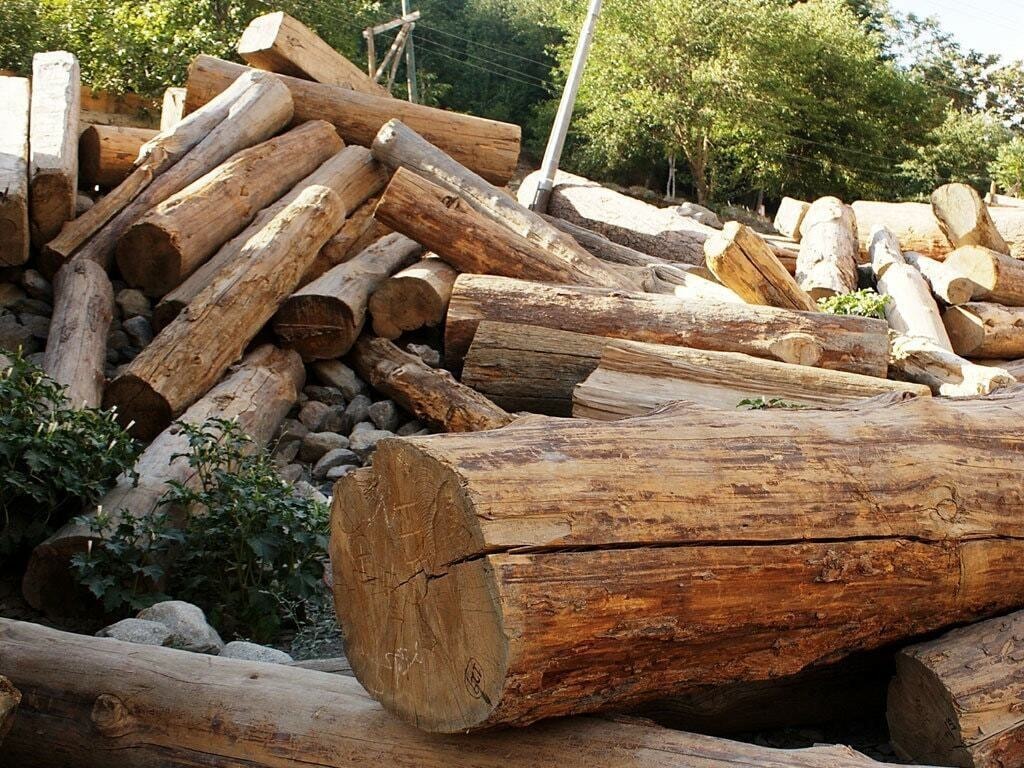

ISLAMABAD: The federal government has reportedly altered policy to address the issue of All Pakistan Timber Traders Association (APTTA) pertaining to the conditions contained in the Import Policy Order, 2022.
The National Assembly Standing Committee on Commerce, in its previous meeting had recommended the formation of an inter-ministerial committee comprising members from MNFS&R, DPP, APTTA and Neutral Expert to review the timber import policy and address the APTTA issue.
In compliance with the directives of the NA Standing Committee on Commerce, a committee was notified comprising members from MNFS&R, DPP, APTTA and Neutral Expert to review the timber import policy. The meeting of the committee was held on December 01, 2025.
Govt urges timber traders to grow forests
The committee held its meeting on December 01, 2025, at the Ministry of Commerce. The meeting was chaired by the Joint Secretary EXIM, Ministry of Commerce.
APTTA shared the following issues pertaining to the import of wood/timer: (i) import of logs (both barked and debarked) may be allowed in accordance with international practice, subject to inspection upon arrival and treatment for insects if detected; and (ii) import of Sawn timber may be exempted from treatment as it is treated in the country of export/origin and subsequently processed through the green channel of PSW.
The Department of Plant Protection (DPP) clarified that Chapter 44 (Wood and Articles of Wood) was not regulated prior to the issuance of the Import Policy Order (IPO), 2022. Following the promulgation of the IPO 2022, the import of timber and wood products came under the regulatory mandate of DPP.
Subsequently, the Plant Quarantine Rules, 1976 were revised and replaced with the Pakistan Plant Quarantine Rules (PPQR), 2019, introducing additional conditions pertaining to the import of wood and establishing uniform phytosanitary requirements
Since the import of timber and logs had been taking place prior to these regulatory amendments, no Pest Risk Analysis (PRA) was initially conducted, and imports were being allowed without restriction. To address procedural gaps such as cases involving expired import permits or discrepancies in declared quantities-DPP introduced SRO 1291 which imposed different penalties.
DPP reaffirmed its commitment to managing phytosanitary risks while ensuring that legitimate trade remains uninterrupted. In this context DPP noted that PPQR Rules, 2019 enable the formulation of a Compliance Agreement between DPP (MNFS&R) and approved wood log processing facilities. Under this framework, log containers will be discharged from vessels, fumigated at the port, transported to designated compliance facilities, and subsequently debarked and treated in accordance with quarantine requirements.
Clear distinctions will also be established between the import conditions applicable to lumber and those applicable to logs. Where approved compliance facilities are not yet available, treatment may be carried out at the importer’s own premises, subject to full compliance with DPP’s SOPs and verification procedures.
Furthermore, the Compliance Agreement will be executed pursuant to the Pakistan Plant Quarantine Act, 1976 and the PPQR 2019, particularly Rules 27 and 28 governing the import, handling, and disposal of wood logs. It will also warrant legally binding obligations aimed at ensuring effective phytosanitary risk mitigation and preventing the introduction or spread of quarantine pests.
The Key elements of the Agreement include: (i) processing timeline of sixty days beginning from the date of arrival of the consignment; (ii) temporary release from the port within 48 hours following immediate fumigation/treatment; (iii) mandatory treatment (either heat treatment or fumigation) of wood residues such as sawdust, chips, and waste if intended for reuse; otherwise, such material must be destroyed through burning; (iv) random audits and verification of compliance facilities by DPP; (v) penalties for violations, with the importer bearing full responsibility for any phytosanitary incidents; and (vi) and five-year tenure for the Agreement with the suspension of the facility or importer in the event of repeated violations.
With regard to sawn timber, DPP stated that consignments accompanied by an e-phytosanitary certificate, supported by valid offshore treatment, and with no history of violations may be placed under the IRMS Green Channel for expedited clearance.
As per DPP, Sawn timber is categorized as a medium-risk commodity and its shipments are generally clean and subjected to heat treatment, reducing the likelihood of phytosanitary concerns. It was further apprised that under the pilot phase of the IRMS risk-based regime, 50 percent of eligible sawn timber consignments will initially be processed through the Green Channel, with the proportion planned to increase to 90 percent as the system stabilizes and performance data supports broader facilitation.
After detailed discussions, the Committee has finalized the following recommendations: (i) insurance coverage of compliance facilities may be ensured to reduce liability for the importer; (ii) quarterly review of the Compliance Agreement may be undertaken by the designated committee; (iii) consignments originating from countries issuing e-phyto certificates may be granted 90 per cent Green Channel clearance; (iv) consignments with Bills of Lading dated up to January 15 2026 may be cleared under the existing terms and conditions; (v) all processes related to the proposed agreement may be fast-tracked; (vi) necessary compliance facilities may be upgraded and improved by the importers; and (vii) the validity of the import permit may be extended to one year, with a further extension of six months.
Copyright Business Recorder, 2025




















Comments
Comments are closed for this article.