


Canada will miss climate targets for 2030, 2035: PM
- Trudeau's government had also set a goal of creating a net-zero power grid by 2035
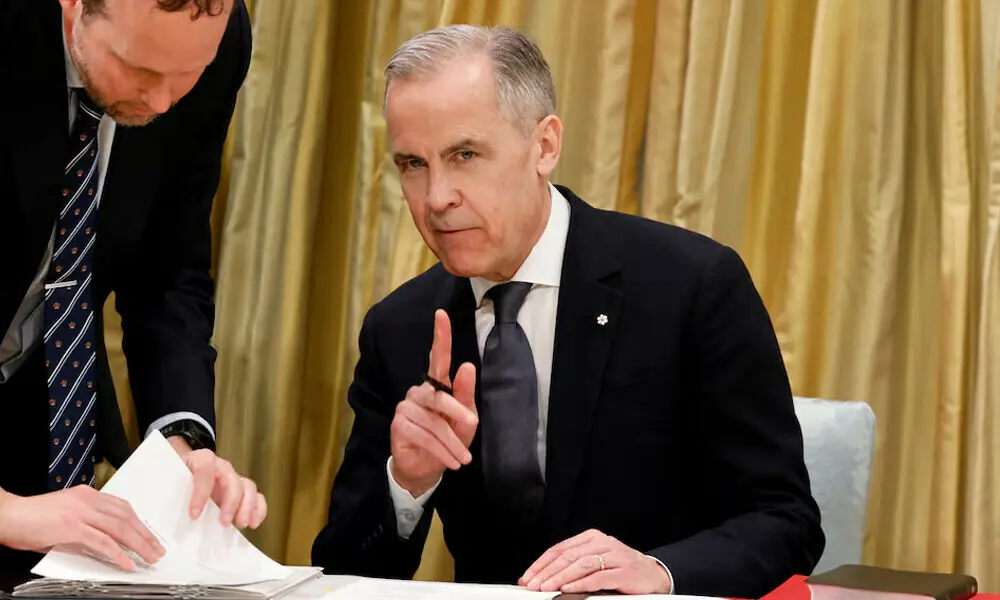

MONTREAL: Canada will not meet its targets for reducing greenhouse gas emissions for 2030 and 2035, Prime Minister Mark Carney acknowledged in an interview that aired Tuesday on Radio-Canada.
The federal government in Ottawa, under former prime minister Justin Trudeau, had set a target in 2021 of slashing total carbon emissions by 40-45 percent below 2005 levels by 2030.
Trudeau’s government had also set a goal of creating a net-zero power grid by 2035.
“What’s clear is that Canada is not going to reach our 2030 and 2035 climate targets with current policy,” Carney, who took office in March 2025 after replacing Trudeau as Liberal Party leader, told the state broadcaster.
“We need to change that.”
Faced with major trade tensions with the United States over President Donald Trump’s trade war, Canada wants to open up to other global markets and reduce its commercial dependence on its southern neighbor.
According to the latest available figures, carbon emissions fell by 8.5 percent in Canada between 2005 and 2023.
The Canadian Climate Institute, a policy research organization, warned earlier this year that emissions could start rising again because of the new government’s policies.
Since coming to power, Carney has scrapped several environmental measures, including a carbon tax for individuals and an emissions cap for the oil and gas sector.
His minority government has also announced a series of major projects in recent months to make Canada an “energy superpower.”
On Radio-Canada, Carney said he was convinced that major investments announced in the energy sector would help reduce emissions over the longer term.
Globally, Canada ranks among the countries with the highest greenhouse gas emissions per capita.
A few weeks ago, the federal government reached an agreement with the oil-producing province of Alberta, leading to the resignation of Steven Guilbeault from Carney’s cabinet. He previously served as environment minister under Trudeau.
Guilbeault lamented that the climate plan he spent several years developing was being “dismantled.”




















Comments
Comments are closed for this article.