


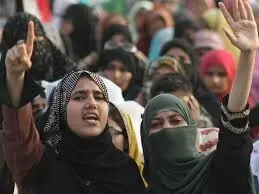
FAISALABAD: Despite the existence of a comprehensive legal framework and dedicated statutory commissions, women continue to face multiple forms of violence and remain vulnerable to harmful customary practices.
Between 1 January and 31 August 2025, more than 54,000 cases of violence against women were officially reported across various districts of Punjab, including over 26,000 incidents of sexual assault and harassment registered under Section 354 of the Pakistan Penal Code. The sharp rise in tech-facilitated gender-based violence is further intensifying the vulnerability of girls and young women, while simultaneously exposing weak political resolve to effectively clamp down on all forms of discrimination and violence against women, in both physical and digital spheres.
These grave concerns were highlighted by human rights defenders at the conclusion of the 16 Days of Activism Campaign in Faisalabad, organized by Association of Women for Awareness and Motivation.
The keynote speakers included Sonia Javed, Sonia Patras, Laiba, Dr. Irum Sultana, Dr. Ghulam Mustafa, and Dr. Sadaf Mahmood, representing leading academic institutions including GC University Faisalabad and University of Agriculture Faisalabad appreciated the authorities and political decision-makers for introducing numerous laws and establishing dedicated commissions; however, identified that under-resourced commissions and un-sensitized human resources are adding fuel.
Dr. Irum Sultana and Sonia Javed said, “Law without the political will to implement and fragile institutional setup would not serve the purpose to curb gender-based discrimination and violence against women and girls.”
Dr. Ghulam Mustafa and Dr. Sadaf Mahmood pointed out that, “Pakistan must incorporate the recommendations of concluding observations of CEDAW Committee and need to concentrate upon strengthening institutions and ensuring women’s access to justice.”
Sonia Patras and Laiba highlighted, “critical weaknesses in reporting and response mechanisms for tech-facilitated abuse, including inadequate digital evidence protocols, limited institutional capacity, and survivor-unfriendly processes, continue to impede access to justice. A multidimensional approach to curbing the growing trend of violence against women is indispensable, they added.”
The speakers collectively call for robust, coordinated action by state institutions, policymakers, and digital platforms to strengthen accountability frameworks, enhance survivor-centered reporting systems, and ensure the full realization of human rights within both on the ground and in cyberspace”


















Comments
Comments are closed for this article.