


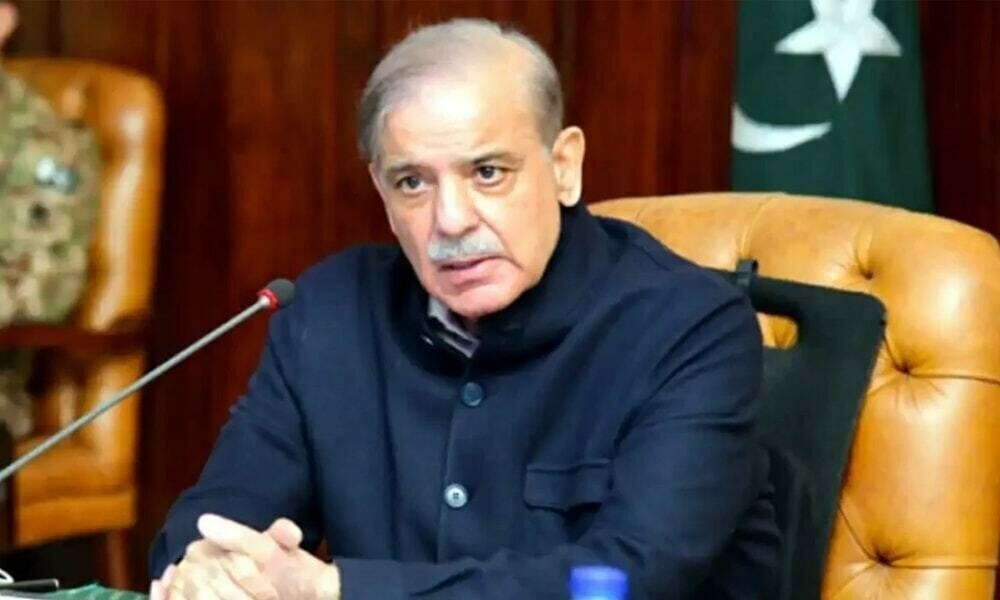

ISLAMABAD: Prime Minister Shehbaz Sharif on Monday approved a series of key energy projects aimed at enhancing electricity supply to Gwadar Port and Gilgit-Baltistan, with a focus on renewable energy initiatives, including a 100 MW solar project for Gilgit-Baltistan.
The announcement came during a high-level review meeting on the government’s ongoing energy reforms, where Federal Minister for Energy, Awais Leghari, provided an in-depth briefing on the status of various power sector projects.
The meeting primarily addressed strategies to resolve power shortages in both Gwadar and Gilgit-Baltistan, with the Prime Minister approving an immediate action plan to ensure a steady and affordable electricity supply to Gwadar Port, a critical hub for Pakistan’s economic and industrial growth.
Sharif directed relevant authorities to coordinate efforts and guarantee that the region’s power supply remains stable, reliable, and cost-effective. “Ensuring an uninterrupted power supply to Gwadar is essential for the economic development of the region,” he remarked, stressing the need for collaborative action to support industrial activity in the port city.
Pakistan eyes $850mn annual revenue from Gwadar Port via fisheries, dates
The Prime Minister also gave the green light for the ambitious 100 MW solar project in Gilgit-Baltistan, which is expected to address the region’s chronic electricity issues. The solar project, consisting of both rooftop and utility-scale installations, aims to provide a clean, sustainable energy source while significantly improving the power situation in the mountainous region.
Sharif underlined that developing Gilgit-Baltistan’s energy infrastructure remains a key priority for the federal government. “The welfare and economic prosperity of the people of Gilgit-Baltistan are paramount,” he said, adding that the solar initiative would ensure a consistent power supply, fostering long-term economic growth.
To further promote industrial growth and attract investment to the region, the Prime Minister assured that every effort would be made to create a conducive environment for business activity in Gilgit-Baltistan.
The solar project will be implemented in two phases: the first, an 18 MW rooftop solar programme, and the second, an 82 MW utility-scale solar plant.
Both phases are expected to be completed by 2027, with a projected annual saving of approximately Rs1 billion for the government.
Copyright Business Recorder, 2025

























Comments
Comments are closed for this article.