



There is a strong rumour circulating in the corridors of power that the imminent tabling of the twenty-eighth constitutional amendment, openly acknowledged by members of the Cabinet, envisages the re-insertion of the constitutional clause that would allow the National Finance Commission (NFC) to reduce the share of the provinces in any subsequent award.
This would be the second attempt as the government abandoned this particular clause in the twenty-sixth constitutional amendment after strong opposition by the Pakistan Peoples’ Party (PPP).
An NFC meeting chaired by the Finance Minister was held on 4 December, but he failed to convince the provinces to share their expenditures with the federal government. Their rationale: the constitution does not allow the Centre to seek these details.
However, it was agreed to set up subgroups/committees to discuss various aspects of the award, which brings to mind the proverb ‘a camel is a horse designed by a committee’.
Successive administrations have repeatedly violated a clause of the constitution pertaining to the NFC notably that it be constituted every five years to review and recommend a new award, given that the last NFC award agreed under the chairmanship of Shaukat Tarin, the then Finance Minister, was twenty-five years ago. And that had taken the then President Zardari’s talent for “reconciliation” to compel Punjab-led by Shehbaz Sharif to agree to a reduction in the population criteria to 82 percent in return for the eighteenth constitutional amendment clause that would allow Nawaz Sharif to become the prime minister for a third time.
The fourteen finance ministers since 2010, including those appointed for a very short period (pending notification of the successor), caretakers and repeat appointments (fuelling the widespread lament that they were allowed to use a revolving door even though they had failed to deliver in the past) were unable to create a consensus on the NFC.
Even Tarin’s immediate successor after his untimely resignation, Hafeez Sheikh, selected by the same party that had appointed Tarin, the PPP, frequently lamented the passage of the seventh NFC award — privately and publicly — citing insufficient funds for the Centre to cover more than its debt servicing costs and defence. Equally, paradoxically, Ishaq Dar who negotiated on behalf of the Punjab government for the seventh award consistently opposed the award when he was appointed the finance minister after the 2013 PML-N victory at the polls.
The sticking point of any award was always opposition by the province that feared its share from the divisible pool would be reduced while the federal government subsequent to the award argued that a reduction in resources of the federal government from 56 to 46 percent compromised the Centre’s capacity to meet its expenditure. Ignored was the approval of the eighteenth amendment by parliament that same year envisaging devolution of several subjects to the provinces (which has yet to take effect), the pledge to increase tax to Gross Domestic Product ratio by a percentage point each year to generate higher total revenue for all (again not yet achieved) and the resistance to reducing the current expenditure each year (that required sacrifice by the elite through raising ability to pay taxes and not giving generous annual wage increases to 7 percent of the population that draws a salary at the taxpayers’ expense).
The current budget is seemingly an exception, however the containment of the outlay is not through a reduction in the elite capture but on a reduction in the discount rate that envisages lower borrowing costs in spite of a budgeted rise in borrowing. This projection has yet to be met, as the discount rate has remained unchanged at 11 percent since June this year.
Chairman PPPP Bilawal Bhutto-Zardari while briefing the press on the decisions taken in the party’s Central Executive Committee on 6 November 2025 categorically stated that the party will oppose any attempt to reduce the share of provinces.
The key question is which party’s narrative — PML-Nor the PPPP — better suits the general public?
Divisible pool taxes consist of Federal Board of Revenue (FBR) collections barring workers welfare fund (estimated at 21,727 million rupees in the revised estimates of last year against the budgeted 25,740 million rupees budgeted for the current year) and workers profit participation fund (estimated at 40,369 million rupees in the revised estimates of last year against the budgeted 47,825 million rupees in the current year) which taken together account for an insignificant 0.53 percent of total FBR collections.
In the revised estimates of last year total FBR taxes collected were 11,900 billion rupees with provincial share cited at 6773.345 billion rupees or 56.9 percent of total divisible pool taxes while in the current year’s budget total FBR taxes are projected at 14,131 billion rupees with the provincial share at 7988.537 billion rupees or 56.5 percent. The difference is the straight transfers, which are relatively a small amount – 217.186 million rupees this year and 223,606 million rupees last year.
If the government can manage to reverse the provinces’ share and reinstate the 56 percent share of the divisible pool taxes, then its total revenue in the current year would have been close to the provincial share of 7.87 trillion rupees (an amount contingent on the FBR actually generating the budgeted amount – a rare occurrence) rather than the 6.5 trillion rupees budgeted this year or about 1.37 trillion rupees more. Or, in other words, it would account for around 48 percent of the current expenditure instead of the 40 percent in the current year.
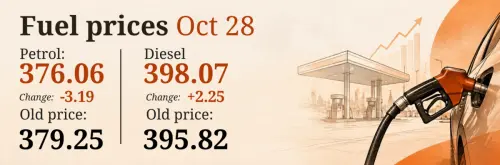
The federal government has kept petroleum levy, a sales tax whose incidence is greater on the poor than on the rich but is easy to collect, in ‘Other Taxes’, which are not part of the divisible pool. An out-of-the-box thinking would be for the federal government to credit the 1.5 trillion rupee budgeted collection under petroleum levy to the divisible pool, which would be more than welcomed by the provinces, or else levy some other withholding tax(es), currently nearly 75 to 80 percent of all direct taxes are levied in the sales tax mode, while keeping them outside the purview of the FBR and credit them under other taxes. This would be the dishonest, albeit the petroleum levy way to go.
Ideally, given a visible lack of consensus on changing revenue sharing between the centre and the federating units the government would be well advised to engage in a number of actions to meet its shortfall including: (i) a 600 billion-rupee reduction in current expenditure with around 100 billion rupees — half of the reduction in running of civilian government that would entail no rise in wages for a couple of years and another 100 billion rupees decline in subsidies; (ii) reduce reliance on borrowing internally as well as externally and the budgeted markup by about 300 billion rupees; (iii) a rise in tax to GDP ratio of one percent, estimated at around 100 billion rupees which is doable; and (iv) transferring at least two of the devolved subjects to provinces (saving of around 100 billion rupees).
There is also a need to change the criteria for the award – a reduction in population from 82 percent to 47 percent (a criterion that incentivizes high population – a major deterrent to growth), a proposal publicly supported by the incumbent Minister for Planning as well as the Finance Minister, increase in the share of poverty or backwardness to 30 percent (from the current 10.3 percent), revenue collection to 10 percent (against current 5 percent) and inverse population density to 5 percent (from the current 2.7 percent) within the next five years.
To conclude, one would hope that the Finance Minister approaches this touchy subject with compromises and alternate proposals after undertaking an in-house review of policies that would be acceptable to all.
Copyright Business Recorder, 2025
















Comments
Comments are closed for this article.