


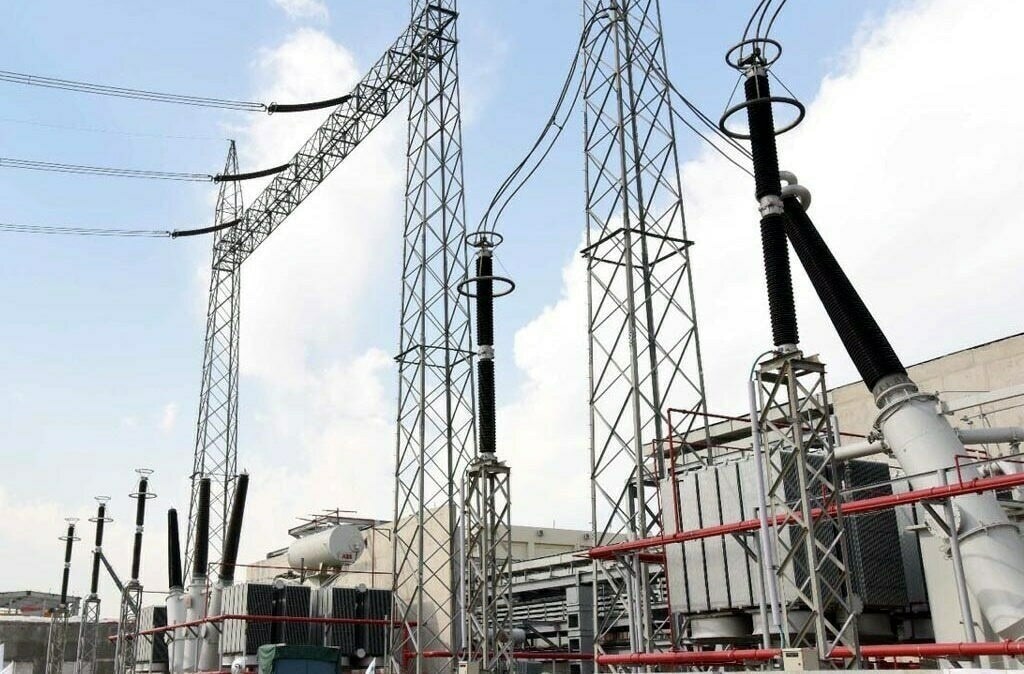

ISLAMABAD: The Central Power Purchasing Agency–Guaranteed (CPPA-G) on Tuesday indicated up to 8 percent depreciation of the rupee and 1 percent growth in electricity demand during CY 2026 amid raised concerns from Nepra and industry stakeholders regarding changes in the assumptions presented in CPPA-G’s original petition for the Power Purchase Price (PPP) and the revised figures submitted during the public hearing.
The Nepra Authority — comprising Chairman Waseem Mukhtar, Member (Technical) Rafique Ahmad Shaikh, Member (Law) Amina Ahmed and Member (Development), Maqsood Anwar Khan conducted the public hearing on CPPA-G’s statistics and projections across five PPP scenarios.
The Power Division was represented by Additional Secretary (Power Finance) Mehfooz Bhatti, CPPA-G CEO Rehan Akhtar and other officials.
Pakistan’s top business body questions 2026 power price plans
NEPRA expressed displeasure over the quality and ambiguity of CPPA-G’s presentation, which was intended to seek approval of the PPP for CY 2026.
Five projected scenarios, based on reference demand with 1% growth in consumption are as follows: (i) Scenario 1: Exchange rate Rs 290–300/$, normal hydrology and fuel prices (PPP: Rs 25.95/kWh) ;(ii) Scenario 2: 1% demand growth, exchange rate Rs 290–310/$ (PPP: Rs 26.53/kWh) ;(iii) Scenario 3: High demand with 2.5% growth, exchange rate Rs 290–300/$ (PPP: Rs 25.73/kWh) ;(iv) Scenario 4: 1% demand growth, exchange rate Rs 290–300/$, normal hydrology, and a 5% increase in fuel prices (PPP: Rs 26.20/kWh) ; and (v) Scenario 5: Normal demand, exchange rate Rs 290–300/$, normal hydrology, and a 5% decrease in fuel prices (PPP: Rs 25.69/kWh).
“Given that economic parameters remained stable over the last one and a half years, the exchange rate parity has been considered within a moderate range. With the same positive outlook, a nominal biannual devaluation of Rs 10 has been assumed,” a CPPA-G representative stated.
SOFR, USD rates, and inflation data were taken from the IMF and global indicators, while fuel price assumptions were based on Argus Media, Platts, Ogra, Nepra, and TCEP data. Due to high climate uncertainty, hydrology is assumed to be normal.
However, three key external economic uncertainties may affect the projections: (i) USD–PKR exchange rate; (ii) growth in electricity generation; and (iii) fuel prices.
The National Grid Company (NGC) and Punjab Power Development Board participated in the hearing to comment on CPPA-G’s projections. After noting the revised PPP assumptions, both organizations expressed agreement with the updated figures. The CPPA-G projected a maximum transmission capability of 25,000 MW next year due to NGC’s limited capacity. No projection was provided for expansion in solar net metering in the coming year.
However, several industry representatives challenged the Power Division’s assumptions, calling the figures inaccurate.
Aamir Sheikh, a major textile exporter, said the industry’s key concern is ensuring that Fuel Price Adjustment (FPA) and Quarterly Tariff Adjustment (QTA) remain as low as possible so that production costs can be forecast reliably. He noted that a positive FPA last year resulted from the government’s decision to increase gas prices supplied to IPPs by around 25%.
He added that since gas prices will also be rebased on January 1, the Power Division should ensure that the correct gas price is used this year. “We have also submitted an intervention to Ogra requesting that gas prices for IPPs not be increased and that the 10-year arrears bill for RLNG be cancelled to prevent further electricity price hikes. It is also concerning that power prices do not appear to be decreasing in this rebasing, despite earlier assurances from the minister.”
Industry representatives argued that increasing demand is the only sustainable solution to lowering electricity prices. The sector earlier requested reducing the tariff to 9 cents, but since the government is instead introducing an incremental package, it is crucial that the 3-year package be designed with an accurate load factor of 40%, reflecting current consumption. This would allow industries to add additional shifts, generating employment and tax revenue. NEPRA was also reminded that demand is highly price-sensitive, and many major exporters are willing to increase consumption if rates are lowered.
They also noted that even Germany has announced a reduction in industrial electricity tariffs to 5-euro cents (from the current 10 cents) to maintain global competitiveness, while Pakistan’s industrial tariff is nearly 14 cents. Pakistan’s trade deficit has widened to $11.26 billion from July to October as industries struggle with high costs.
Tanveer Barry, representing KCCI, stated that the projected PPP range of Rs 25.69/kWh to Rs 26.53/kWh is significantly high. With the current national average PPP at Rs 25.98/kWh, this indicates there will be no reduction in electricity tariffs in 2026.
He said CPPA-G’s assumption that demand will increase is inconsistent with ground realities, where consumption is falling due to high energy prices, industrial closures, and a shift to solar energy. He added that interest rates are declining and expected to reach single digits soon.
Capacity charges remain very high, despite the government’s commitment that renegotiations with IPPs would reduce them; however, no such reduction has been observed. Discos incurred losses of Rs 171 billion in the first quarter (July–September 2025), compared with Rs 103 billion in the same period last year.
Rehan Javed, representing FPCCI, stated that the fundamental issue in the power sector remains the lack of reliable data and selective interpretation of Nepra’s laws. He noted that the load factor applied in the proposed incremental package has no basis in actual industrial demand patterns. Industrial load factors are already between 30–32%, yet a much higher benchmark is being imposed without justification.
He highlighted that there is no clear data on behind-the-meter solar installation, nor any estimate of future expansion, even though demand forecasts and PPP calculations depend heavily on these numbers.
He reminded the Authority that in the last PPP hearing, industry had already warned that demand projections were overstated. This has now been proven, as the first quarter — projected at negative 1.80% — actually recorded positive 0.50percent demand growth, indicating that earlier projections were not evidence-based.
Rehan Javed stressed that any incremental package must be designed in consultation with industry, as it will determine demand and revenues for the next three years. Without revising the load factor benchmark to 40percent, which reflects actual industrial conditions, the package will fail.
He added that industry cannot survive at current tariff levels. The long-pending issue of cross-subsidy, amounting to Rs 131 billion annually and borne by industry, remains unresolved. Meanwhile, circular debt has increased again by Rs 79 billion, signaling that underlying structural issues remain unaddressed.
He concluded by urging Nepra to base all calculations on real industrial data and transparent assumptions to restore trust and ensure that demand, affordability, and sustainability move in the right direction.
Copyright Business Recorder, 2025






















Comments
Comments are closed for this article.