


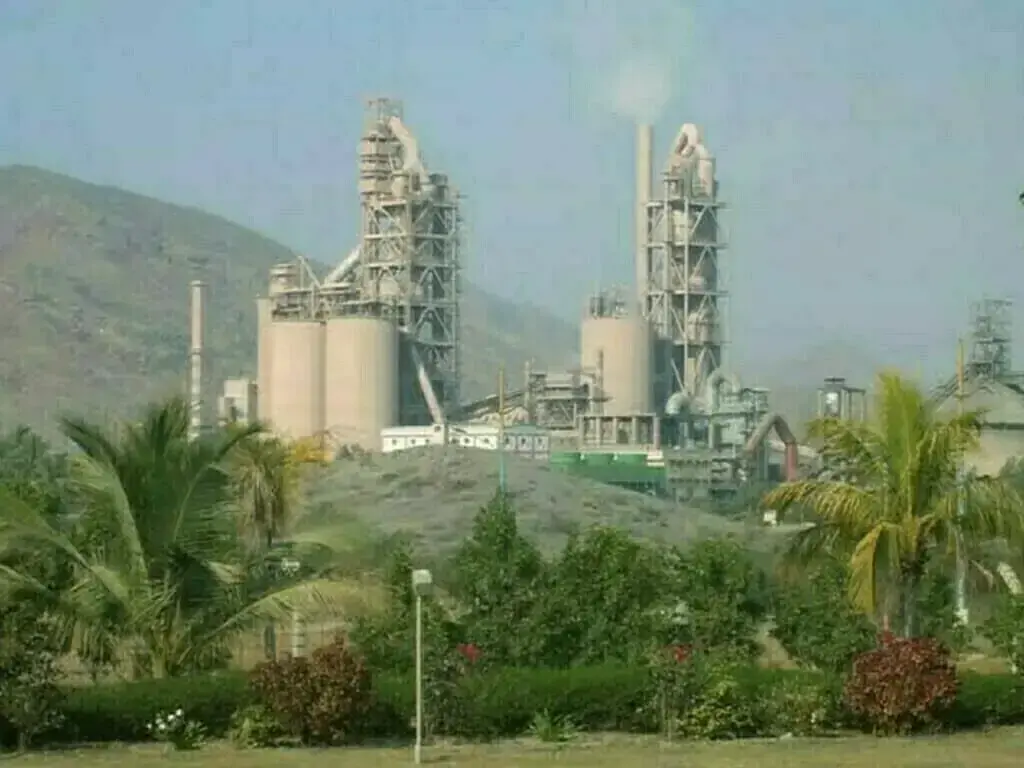

Attock Cement, a modest-sized cement player located in Hubhas been jointly acquired by Fauji Cement and KAPCO. This becomes Fauji’s second major acquisition in recent years, and this deal has pushed Fauji’s market share from roughly 9 percent to 15 percent, bringing it closer to the ranks of the industry’s top two producers: Lucky and Bestway that each take up 18 percent of the market, give or take.
The interest in Attockwas unusually fierce—disproportionate to the company’shistorically lacklustre financial performance.
At one point, Bestway that has built its market equity through acquisitions was also putting its hat in the ring to bid for Attock’s ownership.Why so much interest and what does this say about growing market concentration within the cement industry?
Unlike its previous acquisition, Attock gives Fauji a strategic southern foothold, access to the export corridor and synergies with its northern operations. The acquisition also fits a broader pattern where northern incumbents are seeking southern assets to secure export capacity, diversify their revenue streams, and strengthen their control over domestic and international markets. Similar trends have played out in Turkey, Mexico, and China, where coastal plants serve as export gateways.
Over three decades, Pakistan’s cement industry has evolved from a fragmented field into a concentrated oligopoly. In the early 1990s, the Herfindahl–Hirschman Index (HHI) averaged just 655, and the top four firms held 36 percent of capacity. Zeal Pak, Mustehkum, Askari, and Javedan dominated then, competing vigorously in the post-privatization market. Such fragmentation mirrors early stages of industry evolution globally—in India, China, and elsewhere—where dozens of small producers vied for local demand.
By the 2000s, consolidation began in earnest. HHI rose and the top four’s share reached 42 percent as inefficient players were absorbed by larger rivals like DG Khan, Lucky, Bestway, and Maple Leaf. Globally, similar mergers reduced producer numbers and created oligopolistic clusters in the US, Europe, and Latin America, allowing large firms to modernize and gain pricing power.
By the 2010s, the trend was unmistakable: HHI climbed to 918 and the top four firms commanded 49 percent of capacity. Lucky, Bestway, DG Khan, and Fauji built nationwide networks and faced little competitive friction. With capital-intensive barriers deterring new entrants, expansion decisions and pricing became increasingly coordinated. In the latest decade, despite fluctuating demand—first expansionary, then post-Covid contraction—HHI rose further as the top four crossed 54 percent of capacity. With Fauji’s latest takeovers of Askari and Attock, projections for 2026 place HHI at 1118 and the top four at 59 percent, securing the market’s oligopolistic nature.
High capital requirements, scale advantages, and limited import feasibility have amplified these dynamics. Even during price hikes, dominant firms rarely lose market share, a clear sign of pricing power above competitive levels.
Over the past two years, cement prices have risen despite weak demand and lower utilization, yet aggressive price competition remained absent. The industry’s ability to sustain margins during downturns also confirms tacit coordination. Subtle, but effective. Parallel pricing and simultaneous capacity expansion patterns reinforce this behaviour.
Such dynamics are hardly unique. European cement firms are similarly concentrated, often operating multiple plants across borders to balance supply, reduce transport costs, and optimize capacity, the advantages only scale can afford. Turkey and Egypt’s producers also maintain domestic price stability while exporting through port-adjacent plants. Pakistan’s southern producers, with access to seaports, mirror this model, while northern players dominate inland demand.
Despite frequent accusations of cartel-like practices since the early 2000s, Pakistan’s antitrust watchdog has never confirmed explicit collusion. Meanwhile, the numbers tell their own story. The industry’s structure where few firms control over half the market, synchronized expansions, and stable pricingsuggests tacit coordination.
Such arrangements hold as long as they serve producers’ interests, leaving consumers to bear the cost of higher, more rigid prices. Even so, recent price increases have largely mirrored national inflation rather than sharp, arbitrary jumps, a form of “managed stability” rather than open collusion.
Profitability remains robust. Lucky Cement leads with average margins near 35 percent, peaking at 48 percent in FY16, benefiting from geographic reach and high utilization.
Bestway trails slightly at around 30 percent, while DG Khan, Maple Leaf, and Fauji maintain double-digit margins with more volatility. Kohat Cement remains a notable outlier—smaller, yet consistently outperforming larger rivals with average margins of 28 percent over 15 years.
Pakistan’s cement sector today stands as a geographically layered oligopoly. Instead of formally cartelizing, firms engage in tacit collusion, often predicting others’ behaviors and acting mutually on pricing decisions.
Expansion into and investment in export gateways is a way to ensure there is no future price undercutting. As overutilization and excess capacity often and frequently looms large in an uncertain domestic market like Pakistan’s, exports area strategic pivot: offload surplus production, continue to follow parallel pricing in the domestic market to maintain market share, expand when domestic demand balloons. These are the refined rules of the game, and from FY26 onward, those who can command both markets—home and abroad—will reap benefits without ever having to fight too hard for either.




















Comments
Comments are closed for this article.