


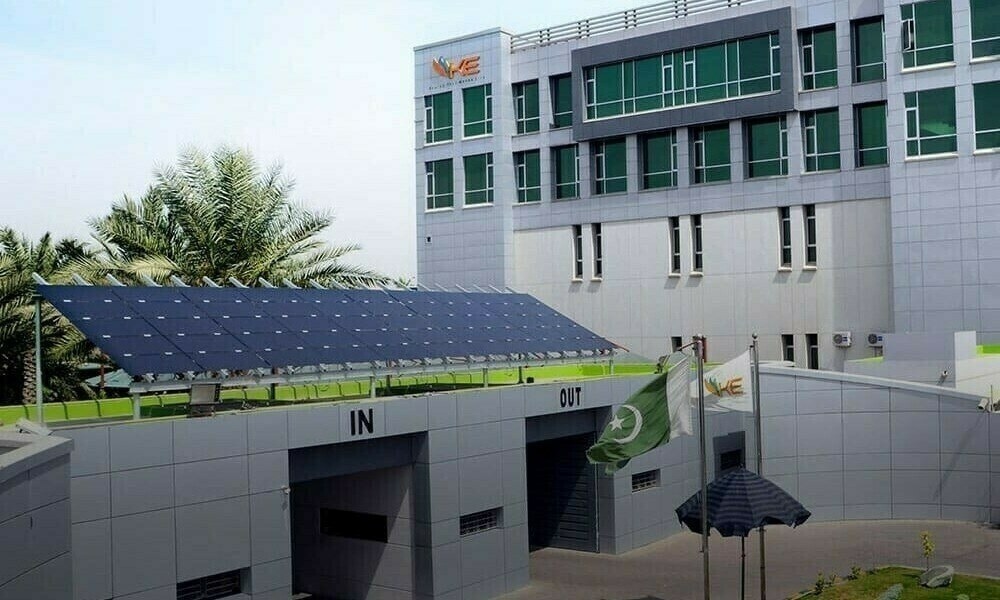

The National Electric Power and Regulatory Authority (NEPRA) late night on Monday issued multiple documents revisiting its earlier decision about K-Electric’s (KE) multi-year tariff (MYT).
Overnight, a financial hole worth hundreds of billions of rupees was created with the stroke of a pen. Let us take a moment to dissect what this means. The tariff awarded to KE has been revised downward from Rs39.97 to Rs32.37, a Rs7.6 cut. The revision is also effective from FY24 onwards, which is more than two years ago.
Let’s dissect what this seemingly innocuous number means. KE sold 15 billion units in FY24. Simple math will, therefore, put the size of the financial hole at more than Rs 100 billion. Let that sink in. This is just for FY 24. Assuming they sold more or less the same number of units, KE is already sitting on a hole twice the size.
The tariff decision has been hailed as a huge saving, a relief to customers. Here is where the plot twist comes in. Worse, KE consumers won’t see a paisa of relief in their bills. In fact, a deeper analysis suggests that their bills will actually go up as a direct consequence of the revised fuel reference price in the new decision. But let’s not get into that for a minute. So where is all this “saved money” going? The entire “saving” goes straight to the federal ledger.
Let’s not pretend this is about rationalizing consumer bills. The government has effectively unplugged Rs 7 per unit in subsidy that it had been giving to electricity consumers of Karachi. On paper, this looks like fiscal discipline. In reality, this seems like re-allocation that may be diverted to an area that would definitely be less productive than Karachi’s industrial units and commercial activity.
No business runs on magic. The basic rule is allocation of economic resources. You redirect and reallocate. A “saving” for one party is usually a transfer of cost to another. This is how budgets are made, and especially for a country like Pakistan that has limited fiscal space. In this case, this fiscal burden has now been shifted onto KE.
The worry is that, in the absence of clear and transparent communication especially for such significant magnitude and for such an essential utility, the consequences of such decisions should be thoroughly weighed instead of leaving the interpretation open to the reader.
This is not a technical glitch. It’s a governance problem. A policy shift of this scale demands consultation, clarity, and public disclosure. Instead, what we see is silence and political spin and misleading claims adding to the confusion and chaos.
Karachi citizens will be in for shock when they see their October bills. If this is truly a rational, beneficial decision, let it be explained clearly. If it isn’t, then citizens deserve to know what crater is being dug beneath their feet and what plans are in place to safeguard them in an event that the sole electricity supplier goes into sever financial distress – it would be surprising if that doesn’t happen.
One only hopes that these points have been well considered and deliberated upon by the decision makers as it is their obligation to do so. After all is said and done, Karachi has been dealt a severe blow.

























Comments
Comments are closed for this article.