


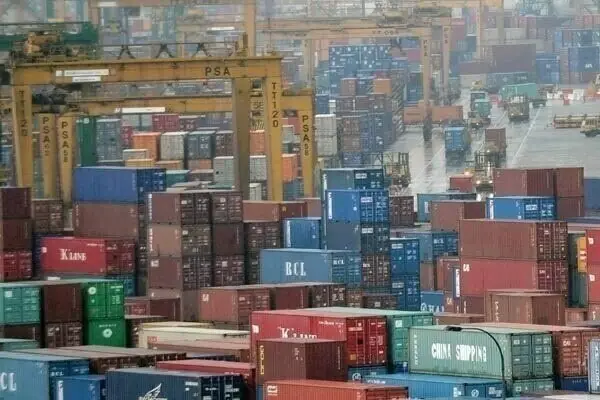

Pakistan’s export performance has remained largely stagnant for over a decade. Between FY2013 and FY2023, the country’s exports grew by less than 2.5 percent annually, compared with Bangladesh’s 7 percent and Vietnam’s 11 percent during the same period.
Despite a diverse productive base, Pakistan continues to rely heavily on a narrow range of low-value commodities, while higher-value and technology-enabled exports remain negligible.
The causes are well known: procedural bottlenecks, fragmented supply chains, limited access for small producers, and weak digital connectivity with international buyers. Small and medium enterprises (SMEs), which represent 90 percent of Pakistan’s business sector, contribute only about one-fourth of total exports, reflecting deep structural constraints.
In this context, the Global Commodity Trading Platform (GCTP) represents one of the most promising and nationally significant digital initiatives in Pakistan’s trade sector.
A digital leap for trade competitiveness
Developed under the umbrella of the Pakistan Mercantile Exchange (PMEX), the GCTP is a fully digital, one-window ecosystem integrating logistics, documentation, compliance, and trade finance on a single platform. It directly connects local producers, including SMEs and farmers, with international buyers, eliminating layers of intermediaries that traditionally reduce producer margins and inflate prices for importers.
Through verified digital traceability, secure payment mechanisms, and transparent documentation, the platform ensures greater confidence for international buyers while offering local exporters fair and efficient market access.
Globally, digital trade platforms are transforming international commerce. The World Trade Organization projects that digital trade will account for 25 percent of all global trade by 2030. Pakistan, however, risks exclusion from this new order unless it enables technology-driven trade mechanisms like GCTP.
Years of development and broad support
The GCTP was developed over several years with the full knowledge and awareness of the Securities and Exchange Commission of Pakistan (SECP), as part of PMEX’s strategic efforts to expand into digital export facilitation. Throughout its development, the project received encouragement from policymakers, trade experts, and industry stakeholders.
The platform has also been praised by Pakistan’s commercial missions abroad and has drawn interest from buyers in the United States, the United Kingdom, and the European Union, who view it as a credible mechanism to source directly from Pakistani producers with digital transparency and assured quality.
After years of work, substantial investment, and extensive stakeholder consultation, the GCTP is fully developed and ready for deployment. It stands as a model of how Pakistan can leverage technology to rebuild its export competitiveness and global credibility.
The regulatory dilemma
Despite these achievements, the project now faces a serious regulatory impasse. The SECP, which regulates PMEX under a futures exchange license, has reportedly taken the position that GCTP, being a spot trading platform, falls outside its jurisdiction.
This interpretation has led to pressure on PMEX to halt or even consider winding up the project, effectively blocking its rollout. Such a move would not only waste years of national effort and investment but also send a discouraging signal to innovators and investors seeking to build technology-led solutions within Pakistan’s regulated markets.
The issue at hand is not one of compliance, but of regulatory adaptation. Around the world, authorities are modernizing their frameworks to accommodate emerging technologies — through sandbox models, inter-agency coordination, and innovation-friendly oversight. Pakistan’s institutions must evolve similarly if they are to facilitate, not frustrate, digital transformation.
Governance and institutional balance
The situation also raises concerns about governance and the balance between regulatory oversight and corporate autonomy. While regulatory supervision is vital for ensuring integrity and investor protection, it must not extend to operational paralysis.
The PMEX board has shown strong support for GCTP, invested its time and resources and showed its full commitment to the project, recognising its potential to modernise Pakistan’s trade infrastructure and expand the export base. However, if regulatory influence effectively prevents the board from exercising its legitimate authority, this undermines institutional independence and risks turning oversight into overreach.
For Pakistan to attract investment and innovation, it must preserve the integrity of its governance structures and ensure that regulators operate as enablers of progress, not as barriers to it.
A national imperative
The GCTP aligns directly with Pakistan’s strategic economic goals:
• Diversifying exports beyond traditional sectors,
• Empowering SMEs and farmers to access international markets,
• Promoting transparency and credibility in trade, and
• Integrating Pakist an into the global digital economy.
At a time when the government is prioritizing export growth, digital transformation, and foreign investment, the suspension or closure of such a project would be a significant setback.
The matter therefore calls for intervention at the highest policy levels — including the Ministry of Finance, Ministry of Commerce, SIFC, and the Prime Minister’s Office — to ensure a balanced, enabling framework. This is in line with SIFC and PM’s vision to enhance exports rapidly. A coordinated regulatory approach could allow SECP to maintain appropriate oversight while permitting GCTP to operate under a fit-for-purpose structure.
A defining moment
Pakistan has a rare opportunity to reposition itself in global trade through digital innovation. The GCTP is not merely a platform; it is a bridge between Pakistan’s productive potential and the international markets that await it. Allowing it to be derailed by jurisdictional rigidity would mean discarding years of effort, investment, and goodwill built with both domestic and international stakeholders.
Supporting it, on the other hand, would send a clear message that Pakistan is ready to embrace technology, transparency, and reform to drive its economic revival.
The choice is clear: innovation or inertia. The future of Pakistan’s exports may well depend on which path we take.
Copyright Business Recorder, 2025
The writer is the former Managing Director of the Pakistan Mercantile Exchange (PMEX) and a financial markets professional with over two decades of experience in capital and commodity markets

















Comments
Comments are closed for this article.