


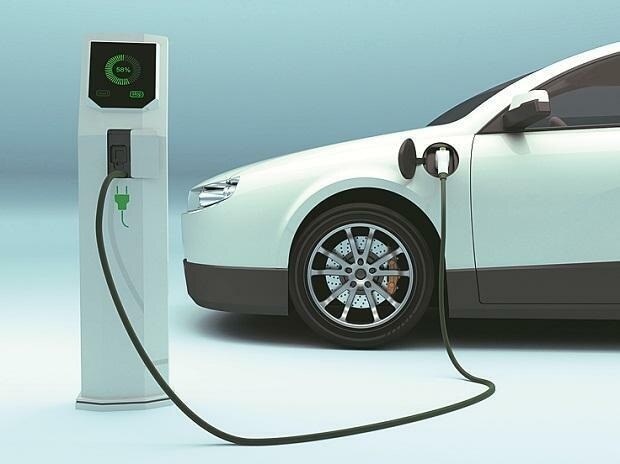

The Economic Coordination Committee of Cabinet approved the New Energy Vehicle Policy of the country for the years 2025-2030.
While the policy is titled as new ‘energy’ vehicle policy focusing on vehicles using all forms of latest alternate energies either completely or partially, but predominantly the focus of the policy remains on Electric Vehicles.
The policy has set highly ambitious, or as in some opinions, highly unrealistic targets for achieving by 2030.
Though the views on practicality of the targets set out in the NEV policy, and the shortcomings of it remain an important discussion point, the government’s focus is loud and clear. Initiatives such as subsidy for 2-wheeler EV consumers, NEV levy on non-electric passenger vehicles, plans to install fast chargers on national highways and motorways are a clear signal of the government’s priority to encourage and push for a rapid EV adoption in the country.
This push for EVs among all new energy vehicles for the government does represent a degree of disregard towards the ground realities of Pakistan’s automobile sector in particular. Pakistan stands as one of the most vulnerable countries to the climate change, and the fuel consumption by the transport sector is one of the major pollutant contributors in the country.
In such a scenario, the transition to EVs presents an opportunity to limit further damage to the environment thus reversing the vulnerabilities of the global climatic changes. The benefit of a successful EV transition for Pakistan is not limited to just the environment and climate. Instead, there is a significant economic benefit attached to it as well.
Pakistan has for long been facing a significant trade deficit. While the increasing export import gap can be associated to various reasons, including a lack of export volume and earnings, but as an oil importing country, the deficit is also significantly fueled by the import bill of petroleum products with majority of that being used for the transport sector. If Pakistan is able to transition towards EVs, the reduction in the oil import bill will help minimize the trade deficit and hence vacate essential fiscal space and forex for spending on other economic activities.
However, this does seem like a distant dream. A major reason for this is the low automobile ownership in the country.
Estimates show that not more than 10% of the households in the country own a 4-wheel passenger vehicle in the country, and having one of the lowest cars per 1,000 people ratio. This makes the transition to EVs a bigger challenge. With EVs costing more than the equivalent combustion engine vehicles, the affordability due to the upfront cost in a low vehicle ownership market like Pakistan’s makes the EV target audience even smaller. Further, the lack of commercial charging infrastructure makes inter-city travel on EVs impossible.
Considering this, in a country like Pakistan where vehicle ownership remains low and cars are unaffordable for the majority, large-scale EV adoption in the passenger cars segment seems unattainable. In the current scenario, EVs remain a viable option for the limited few households with the affordability of a second vehicle in the price bracket of PKR eight to ten million, or a first vehicle in the price bracket of over PKR 15 to 20 million. These challenges are not unique to Pakistan but common to all low and medium income countries. To date, only high-income countries have successfully managed to transition to a large scale EV adoption in the four-wheel passenger car segment.
So does this mean that countries such as Pakistan should ignore EVs and continue to focus on ICEVs? Certainly not. Instead, the perfect solution for low and medium income countries, and hence for Pakistan, are the Plug-In Hybrid Electric Vehicles (PHEVs).
PHEVs are powered by an electric motor like conventional EVs and an engine like the routine ICEVs. However, unlike HEVs, the PHEVs’ batteries are charged not by engine and braking power but need to be charged through an external electricity source just as any EV.
The size of the electric motor in PHEVs though is much smaller, enabling the car to drive purely on electric power for around 50 to 100 km based on the battery size. Once the electric charging runs out, the PHEV is powered through its fuel-based engine.
As such, the range anxiety that comes along the conventional EVs, i.e., the fear of car running out of electric charging and hence becoming immobile in the middle of the road is eliminated in case of PHEVs as once the vehicle battery charging finishes, the car is run through its fuel engine and hence not hindering the journey.
More importantly, PHEVs allow consumers to drive their average daily commute either entirely or mostly through battery power, while in case of longer journeys particularly inter-city travels, the fuel engine facilitates the journey even without battery charging.
Consequently, the Pakistani government and automobile industry both must focus on encouraging and facilitating the adoption of PHEVs in the country as they will be able to provide a similar environmental and economic benefit as hoped through the transition to EVs without restricting consumer adoption due to limited charging facilities and issues such as range anxiety. While aiming for large-scale Electric Vehicles adoption in the country is a positive and forward looking objective, for Pakistan and other similar countries, the future is plugged-in, so to speak.
Copyright Business Recorder, 2025
The writer is Research Economist at the Pakistan Institute of Development Economics (PIDE)














Comments
Comments are closed for this article.