


Sudan seeks technical support in agri, pharma, maritime sectors
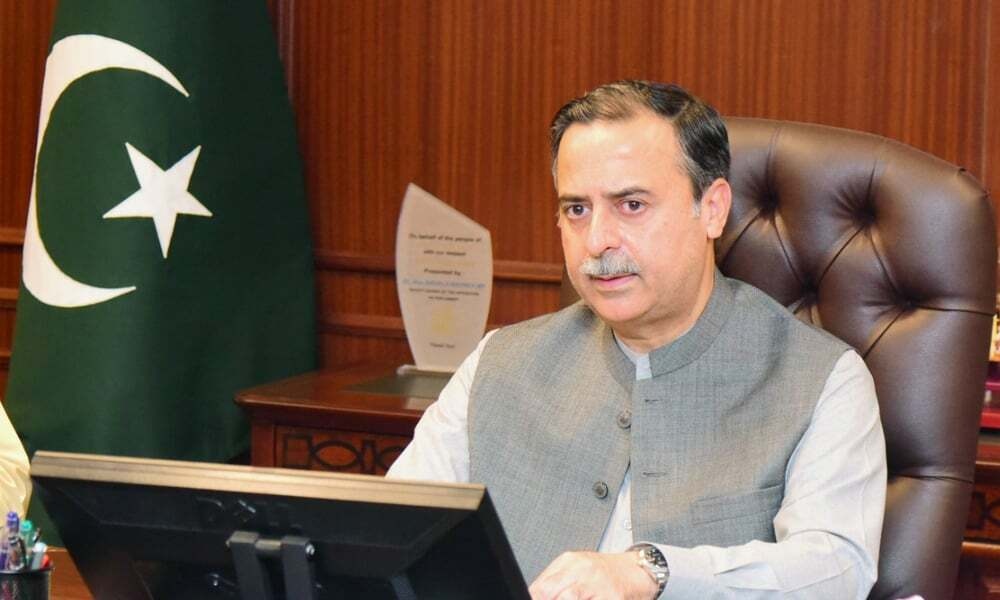

ISLAMABAD: The government of Sudan has sought Pakistan’s technical cooperation in the development of its agricultural, pharmaceutical, and maritime sectors.
These proposals were formally forwarded by the Sudanese Ambassador to Pakistan, Salih Mohamed Ahmed Mohamed Siddig, during his meeting with the Federal Minister for Maritime Affairs Muhammad Junaid Anwar Chaudhry here on Thursday.
Ambassador Siddig said Sudan was keen on expanding trade relations in various sectors, particularly in pharmaceuticals and agricultural machinery, adding that Sudan is highly in need of tractors to support its agricultural sector and boost food production.
Responding to the Sudanese envoy, the minister said that Pakistan was considering setting up a joint venture for tractor assembly at the Gwadar Free Zone to help meet Sudan’s demand and promote exports to other African markets.
On behalf of the Maritime Ministry Junaid Anwar Chaudhry offered Pakistan’s technical expertise to help modernize Sudan’s ports, pledging support for the African nation’s efforts to upgrade its maritime infrastructure and strengthen trade connectivity across the region.
Both sides discussed cooperation in maritime development, port modernization, and industrial ventures. They also explored opportunities for logistics improvement and technology-driven port operations. Ambassador Siddig said Khartoum was keen to establish a direct shipping line with Pakistani ports to strengthen trade and logistics links between the two countries.
The minister noted that a dedicated route could cut transport costs and improve supply chain connectivity between East Africa, the Middle East, and South Asia. Several landlocked African nations, including Chad, the Central African Republic (CAR), Ethiopia, and Uganda rely on Sudan’s Red Sea ports, particularly Port Sudan, for access to global trade routes.
Junaid Chaudhry welcomed the proposal and said Pakistan was ready to assist Sudan in modernizing its ports. He said Pakistan had recently approved a National Artificial Intelligence (AI) Policy 2025, under which the maritime ministry was integrating AI into the management of Pakistani ports.
“We are shifting our ports onto AI-based systems to improve efficiency and reduce operational delays,” he said, adding that Pakistan could help Sudan adopt similar technologies.
“We can assist Sudan in equipping its ports with AI, particularly Port Sudan, which handles about 90 percent of the country’s international trade.”
The minister said modern, technology-driven ports were essential for economic growth and trade facilitation, and that Pakistan’s experience in automation, smart logistics, and digital port management could benefit Sudan.
He also pointed to the potential for wider regional trade through Sudan, saying the country’s landlocked neighbors could gain from improved maritime access. “Sudan can serve as a key trade hub connecting Pakistan with Central Asia, East Africa, and beyond,” he said, reaffirming Islamabad’s commitment to promoting regional connectivity under its Blue Economy Vision 2030 initiatives.
Both sides agreed to maintain close coordination between their respective ministries and explore practical mechanisms for cooperation. The meeting ended with a shared commitment to deepen maritime and industrial ties and enhance technological collaboration between Pakistan and Sudan.
Copyright Business Recorder, 2025























Comments
Comments are closed for this article.