


MYT for 2022-23 to 2024-25: Three-fold UoSCs hike by NGCP draws Nepra’s concerns
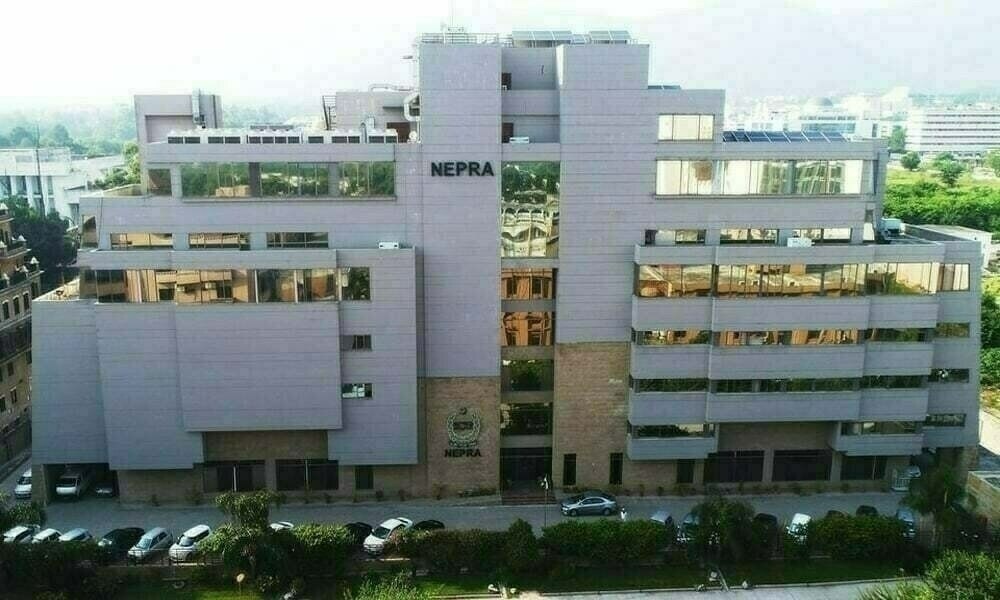

ISLAMABAD: The National Electric Power Regulatory Authority (Nepra) has raised serious concerns over a threefold increase in Use of System Charges (UoSCs) by the National Grid Company of Pakistan (NGCP) under the Multi-Year Tariff (MYT) for 2022-23 to 2024-25.
According to the company’s petition, it has sought Rs 117 billion for FY 2022-23, Rs 170 billion for FY 2023-24, and Rs 209 billion for FY 2024-25 under revenue requirements. Additionally, the company has requested Rs 8.9 billion per month under UoSC. If approved, this increase will translate to an additional Re 1 per kilowatt-hour (kWh) for consumers.
During a recent public hearing, the Nepra appeared dissatisfied with the NGCP’s justification for the steep hike.“What happened that caused a threefold increase in Use of System Charges? We don’t like asking childish questions, but why should consumers pay for the company’s inefficiency?” questioned Nepra members.
Adding to the controversy, the NGCP included in its application a penalty it had to pay after losing a legal case to Star Power Company. The company argued that court fees, lawyer fees, and a Rs 2 billion fine were incurred due to the case’s outcome.
“If you were at fault, then why should the burden be passed onto consumers?” asked Sheikh Rafique Ahmad, NEPRA Member (Technical).
The long-delayed CASA-1000 project also came under scrutiny.
“We’ve been hearing about the CASA-1000 project for the past 20 years — what happened to it?” asked Arif Bilwani, a participant.“We don’t know when this project will be completed,” admitted NGCP officials.“Let it be made part of the record that the company doesn’t know the project’s status,” the Nepra stated.
The Nepra further questioned the relevance of the project, citing the current electricity surplus in the country.“We already have surplus electricity — what’s the point of importing more power?” a member asked NGCP representatives responded that the project could eventually enable Pakistan to export electricity to Central Asian countries.
“When we have major transmission issues within the country, especially between the North and South, how will we export power so far?” Nepra countered.
According to NGCP, the project is now expected to be completed by 2028. Power from Dasu and Tarbela-5 would feed into this system. However, concerns were raised about whether such expensive electricity could find buyers.
“Who will buy such costly electricity?” asked Bilwani.“Under the CASA-1000 agreement, Pakistan will supply electricity at 9 cents per unit,” said an NGCP official.
He also clarified that only two transmission lines were affected during the recent floods, with six poles falling.
Rehan Javed from Karachi highlighted that the company is seeking Prior Year Adjustments (PYAs) amounting to Rs 9.5 billion for FY23, Rs 38.5 billion for FY24, and a staggering Rs 92.8 billion for FY25 — a tenfold increase over three years.“PYAs are meant to reconcile forecasts with actuals, but here they are being used as a revenue stream,” he noted.
The petition also shows other income of Rs 5.2–7.0 billion, which has not been fully netted off from revenue requirements. Additionally, forex losses of Rs 2.5 billion in FY23 are being passed on to consumers, while forex gains of Rs 892 million in FY24 are excluded. “The approach is simple: losses are socialized, gains are not,” Javed added.
Depreciation charges are projected at Rs 15.3 billion for FY23, Rs 16.4 billion for FY24, and Rs 18.7 billion for FY25. However, some NEPRA documents acknowledge that part of this depreciation is for unapproved investments — costs that are being shifted to consumers.
Demand figures in the petition also raised eyebrows. Average monthly demand is listed as 26,158 MW in FY23, dropping to 25,287 MW in FY24, and then bouncing back to 26,179 MW in FY25 — a trend not supported by actual system data.
“The consumers are already paying Rs 17.06 per unit in capacity charges. Loading inflated UoSC on top of that will only suppress demand and worsen the circular debt,” warned Javed.
Tanveer Barry, representing the Karachi Chamber of Commerce and Industry, criticized the delay in filing the revenue requirement petition. “Why did the National Grid Company file this petition so late, covering three years at once? The NEPRA issued hearing notices to DISCOs, but no CEO attended or submitted objections. Does this mean there are no issues in the power sector, or are DISCOs simply not interested?” he asked.
Copyright Business Recorder, 2025




















Comments
Comments are closed for this article.