


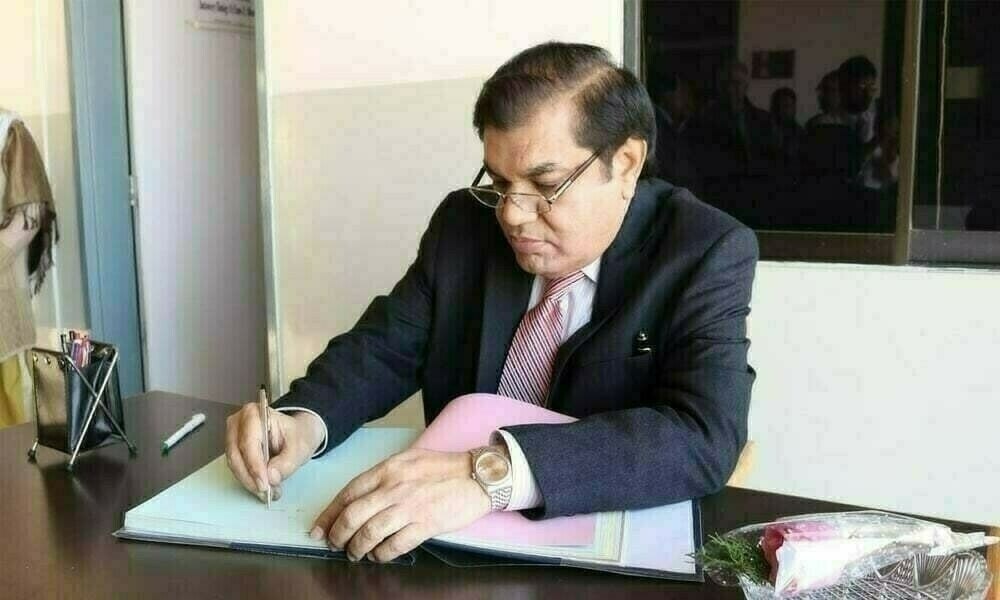

KARACHI: Mian Zahid Hussain, President Pakistan Businessmen and Intellectuals Forum, Chairman National Business Group Pakistan (NBG), has welcomed the new U.S. reciprocal tariff framework introduced under the "America First Trade Policy”. The new framework moves away from system of uniform trade rules toward country-specific tariffs.
Pakistan secured a 19% reciprocal tariff on its U.S. exports, a diplomatic win compared to India's 25%, plus another 25 percent as penalty for the purchases of Russian oil.
In exchange, Pakistan will withdraw its 5% digital services tax and pursue a joint oil reserve project with an American firm. "This new tariff framework presents a crucial opportunity for Pakistani exporters," said Mian Zahid Hussain.
"The 19% tariff gives our businesses a competitive edge, particularly in the textile and apparel sectors, which comprise the bulk of our shipments to the U.S. However, this advantage is fragile and its long-term benefits are not guaranteed without significant structural reforms at home."
Mian Zahid emphasized the need for a two-track strategy to fully capitalize on this opportunity. He said that Pakistani exporters, particularly in the textile and apparel sectors, must move quickly to leverage the competitive advantage offered by the 19% tariff. He stressed the need for urgent structural reforms to tackle high energy costs, improve port infrastructure, and diversify exports into high-value sectors like IT and engineering.
Mian Zahid pointed out that the updated U.S. de minimis exemption now requires formal declarations and duties on most shipments, which significantly impacts small and medium-sized enterprises (SMEs). He emphasized the need for collaboration between the government and private sector to foster a competitive environment. Without substantial reforms, we risk losing our advantage. A unified focus on innovation and making business easier in Pakistan is essential.
Copyright Business Recorder, 2025




















Comments
Comments are closed for this article.