


‘Climate change is posing threat to livestock sector, food security’
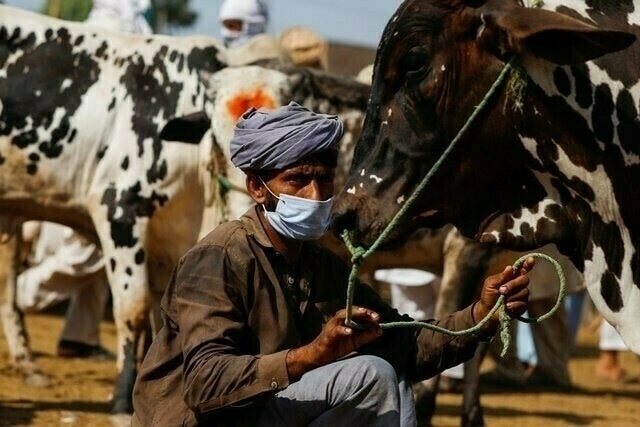

HYDERABAD: Veterinary and agricultural experts warned that climate change is compounding the crisis, posing a grave threat to the country’s livestock sector, food security, and rural livelihoods, as indigenous animal and bird species continue to decline.
Despite possessing rich resources and valuable indigenous breeds, Pakistan annually imports over 500,000 cattle and 1 million semen doses, a trend experts have described as “alarming.”
They were speaking at the inaugural seminar on “Climate Change and its Impact on Animal Health” held under the Green Veterinary Drive 2025, organized by the Veterinary Business and Entrepreneurship Society of the Faculty of Animal Husbandry and Veterinary Sciences (FAVS), Sindh Agriculture University (SAU) Tandojam, on Tuesday.
Vice Chancellor Prof. Dr Altaf Ali Siyal said climate change is no longer just an environmental concern but a direct threat to livestock, farmers, and the national economy. He noted that Sindh is the most climate-affected province, where the devastating floods of 2010 and 2022 destroyed millions of homes and crops and claimed millions of livestock, causing irreparable damage to rural livelihoods.
“Rising heat, water scarcity, fodder shortages, and recurrent floods are directly undermining animal health and productivity. Livestock health is not merely a veterinary issue; it is a national concern tied to food security, poverty reduction, and economic stability,” he stressed.
Former SAU Vice Chancellor Dr Fateh Marri said livestock contributes over 60 per cent to agriculture and plays a key role in GDP growth through milk, meat, and related products. However, climate-induced variations in rainfall and temperature are making livestock farming increasingly difficult. “We must adopt dynamic strategies to adapt to these changes. Seminars and workshops like this are critical to preparing the livestock industry for future challenges,” he added.
Dean FAH&VS Dr Syed Ghiyasuddin Shah Rashdi highlighted that livestock is a major source of income for the rural middle class, with women playing a crucial role. He said veterinary students continue to contribute significantly to community livelihoods despite the mounting challenges of climate change.
Delivering the keynote lecture “Climate Change and Livestock Health/Production in Pakistan: From Physiology to Policy”, noted veterinary scientist Prof. Dr Zaheer Ahmed Nizamani cautioned that Pakistan’s livestock sector, which contributes over 60 per cent of agricultural value-added and nearly 12 percent of GDP is at “severe risk” from climate change. He said Pakistan is on the frontline of the crisis, with temperatures rising faster than the global average. Over one million animals died in the 2022 floods, he pointed out. The sector is also shifting rapidly from smallholder farming to large-scale commercial mega-farms, which, while catering to urban demand, is threatening hardy indigenous breeds such as Red Sindhi, Sahiwal, and Tharparkar, increasingly being replaced by exotic breeds like Holstein Friesian.
“This genetic reshuffling is undermining biodiversity and posing serious risks to food security,” he warned, adding that Pakistan already faces a 37 percent national protein deficit in animal feed, while heat stress has reduced milk production by 10–30 per cent.
Copyright Business Recorder, 2025




















Comments
Comments are closed for this article.